

Must-Visit Attractions in Northern Ireland
Complete Northern Ireland Travel Guide
Written by Murat Yilmaz
Last updated: June
Northern Ireland is home to some of the most breathtaking scenery, rich history, and vibrant culture in the UK and Ireland. This guide highlights the must-visit attractions in Northern Ireland, helping you plan a trip that combines dramatic landscapes, historic landmarks, and unforgettable local experiences.
From the world-famous Giant’s Causeway to the dramatic Carrick-a-Rede Rope Bridge, the coastline is filled with natural wonders that showcase the region’s rugged beauty. History lovers can explore sites such as Dunluce Castle, the Dark Hedges, and Titanic Belfast — landmarks that bring Northern Ireland’s past vividly to life.
If you’re building your Northern Ireland itinerary, Belfast is essential. The capital offers a thriving food scene, powerful political history, museums, and street art. Meanwhile, Derry~Londonderry blends modern culture with centuries-old city walls, creating one of the most distinctive urban experiences on the island of Ireland.
There is no shortage of things to do in Northern Ireland. Drive the Causeway Coastal Route, explore medieval castles, visit Game of Thrones filming locations, or enjoy a whiskey tasting at Old Bushmills Distillery. The region is compact, making it easy to experience several highlights in a single trip.
Whether you explore independently or join a guided experience, Northern Ireland offers a unique mix of iconic landmarks, hidden gems, and spectacular scenery — all within short travelling distances.
Below are some of the Top attractions in Northern Ireland
Table of Contents
Belfast City Hall

Located in Donegall Square, Belfast City Hall is one of the city’s most recognisable landmarks. Designed by Sir Alfred Brumwell Thomas and completed in 1906, the grand Portland stone building sits at the heart of the city centre.
Visitors can join an official guided tour (approximately 45 minutes) to explore areas not usually open to the public, including the Council Chamber, the marble Rotunda, and the impressive Grand Staircase. The building’s architecture and civic history make it one of the top attractions in central Belfast.
Follow Us for Travel Inspiration
Follow us for travel inspiration, local insights, and real moments from our private tours across Northern Ireland. Stay updated with new experiences, seasonal highlights, and guest stories.
About Belfast Tours NI

Belfast Tours NI is a local tour company for travellers who want a personal, relaxed way to explore Northern Ireland, offering private tours, tailored itineraries, and local insight to help you plan a memorable visit.
Botanic Gardens
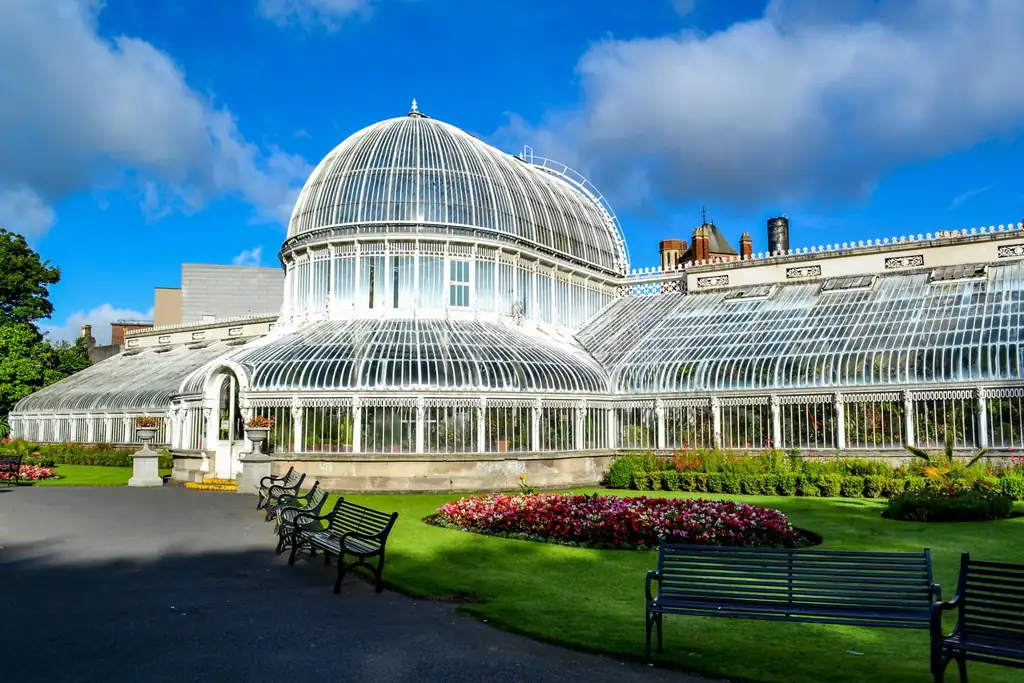
Established in 1828, Botanic Gardens is a peaceful green space in the Queen’s Quarter of south Belfast. Popular with locals, students, and visitors alike, the 28-acre park offers rose gardens, wide lawns, and seasonal displays.
At its centre stands the Palm House, designed by Charles Lanyon and built in the 1830s — one of the earliest examples of a curvilinear cast-iron glasshouse in the world. The Ulster Museum sits at the main entrance, making this area ideal for a relaxed half-day visit.
Titanic Belfast is Top Northern Ireland Tourist attractions
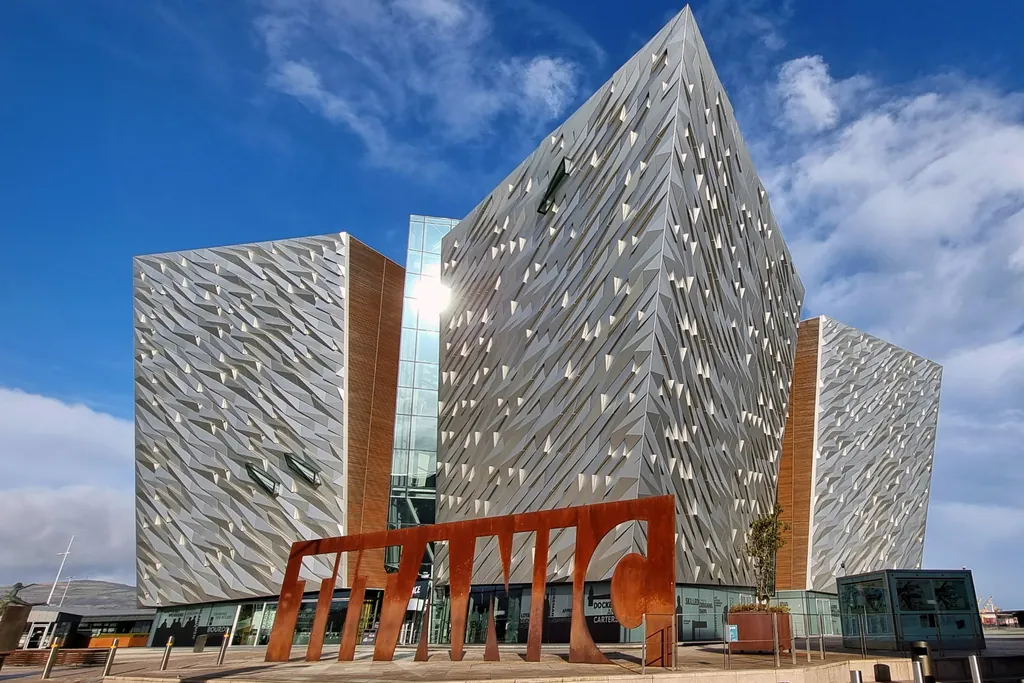
No visit to Belfast is complete without exploring Titanic Belfast, one of the most famous must-visit attractions in Northern Ireland. Located in the Titanic Quarter on the site of the former Harland & Wolff shipyard, this striking museum tells the story of RMS Titanic, built here in the early 1900s.
Opened in 2012, the interactive experience guides visitors through Belfast’s shipbuilding history, the construction of Titanic, her ill-fated maiden voyage in 1912, and the legacy she left behind. The exhibitions are immersive, modern, and suitable for all ages.
Just outside, you can also visit SS Nomadic, the last remaining White Star Line ship in the world, now fully restored and open to the public.
Titanic’s Dock and Pump House
Nearby, the historic dry dock and pump house offer another fascinating insight into Belfast’s maritime heritage. This is the dock where Titanic was fitted out before setting sail.
Visitors can walk the perfectly preserved dry dock and learn how engineers constructed one of the largest ships of its time. It’s a powerful place to stand, knowing this was Titanic’s final connection to Belfast before her maiden voyage.
Belfast Castle

A 19th century Scottish Baronial style castle with unrivaled views of the city
Perched on the slopes of Cave Hill Country Park, Belfast Castle offers panoramic views across the city and Belfast Lough. Built in the 19th century in Scottish Baronial style, the sandstone building is one of Belfast’s most picturesque landmarks.
The grounds include landscaped gardens, walking trails, and a visitor centre. It’s a peaceful spot away from the city centre and ideal for combining history with scenic views.
Crown Liquor Saloon
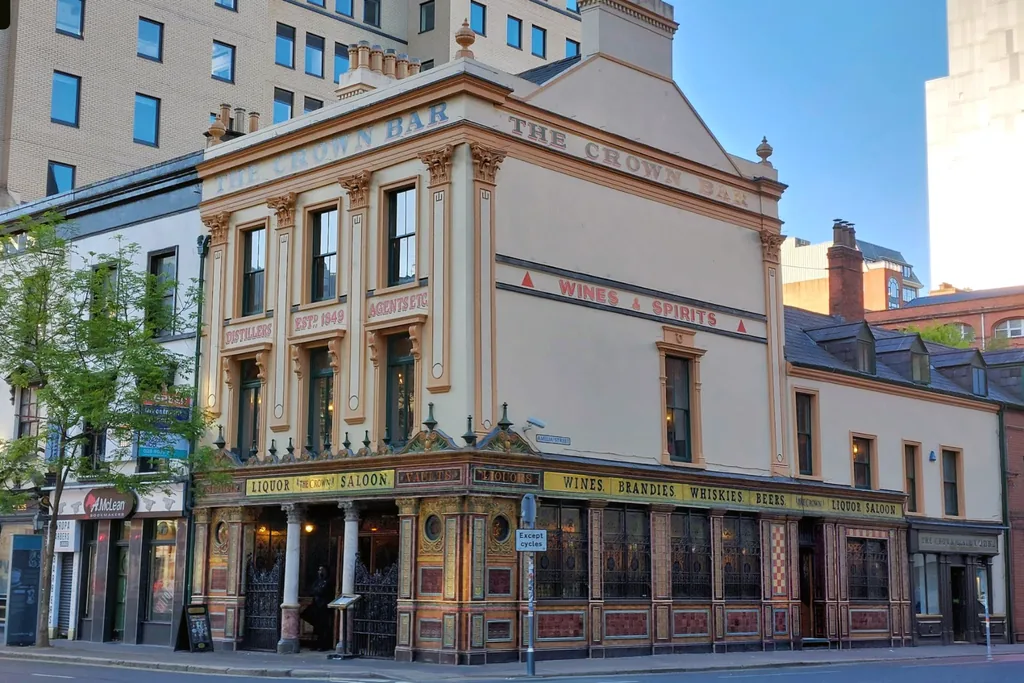
The Crown Liquor Saloon is one of Belfast’s most distinctive Victorian landmarks. Located on Great Victoria Street, this historic pub dates back to the 1880s and is now owned by the National Trust.
Inside, you’ll find beautifully restored features including mosaic tiles, carved wooden booths, stained glass, and a striking red granite bar. Originally built by Italian craftsmen, the interior reflects the grandeur of a traditional Victorian gin palace.
It remains a popular stop for both locals and visitors, offering a traditional pub atmosphere in one of the most architecturally unique buildings in the city.
Crumlin Road Gaol / Jail
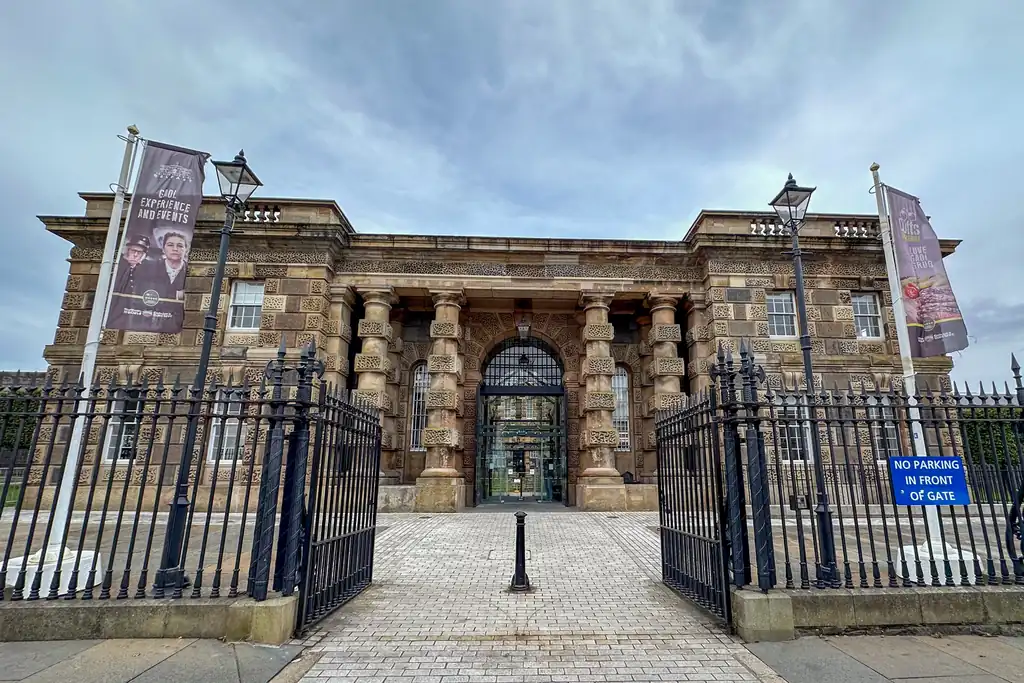
Crumlin Road Gaol, often referred to locally as “The Crum,” is the last remaining Victorian-era prison in Northern Ireland. Opened in 1845 and closed in the late 20th century, it now operates as a visitor attraction.
The prison’s design features four wings branching from a central circle. Over the years, it witnessed executions, escape attempts, and political imprisonment during the Troubles. A tunnel beneath the road once connected the jail to the courthouse opposite, allowing prisoners to be transferred securely.
Today, guided tours take visitors through the cells, execution chamber, and underground tunnel, offering a powerful insight into Belfast’s complex past.
Belfast Peace Walls & Murals
The Peace Walls were first built in 1969 during the early years of the Troubles to separate nationalist and unionist communities. Originally intended as temporary barriers, many remain in place today.
One of the most well-known sections divides the Falls Road and Shankill Road in West Belfast. Gates along the walls still close at night.
The surrounding murals have become one of the most visually striking aspects of the city. These large-scale artworks reflect political identity, remembrance, and international solidarity movements. Visiting this area offers important context for understanding Northern Ireland’s recent history and ongoing peace process.
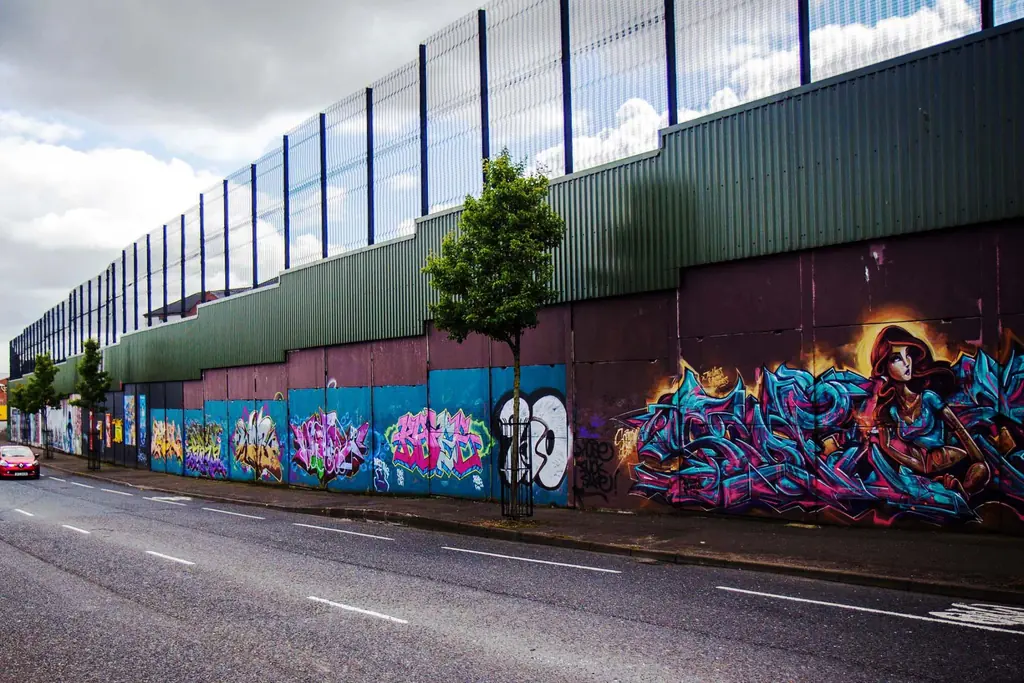
Belfast international wall Murals
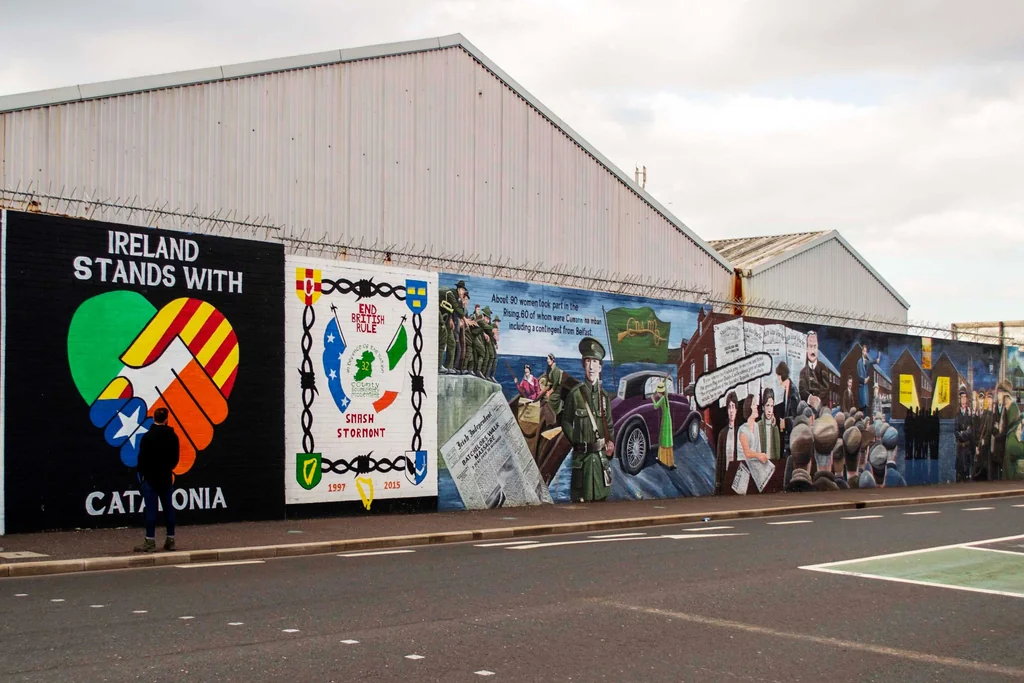
The International Wall is one of the most thought-provoking mural sites in Belfast. Located on the Falls Road in West Belfast, it forms part of the wider Peace Wall area and reflects global political struggles as well as local history.
Unlike many murals that focus solely on Northern Ireland’s conflict, the International Wall features artwork expressing solidarity with international causes. Over the years, murals have highlighted civil rights movements, anti-apartheid campaigns, Palestinian solidarity, Basque nationalism, and other global political themes.
The artwork changes regularly. Murals are updated, replaced, or repainted to reflect current events, making it one of the most dynamic outdoor galleries in the city.
For visitors, the International Wall offers a deeper context to Belfast’s political identity and the connections felt between local communities and global movements. It is commonly included in guided mural tours and black taxi tours, where local guides explain the symbolism and background behind the imagery.
Visiting the International Wall is less about sightseeing and more about understanding how art, politics, and identity intersect in modern Belfast. Many visitors choose to explore this area as part of a private Belfast city tour for deeper historical insight.
Queen's University
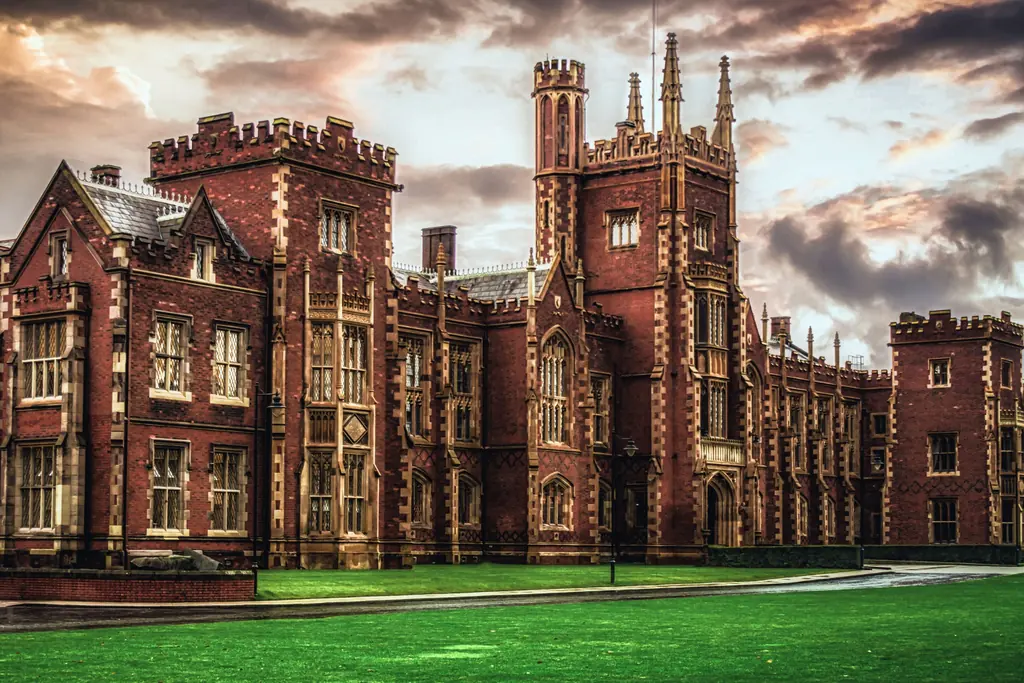
Queen’s University Belfast is a public research university in Belfast, Northern Ireland. The university received its charter in 1845 as “Queen’s College, Belfast” and opened four years later. Queen’s offers academic degrees at various levels, with approximately 300 degree programs available.
The Queen’s University has a rich heritage and a renowned history of producing Nobel Laureates, leading global academics, and national and international leaders over the last 170 years.
ABOUT QUEEN’S WELCOME CENTRE
The Queen’s Welcome Centre is a Northern Ireland Tourist Board Local Information Office for South Belfast. It serves as an information point for visitors and tourists, as well as offering a varied selection of souvenirs and gifts.
Locations: Queen’s University
- University Road, Belfast
Northern Ireland, BT7 1NN - +44 (0)28 9024 5133
Must-Visit Attractions Along the Causeway Coast
Leaving Belfast behind, the Antrim Coast and Causeway Coastal Route reveal some of the most dramatic landscapes in Northern Ireland. This stretch of coastline is often ranked among the most scenic drives in the world.
Carrickfergus Castle

Located just 11 miles from Belfast, Carrickfergus Castle is one of the best-preserved medieval castles in Ireland. Built in 1177, this Norman fortress has survived sieges by the Scots, Irish, English, and French over more than 800 years.
Set beside Belfast Lough, its imposing stone walls and towers make it one of the most photographed historic sites along the coast. Visitors can explore the battlements and exhibitions inside to learn about medieval life and military history.
The Antrim Coast Road & Glens of Antrim
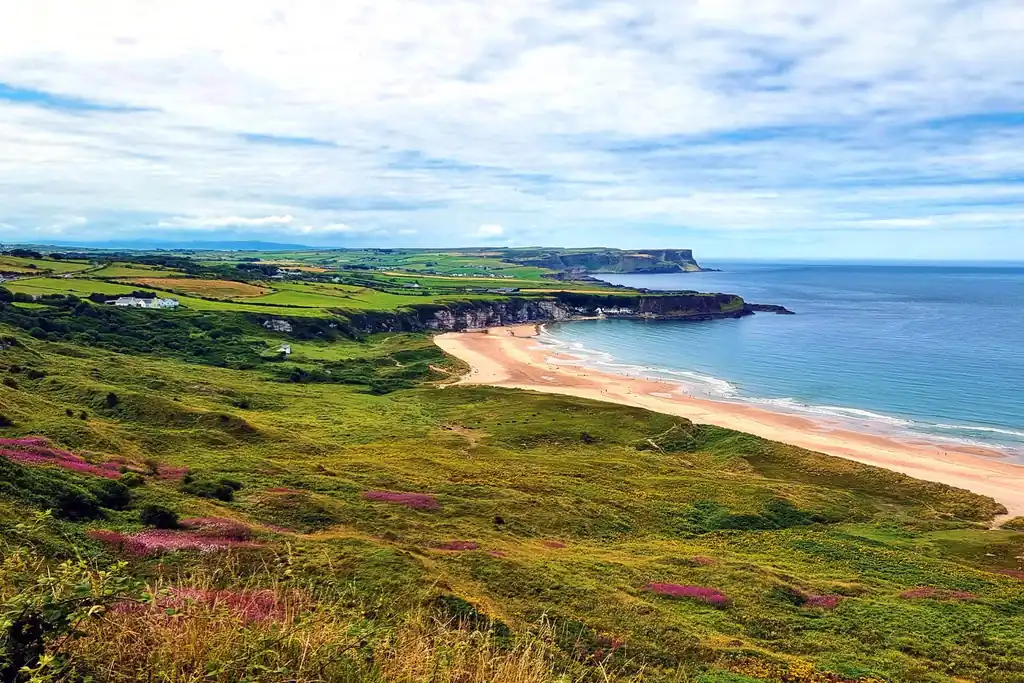
Stretching for over 60 miles along the North Atlantic, the Antrim Coast Road offers breathtaking sea views, rugged cliffs, waterfalls, beaches, and quiet villages. On a clear day, you may even see Scotland across the water.
The nearby Glens of Antrim — carved by glaciers during the Ice Age — provide lush green valleys and scenic walking trails. Glenariff, often called the “Queen of the Glens,” is especially popular for its woodland waterfalls and natural beauty.
The Antrim Coast & Nine Glens Area of Outstanding Natural Beauty
Designated in 1988 under the Nature Conservation and Amenity Lands (Northern Ireland) Order, the Antrim Coast & Glens Area of Outstanding Natural Beauty includes Rathlin Island, the Glens of Antrim, and the coastal stretch between Larne and Ballycastle.
This region contains some of the most varied and beautiful scenery in Northern Ireland. The Antrim Coast Road hugs the shoreline, offering uninterrupted sea views, passing quiet beaches, and weaving beneath towering cliffs. On a clear day, you may even catch a glimpse of Scotland across the water.
The world-famous Glens of Antrim have attracted visitors for over a century. Of the nine glens, Glenariff is perhaps the most popular, known for its waterfalls and dramatic woodland scenery. Like the others, it was carved by glaciers during the Ice Age, creating the distinctive landscape seen today.
The Antrim Coast remains one of the must-visit regions in Northern Ireland for anyone seeking unforgettable scenery and natural beauty.
Cushendun Caves – Game of Thrones Filming Location
The Cushendun Caves are one of the most striking coastal locations along the Antrim Coast. Formed over 400 million years ago, their rugged sandstone formations create a dramatic and atmospheric setting.
For Game of Thrones fans, this site holds particular significance. In Season 2, Sir Davos Seaworth and Lady Melisandre came ashore here, and the caves became the setting for one of the series’ most shocking scenes — the birth of the shadow creature. The location returned in Season 8 during the intense battle between Jaime Lannister and Euron Greyjoy.
Today, the caves are a popular stop on Game of Thrones tours and attract visitors who want to stand in the exact spot where these iconic scenes were filmed.
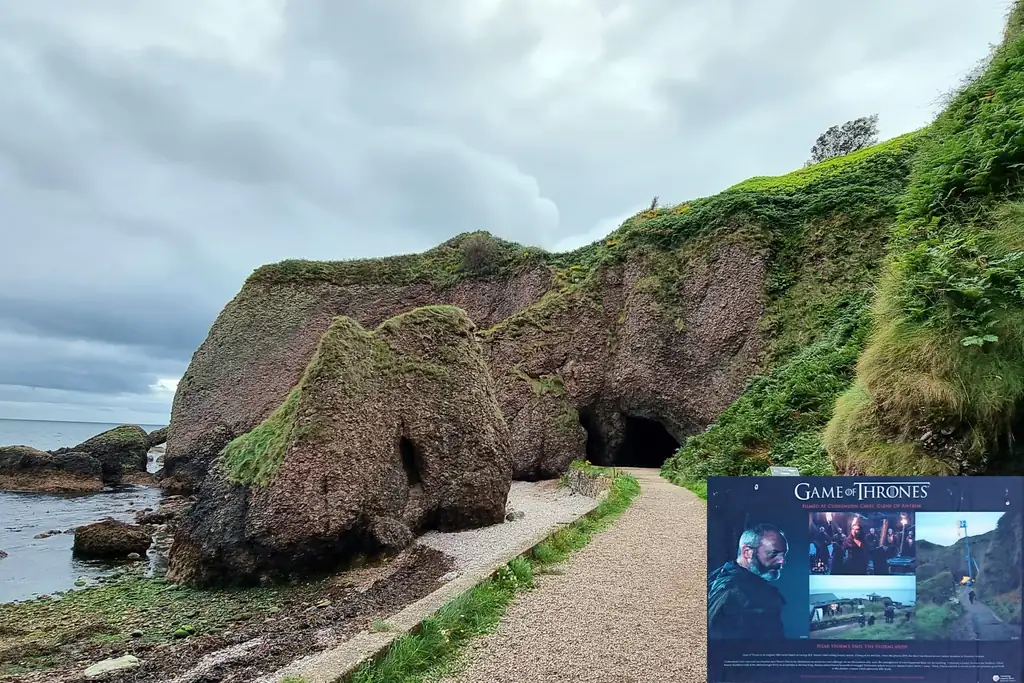
Cushendun Village
Formed over 400 million years ago, the Cushendun Caves are carved into the coastline by centuries of wind and sea. Their smooth sandstone curves create a dramatic natural setting.
The caves also featured in Game of Thrones, making them a popular stop for fans of the series. Beyond television fame, they are a fascinating geological site and part of the wider beauty of the Glens of Antrim.
The Dark Hedges – One of Northern Ireland’s Most Photographed Landmarks
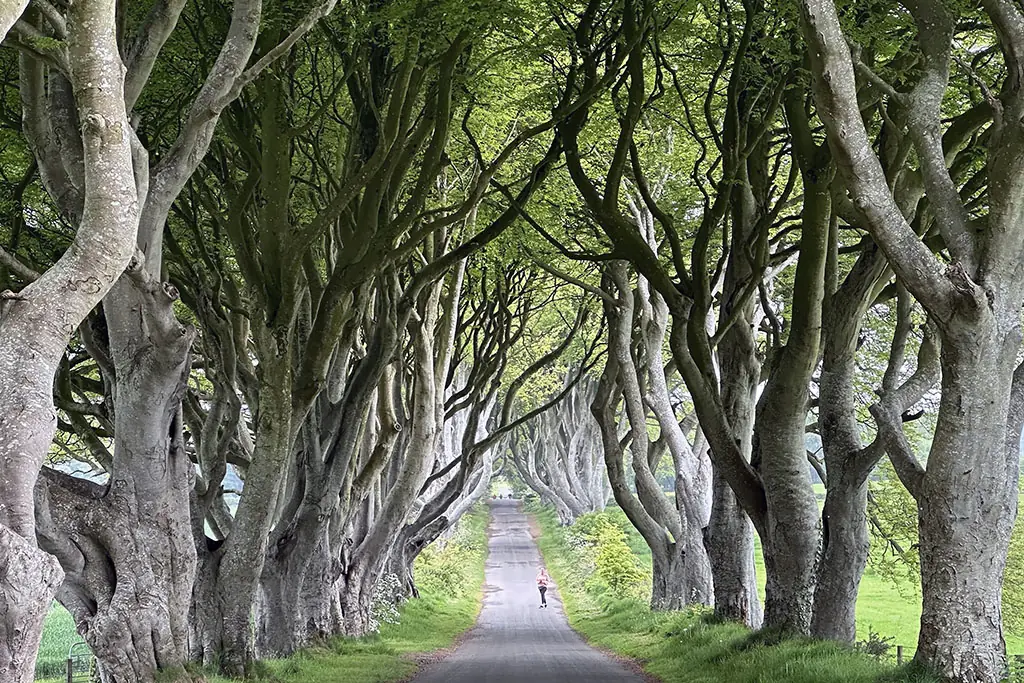
The Dark Hedges are one of the most photographed landscapes in Northern Ireland. Planted in the 18th century as an avenue leading to Gracehill House, the twisting beech trees now form an atmospheric tunnel along Bregagh Road.
The site became globally recognised after appearing as the King’s Road in Game of Thrones. Combined with local legends of the “Grey Lady,” the Dark Hedges offer both natural beauty and storytelling appeal.
The Legend of the Grey Lady
Like many historic sites in Northern Ireland, the Dark Hedges come with a local ghost story. According to legend, the avenue is haunted by the “Grey Lady,” believed to be the spirit of a woman from a long-abandoned graveyard nearby. She is said to drift silently between the trees at dusk before vanishing into the shadows.
Whether fact or folklore, the story adds to the mysterious atmosphere of the site.
Game of Thrones Filming Location
The Dark Hedges gained international fame after appearing in HBO’s Game of Thrones. The avenue represented the King’s Road in Season 2, Episode 1, The North Remembers. In this scene, Arya Stark travels north disguised as a boy, alongside Yoren and other recruits bound for the Night’s Watch.
Since then, the location has become a must-visit stop for fans of the series and a highlight on many Game of Thrones tours across Northern Ireland.
The Giants Causeway
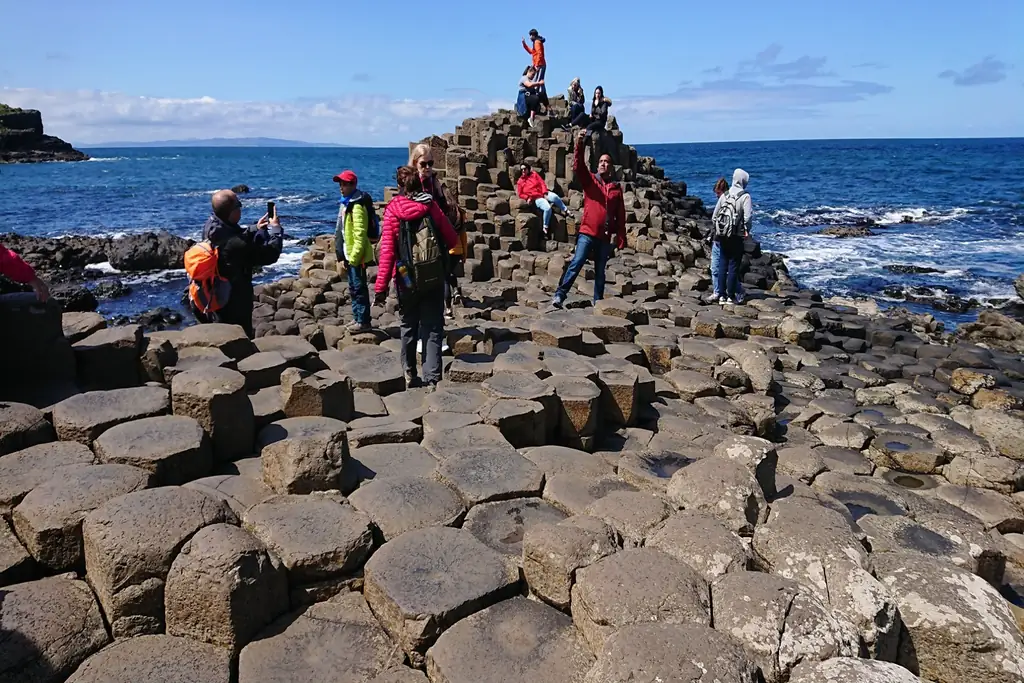
The Giant’s Causeway is Northern Ireland’s only UNESCO World Heritage Site and one of the country’s most iconic natural landmarks. Formed by volcanic activity around 60 million years ago, the area is famous for its interlocking basalt columns.
Legend says the stones were built by the giant Finn McCool, adding mythology to an already extraordinary geological landscape. Walking among the columns while waves crash against the cliffs is one of the most unforgettable experiences in Northern Ireland.
Dunluce Castle Medieval Irish Castle on the Antrim Coast
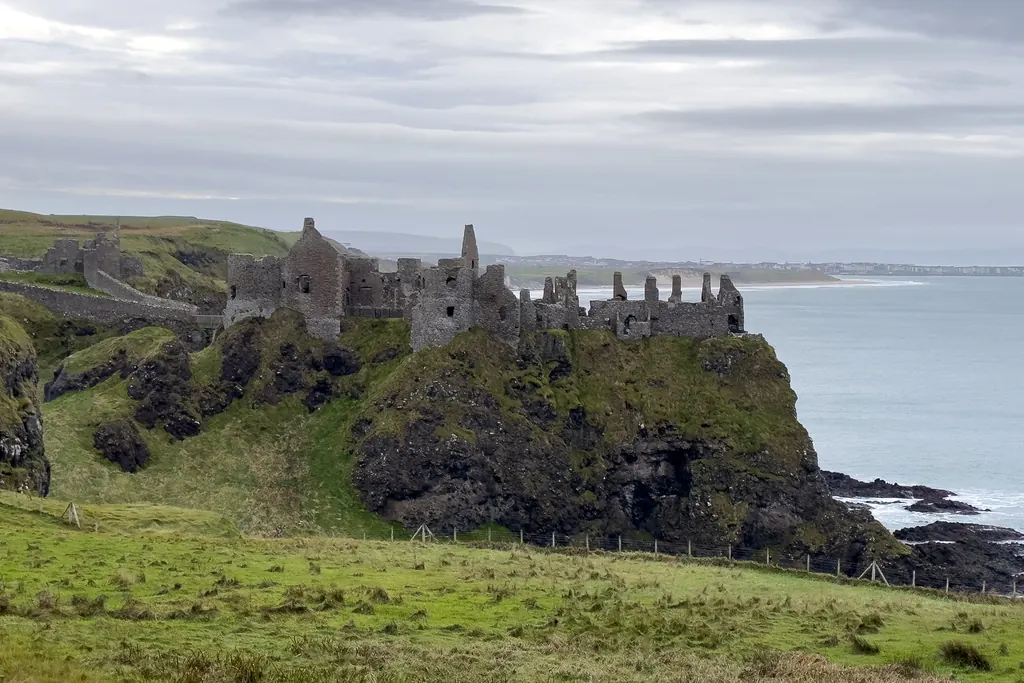
Perched dramatically on the edge of a cliff, Dunluce Castle is one of the most atmospheric ruins in Ireland. Originally built in the 16th century and later controlled by the MacDonnell clan, the castle has a long history of conflict and legend.
Archaeological excavations have revealed the remains of a small town beside the castle, and local stories tell of kitchens collapsing into the sea during a storm in 1639. Its wild coastal setting makes it a highlight of the Causeway Coast.
Carrick a Rede Rope Bridge
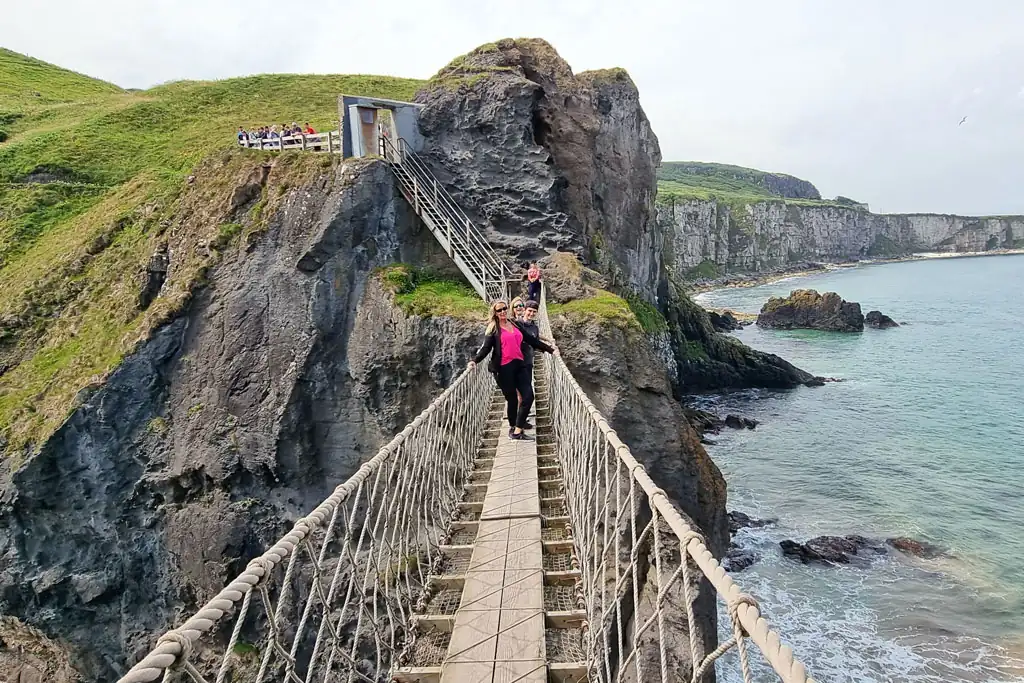
One of the Must-Visit Attractions in Northern Ireland, Carrick-a-Rede is one of the most thrilling must-visit attractions in Northern Ireland. Suspended nearly 100 feet above the rocks below, the rope bridge connects the mainland to a small island once used by salmon fishermen.
The original bridge, built over 300 years ago, was far more basic than today’s modern structure. While it is now secure and well-maintained, crossing it still offers a real sense of adventure. Even for those who choose not to cross, the coastal views alone make the visit worthwhile.
Ballintoy Harbour
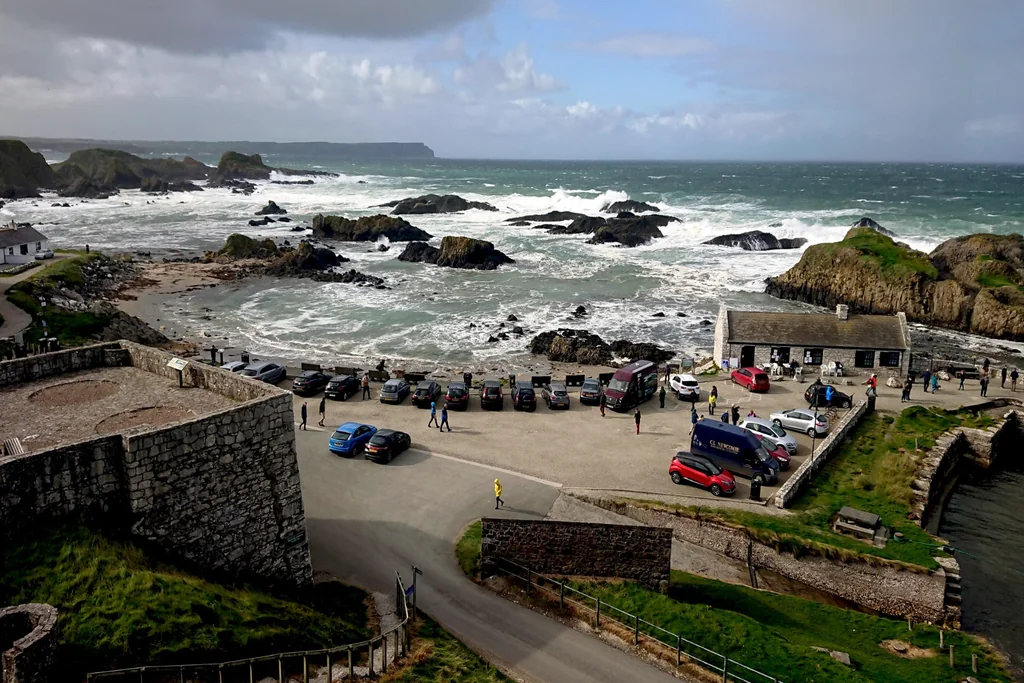
Ballintoy Harbour is a small working fishing harbour along the Causeway Coastal Route, reached by a narrow, winding road. Surrounded by dramatic basalt formations and Atlantic waves, it offers a striking glimpse of rural coastal life.
The harbour gained international attention as a filming location for Game of Thrones, where it represented the Iron Islands. Today, it remains a peaceful stop for visitors exploring the Antrim Coast.
Old Bushmills Whiskey Distillery
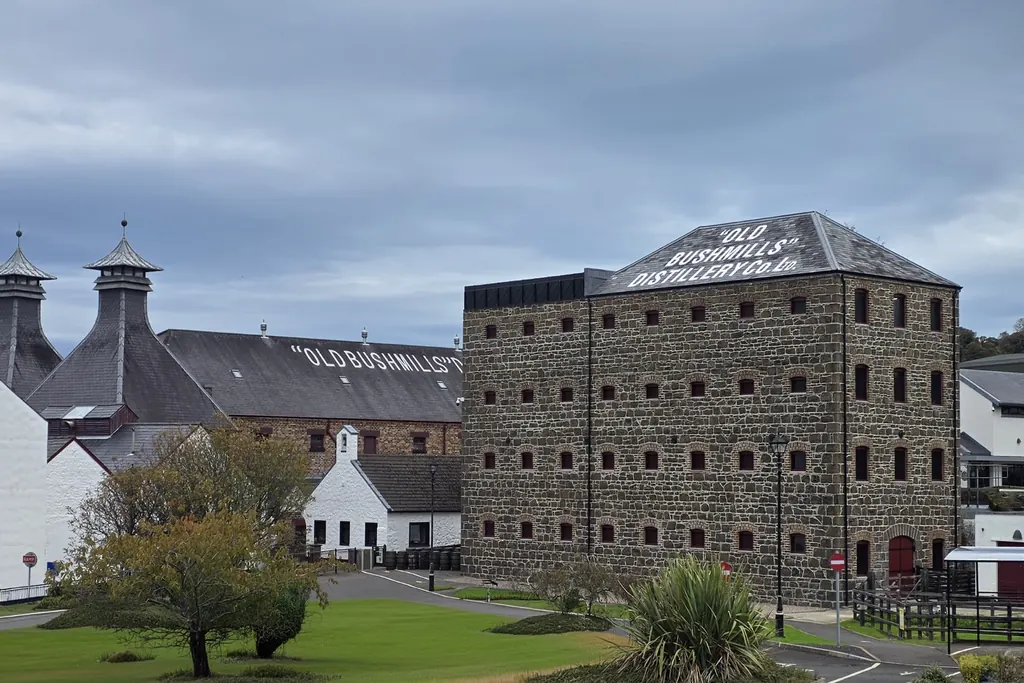
Old Bushmills Distillery is the oldest licensed working distillery in Ireland, with a history dating back to 1608. Located near the Giant’s Causeway, it is one of the most popular stops along the Causeway Coast.
Visitors can take a guided tour through the mash house and still house to learn about the triple-distillation process that defines Irish whiskey. Tastings are available at the end of the tour, and exclusive releases can be purchased in the gift shop. It’s a relaxed and authentic addition to any coastal itinerary.
Go Whiskey Tasting Tour
A whiskey tasting tour is one of the most enjoyable ways to experience Northern Ireland’s rich distilling heritage. Whether you are a long-time whiskey enthusiast or simply curious to learn more, these experiences offer insight into the craftsmanship behind one of Ireland’s most famous exports.
Most tours include a guided walk through a working distillery, where you’ll learn about the history of Irish whiskey, the triple-distillation process, and the importance of maturation in oak casks. The visit usually finishes with a tasting session, allowing you to sample a selection of carefully aged whiskeys while understanding the flavours, aromas, and character of each.
Along the Causeway Coast, a stop at Old Bushmills Distillery is a popular choice, combining history, production insight, and tasting in one visit. In Belfast, there are also modern distilleries offering small-batch spirits and personalised tasting experiences.
A whiskey tasting tour can easily be combined with a scenic coastal drive or city sightseeing, adding a relaxed and authentic local experience to your Northern Ireland itinerary.
History of Old Bushmills Distillery
Bushmills Distillery is the oldest licensed working distillery in Ireland, with a distilling licence dating back to 1608. It has been known as Old Bushmills Distillery since 1784 and remains one of the most respected names in Irish whiskey.
A fire destroyed much of the distillery in 1880, but it was quickly rebuilt. The late 19th century marked a successful period for the company, including winning the only gold medal awarded to a whiskey at the 1889 Paris Expo — a significant achievement at the time.
Today, visitors can explore the distillery on a guided tour, beginning in the mash house where the whiskey-making process starts. The tour continues into the still house, where the spirit is triple distilled in traditional copper pot stills, before finishing in the bottling hall where the whiskey is prepared for shipment worldwide.
Many guests choose to end their visit with a tasting and a stop at the gift shop, where exclusive releases such as the Distillery Reserve 12-Year-Old Single Malt are available only on-site.
Mussenden Temple and Downhill Demesne
Perched dramatically on a 120-foot cliff above the Atlantic Ocean, Mussenden Temple is one of the most scenic viewpoints in Northern Ireland. Built in 1785 as a summer library, it was inspired by the Temple of Vesta in Italy.
From this striking clifftop location, visitors can enjoy sweeping views across Downhill Strand towards County Donegal and along the north coast towards Portrush and Fair Head. The surrounding Downhill Demesne adds woodland walks and coastal scenery to the experience.
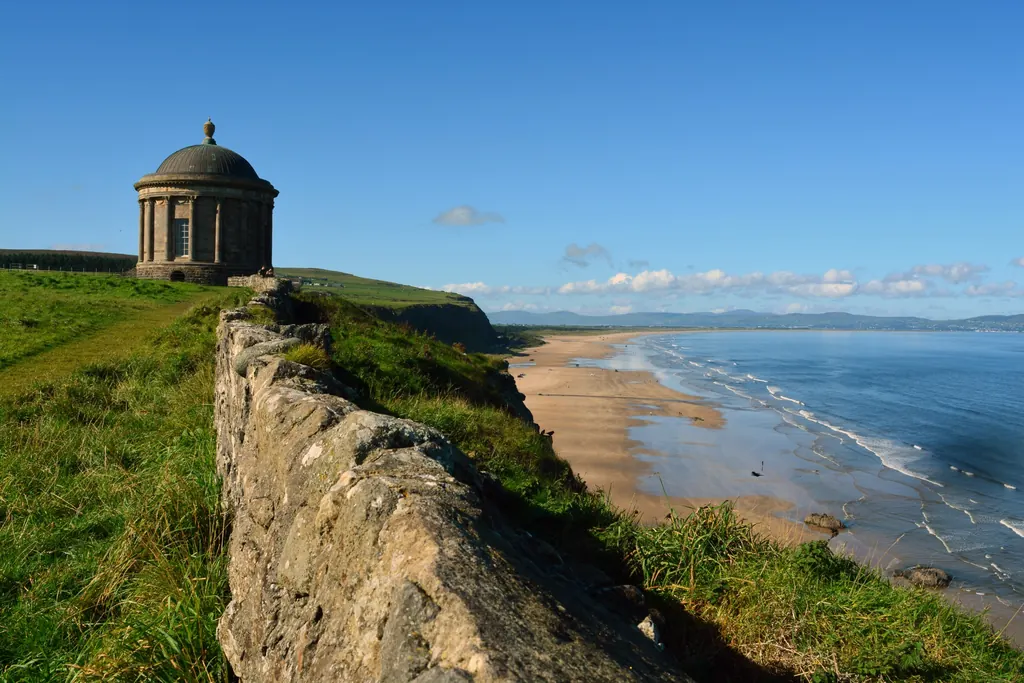
Today, Mussenden Temple and its dramatic coastal setting are among the most photographed locations in Ireland. Over the years, coastal erosion brought the structure dangerously close to the cliff edge, but stabilisation work has helped preserve this iconic landmark for future generations.
Must-Visit Attractions in Northern Ireland FAQ
How many days do you need in Northern Ireland?
Most visitors need 3 to 5 days to explore Northern Ireland properly. This allows time for Belfast, the Causeway Coast, Giant’s Causeway, and a scenic drive along the Antrim Coast. With 7 days, you can explore at a slower pace and include Derry~Londonderry and more rural areas.
What is the best time to visit Northern Ireland?
The best time to visit Northern Ireland is between May and September, when daylight hours are long and temperatures are mild. Summer offers the best weather for coastal drives and walking, while spring and early autumn are quieter with fewer visitors.
Do you need a car to explore Northern Ireland?
A car is highly recommended to explore Northern Ireland, especially the Causeway Coastal Route and rural areas. While public transport connects major towns, many scenic locations such as Carrick-a-Rede Rope Bridge and Dunluce Castle are easier to reach by car or guided tour.
What are the must-visit attractions in Northern Ireland?
The must-visit attractions in Northern Ireland include the Giant’s Causeway, Titanic Belfast, Carrick-a-Rede Rope Bridge, Dunluce Castle, the Dark Hedges, and the Causeway Coastal Route. In Belfast, highlights include the Peace Walls, Crumlin Road Gaol, and Belfast City Hall. These landmarks combine dramatic scenery, history, and cultural significance.
Can you visit the Giant’s Causeway for free?
Yes, access to the Giant’s Causeway stones is free. Visitors only pay for parking and entry to the Visitor Centre if they choose to use it. The coastal paths and viewpoints can be accessed without purchasing a visitor centre ticket.
Is Northern Ireland good for a road trip?
Northern Ireland is ideal for a road trip due to its compact size and scenic routes. The Causeway Coastal Route is regularly ranked among the most beautiful drives in the world, featuring castles, cliffs, beaches, and filming locations within short distances.
Is Northern Ireland safe for visitors?
Northern Ireland is generally very safe for tourists. Major attractions and city centres are welcoming and well-policed. As with any destination, visitors should follow normal travel precautions, but tourism infrastructure is well established and visitor-friendly.
Connect with Us
Belfast Tours NI offers a range of resources to help visitors plan a trip to Belfast, Northern Ireland. Our blog post highlights the best things to do in the area and provides insider tips to ensure visitors have an unforgettable experience.
We encourage you to explore our social media channels as well, where you can find additional information and travel inspiration. Trust our team of experts to guide you through the planning process and provide you with the tools you need to fully immerse yourself in the culture and attractions of Ireland.
Facebook
Pinterest
LinkedIn
WhatsApp