

Crumlin Road Gaol Experience Belfast Travel Guide
Written by Murat Yilmaz · Last updated:
Walk in through the gates on the Crumlin Road and you end up standing in the Circle, the point where four wings of a Victorian prison fan out around you. Crumlin Road Gaol held prisoners for 150 years, from 1846 until it closed in March 1996, and it is the only prison of its kind left in Northern Ireland. Black basalt walls, ten acres of ground, four wings rising four storeys, and cells built 12 feet by 7 feet.
Sir Charles Lanyon designed it. It was built between 1843 and 1845 at a cost of £60,000, and it took over from the old county gaol at Carrickfergus. The plans borrowed from Pentonville in London, and it was the first prison in Northern Ireland built on the separate system, which was meant to keep every prisoner apart from every other one. A tunnel under the road carried men across to the courthouse, and you can still walk it.
The thing that catches visitors out is time. The Gaol Experience is self guided, and most people are inside for 60 to 90 minutes, longer if they stop and read everything. It does not slot neatly into half an hour between two other stops. Entry runs on timed admissions, the last slot of the day is earlier than people expect, and the tunnel is the one part of the building that a lift or a ramp cannot reach.
Below you will find the history, the executions, what the tour actually covers, and a visitor information panel with the opening times, prices, parking and access together in one place. I am in and out of this part of Belfast most weeks of the year, so I will also tell you the things the official page does not: where to leave the car, how long to really allow, and what is worth seeing nearby once you come back out.
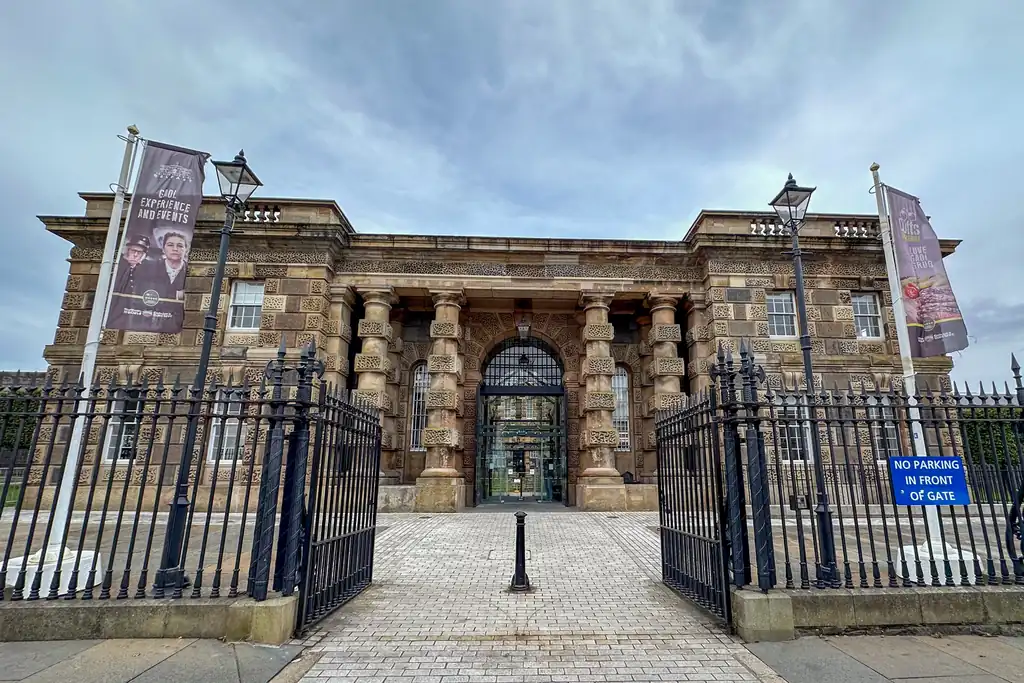
Crumlin Road Gaol - HM Prison
HM Prison Belfast, known locally as the Crum, stands on the Crumlin Road in the north of the city and has been there since the Victorian era.
It is the only prison of its kind left in Northern Ireland, and it holds Grade A listed status from the Northern Ireland Environment Agency in recognition of what it adds to the country’s heritage.
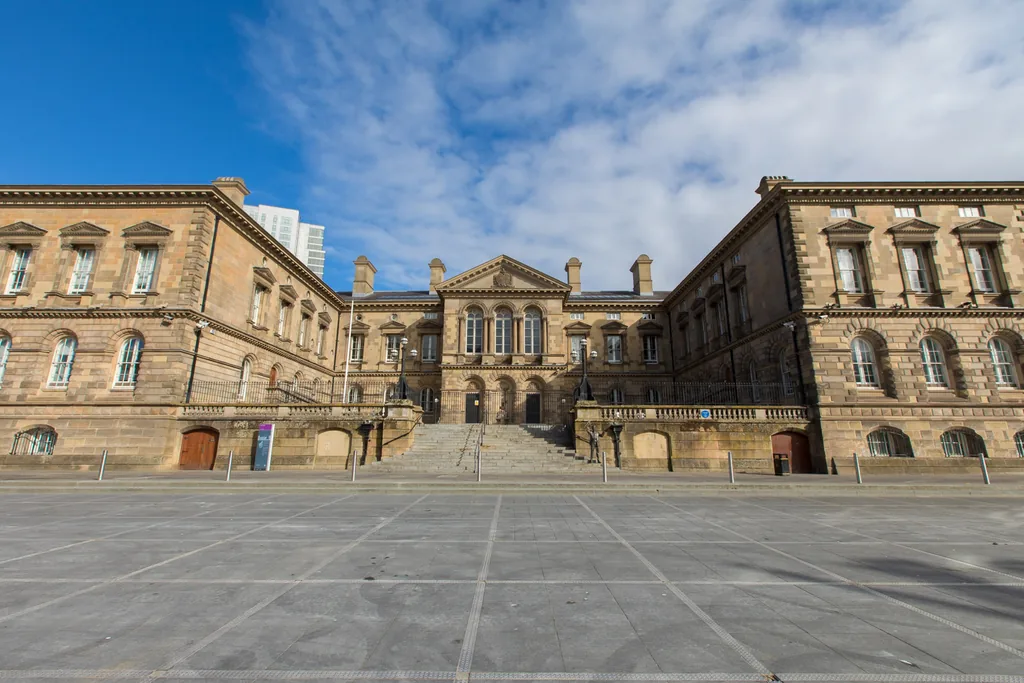
Across the road stands the Crumlin Road Courthouse, empty since the prison closed, with the underground tunnel between the two that was used to move prisoners back and forward.
The Gaol sits on the edge of north Belfast, a short run from the murals and the peace wall covered on our Belfast political and mural tour.
Crumlin Road Gaol tours are self guided. You are given an audio handset at the start and you go round at your own pace, with video and holograms through the building, so you can stop where something interests you and move on where it does not.
You walk the tunnel under the Crumlin Road that carried prisoners over to the courthouse, and come up into the Circle where the four wings meet. C wing shows how the cells were lived in. Further on are the condemned man’s cell, the execution chamber, the hospital and the graves of the men hanged here.
Allow 60 to 90 minutes, and more if you read everything properly. Cuffs Bar and Grill is on site if you want to sit down afterwards.
Crumlin Road Gaol Visitor Attraction and Conference Centre
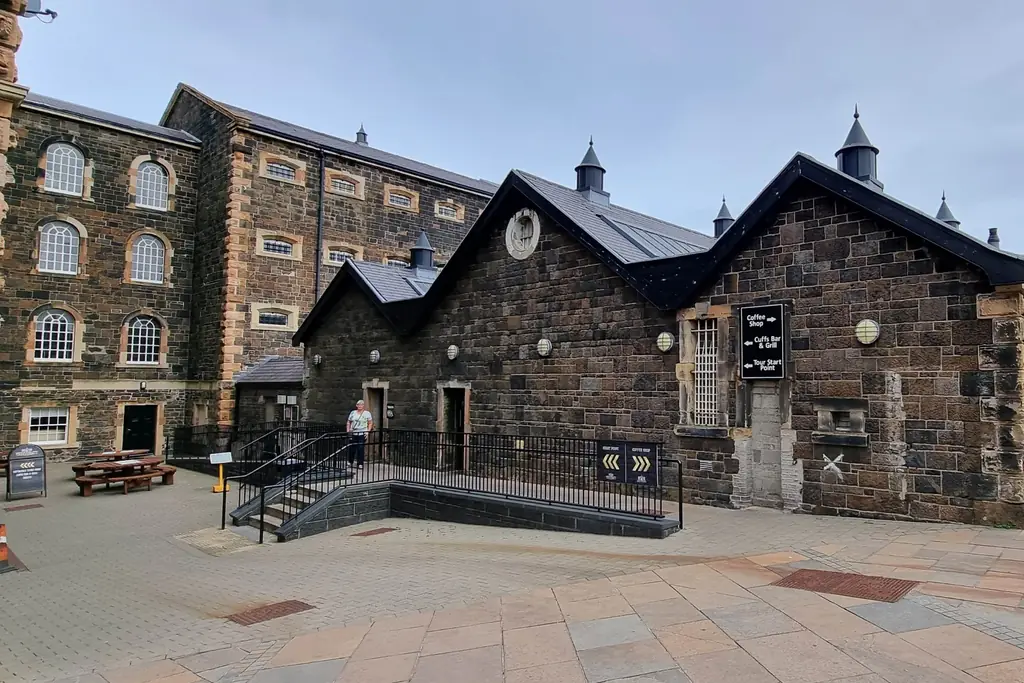
The Gaol has come a long way and evolved into an exceptional and diverse space. It has transformed into a multi-purpose venue that hosts various functions such as conferences, concerts, exhibitions, events and daily tours.
With over 70 dedicated staff, the site is always buzzing with activity. Besides its primary functions, the place serves as a perfect setting for films, competitions, and civic events.
The Visitor Attraction & Conference Centre had a grand opening to the public on 19 November 2012 and has since welcomed over one million guests.
It’s no surprise that Cuff’s Bar & Grill, a fully licensed restaurant, opened its doors in 2016, given the overwhelmingly positive reception from visitors. The Gaol Visitor Attraction and Conference Centre also holds a five star visitor attraction rating from Tourism Northern Ireland.
Last but not least, their historic education program, “A Day in the Life of a Victorian Child Prisoner,” received the Sandford Award for its excellent provision of heritage education, a remarkable achievement.
Crumlin Road Gaol Tickets, Opening Times and Parking
Visitor information
Opening times. Monday to Friday, first admission 10.30am and last admission 3.30pm. Saturday and Sunday, first admission 10am and last admission 4pm.
Tickets. Adult £18.50, child £12, concession £17, and a family ticket for two adults and two children £55. Booking online at least 24 hours ahead is cheaper than paying at the door, and you book on the Crumlin Road Gaol website.
How long to allow. The Gaol Experience is self guided, with audio, video and holograms, and takes 60 to 90 minutes.
Booking. Tickets are sold on the day, but the Gaol advises booking ahead. Arrive 10 to 15 minutes before your entry time. Groups of 15 or more have to book through the Gaol directly.
Parking. Free car and coach parking on site.
Access. Everywhere except the tunnel is reachable by lift or ramp. There are accessible toilets and parking, and wheelchairs to borrow for a £10 deposit.
Where it is. 53 to 55 Crumlin Road, Belfast BT14 6ST, about a mile north of the city centre.
Crumlin Road Gaol History
Sir Charles Lanyon drew up the plans, and the Gaol was built between 1843 and 1845 at a cost of £60,000. It opened in 1846 as the county gaol for Antrim, replacing the older gaol on Antrim Street in Carrickfergus. The first 106 prisoners arrived that year.
It is built of black basalt on about ten acres at the bottom of the Crumlin Road, four wings up to four storeys high behind a five sided wall. The design borrowed from Pentonville in London, and in its day it was one of the most advanced prisons anywhere. At the centre is the Circle, the point where the four wings meet, and it is still the first thing you see when you walk in.
The original plan was for 500 to 550 prisoners, each in a cell of his own measuring 12 feet by 7 feet. That was the separate system, and the whole point of it was that no prisoner ever met another one. Crumlin Road was the first prison in Northern Ireland built that way.
It did not stay that way. By the early 1970s three men were often held in a cell built for one, and in October 1971 Red Cross inspectors counted 864 prisoners and internees in a building intended for 475. The Gaol closed on 31 March 1996, after 150 years of use.
Crumlin Road Jail Belfast Executions
For the first half of its life the Gaol had no gallows of its own, and executions were carried out in public. That changed in 1901, when an execution chamber was built inside the prison walls.
Seventeen men were executed here in all. The condemned cell was larger than the others, with room for two guards to sit with the prisoner through his last days. The bodies were buried inside the grounds, in unconsecrated ground against the back wall of the prison hospital.
The best known of them is Tom Williams, an IRA member hanged in 1942 by Thomas Pierrepoint, who carried out more executions here than any other hangman. The last was in 1961, when Robert McGladdery was hanged for the murder of Pearl Gamble. He was the last man to be executed in Northern Ireland.
Crumlin Road Gaol FAQ
How Long Is the Crumlin Road Gaol Tour?
The Gaol Experience is self guided and takes 60 to 90 minutes, using audio, video and holograms through the wings. The Gaol itself suggests allowing about an hour.
How Much Are Crumlin Road Gaol Tickets?
Adult £18.50, child £12, concession £17, and a family ticket covering two adults and two children £55. Booking online at least 24 hours ahead is cheaper.
What Are the Crumlin Road Gaol Opening Times?
Monday to Friday, first admission 10.30am and last admission 3.30pm. Saturday and Sunday, first admission 10am and last admission 4pm.
Do You Need to Book Crumlin Road Gaol in Advance?
Tickets are sold on the day, but the Gaol advises booking ahead and the online price is lower. Arrive 10 to 15 minutes before your entry time. Groups of 15 or more must book directly with the Gaol.
Is There Parking at Crumlin Road Gaol?
Yes. There is free car and coach parking on site, which is unusual for a Belfast attraction and worth knowing if you are driving.
Where Is Crumlin Road Gaol?
53 to 55 Crumlin Road, Belfast BT14 6ST. It is about a mile north of the city centre.
When Did Crumlin Road Gaol Close?
It stopped holding prisoners on 31 March 1996, after about 150 years in use.
How Old Is Crumlin Road Gaol?
Charles Lanyon designed it in 1841 and it was built between 1843 and 1845. It was ready for prisoners by the summer of 1845, and the first 106 arrived in 1846.
How Many People Were Executed at Crumlin Road Gaol?
Seventeen men. The first was Robert Henry O’Neill on 21 June 1854 and the last was Robert McGladdery on 20 December 1961. The execution chamber was built in C Wing and first used in 1901.
What Is the Tunnel at Crumlin Road Gaol?
An underground tunnel created in 1850 linking the Gaol to the courthouse across the road, so prisoners could be brought to trial without going out on the street. You walk it on the tour, and it is the one part of the building that is not wheelchair accessible.
Is Crumlin Road Gaol Wheelchair Accessible?
Everywhere except the tunnel, by lift or ramp. There are accessible toilets and parking, and wheelchairs can be borrowed for a £10 deposit.
Is Crumlin Road Gaol Suitable for Children?
Yes, and there is a family ticket for two adults and two children. Be aware that the subject matter covers executions and the Troubles, so judge it by the child.
Is There a Cafe at Crumlin Road Gaol?
Yes. The Yard Café and gift shop are on site, and Cuffs restaurant is in the building as well.
Can You Bring a Dog to Crumlin Road Gaol?
Only guide and assistance dogs. No other dogs are allowed in, for any reason.
Follow Us for Tour Updates &