

Carrick-a-Rede Rope Bridge, A Visitor Guide
Take a walk out to the edge of the County Antrim coast and cross a rope bridge hanging a hundred feet above the sea. Carrick-a-Rede is sixty-six feet of plank and wire strung between the mainland and a small rocky island, and it moves under your feet the whole way over. If heights are not your thing, keep your eyes on the view instead. There is not a better one on this coastline.
Salmon fishermen put the first bridge across in 1755 so they could reach the island and set their nets. The fish are long gone, and the National Trust looks after the site now, but the crossing and the cliff path that brings you out to it have made this one of the most photographed places on the Causeway Coast.
The thing most people do not realise is that you cannot simply turn up and walk on. Tickets are timed, the summer slots sell out, and the bridge closes altogether when the wind gets up. It is an hour and a quarter from Belfast each way, so half an hour of planning here is worth more than at almost any other stop on this coast.
I am out on this coast most weeks of the year, so let me tell you what actually matters: how to get there, how the timed tickets work, what the walk-in and the crossing are really like, the time of day the crowds thin out, and how to fit the Giant’s Causeway into the same day.
Table of Contents
ToggleCrossing the Rope Bridge, What It Is Actually Like
The bridge is shorter than most people picture it. It runs sixty-six feet across, with a plank deck, wire handrails on both sides and a hundred feet of clear air down to the water. It is solidly built, and the National Trust maintains and inspects it.
None of that helps much when you are standing at the gate looking at it, and I have watched enough people reach that gate to know. The drop is the whole point. The sea moves underneath you, the wind pushes at you from the side, and you notice every step. Some people walk across chatting. Some get a few feet out and come back, and the staff there have seen it a thousand times and will not make anything of it.
The mistake I see most often is people crossing, turning straight round and coming back. Your ticket covers both directions, and the island is small, so give it ten or fifteen minutes. The view worth having is the one looking back at the white cliffs from the island, and almost nobody photographs it, because they are all still photographing the bridge.

What you see from the island
Carrick-a-Rede is the plug of an old volcano. That is why it sits out there hard and separate while the cliffs behind it are soft white chalk, and once somebody points it out you cannot unsee it. From the top you look east to Rathlin, four and a half miles offshore, with its West Lighthouse visible on a clear day and thousands of puffins breeding on it through early summer. On the clearest days you can see past Rathlin to Scotland.

Visitor information
Opening times. The Carrick-a-Rede Rope Bridge opening times are daily, roughly 09:00 to 16:30, with the car park open 09:00 to 18:00. Times shift with the season, so check the National Trust page the week you travel.
Guide prices. Carrick-a-Rede Rope Bridge tickets are adult £16.00, child aged 5 to 17 £8.00, family of two adults and up to three children £40.00, single adult family £24.00. Under-fives and National Trust members go free, though members still need to book a time slot. Car parking is included in the ticket. Booking in advance is essential, and it does sell out in summer.
Facilities. Car park, toilets open during car park hours, and the Weighbridge Tea Room for coffee and something to eat. Dogs are welcome on leads on the path but not on the bridge.
Where it is. 119a Whitepark Road, Ballintoy, County Antrim, BT54 6LS. Phone: 028 2073 1855. The entrance is off the B15 coast road between Ballintoy and Ballycastle, and it is well signposted.
What is nearby. Ballintoy Harbour is a few minutes west, White Park Bay is on the same road, and the Giant’s Causeway is a short drive on. Ballycastle is the nearest town for lunch.
Accessibility. The first third of a mile of the coastal path is accessible, and there is an accessible telescope at the viewpoint and an accessible toilet. Past that, the path has steep gradients, steps and uneven ground, and the bridge itself is not accessible.
The Salmon Fishermen Who Built the First Bridge in 1755
This is the part I most enjoy telling people, because almost nobody arrives knowing it. The bridge was never built for visitors. Carrick-a-Rede means the rock in the road, and the road is the one Atlantic salmon take along this coast on their way to the rivers. The island sits directly in their path, so the fish have to swim around it, and for the best part of four hundred years that made the water beside it the best place on the north coast to put a net.
Fishing here goes back to 1620. By the 1800s it was a real industry. The parish of Ballintoy supported more than eighty fishers, twenty-one of them working salmon in particular, and ten fish carriers to move the catch away. At its height the fishery took as many as three hundred salmon in a day, and it held near that level into the 1960s.
The fishermen crossed every season to set their nets, and in 1755 they strung the first rope bridge across the gap rather than take a boat round the headland. The early versions were a good deal less reassuring than the one you cross today. A single rope handrail was normal, and they carried the catch back over it.
The last salmon
The fishery did not survive the second half of the twentieth century. Pressure from fishing out at sea and pollution in the rivers cut the runs back year after year until the numbers stopped adding up. The last salmon at Carrick-a-Rede was caught in 2002. Alex Colgan, known locally as Achi, had worked the fishery for over thirty years and was the last man to do it. His reason for stopping was not sentimental. There were not enough fish left to pay anybody to work.
What they left is still there, and it is worth slowing down for. The fisherman’s cottage here is over four hundred years old and listed, and it is where the nets and gear were kept. The wooden crane that hauled the boats up out of the water was wrecked in the storms of winter 2014, and the National Trust rebuilt it, so it stands where it always stood.

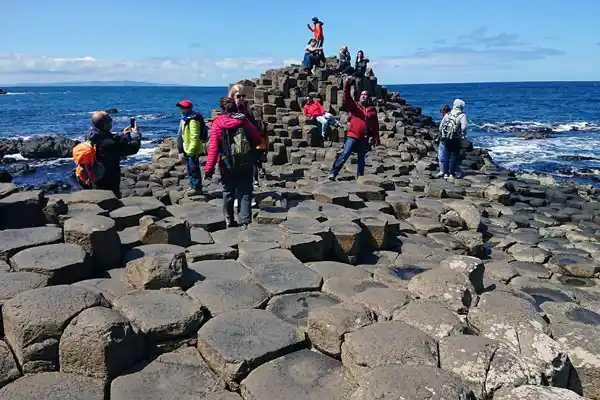
Private Giant's Causeway Tour
A full day on the Antrim coast with your own driver-guide, at your pace.
The Walk In, Two Thirds of a Mile Along the Cliff Top
The Carrick-a-Rede Rope Bridge walk is about two-thirds of a mile from the car park to the bridge, and this is the part people forget to plan for. The path runs along the clifftop with the sea on your right the whole way. Allow fifteen to twenty minutes in each direction at a normal pace, and longer if you stop, which you will.
The surface is good for the first third of a mile, then it steepens, with steps and uneven ground before you drop down to the bridge gate. Proper shoes, not sandals. There is no shelter anywhere along it, so whatever the weather is doing, it is doing it to you.
In late spring and summer the banks are full of wildflowers, including at least three different orchids, and the cliffs are loud with seabirds. Guillemots, razorbills, kittiwakes and fulmars all nest on the faces below the path. Basking sharks, dolphins and porpoises all pass along this coast, and the quiet stretch just past the quarry is where I have most often seen people spot them, because that is where they finally stop looking at their feet.

Good to know before you set off
Take a jacket, whatever the forecast says. The wind comes straight off the Atlantic, and it is always a few degrees colder at the bridge than it was at the car.
Allow an hour and a half for the whole thing. Twenty minutes out, time at the bridge and on the island, twenty minutes back. Your timed ticket is for the crossing, not for your arrival, so the walking time goes on top of it. People who turn up ten minutes before their slot end up running the last stretch, and it is not a path to run on.
If somebody in the group would rather not cross, that is no loss to their day. The viewpoint near the car park looks straight down on the bridge and the island; it costs nothing, and there is an accessible telescope there. The first third of a mile of path is suitable for wheelchairs.

Larrybane Quarry, White Chalk Cliffs and Renly Baratheon's Camp
The car park sits in an old chalk quarry called Larrybane, and most people walk straight through it without a glance. Give it a few minutes. The white cliffs here are the reason this coast looks the way it does, a band of soft chalk under harder black basalt, and the quarry cut straight into it so you can see the two layers stacked one on the other.
For a lot of people it is the reason they came in the first place. Larrybane is where Renly Baratheon pitched his camp in season two of Game of Thrones, the scene where Catelyn Stark and Petyr Baelish arrive at his tents. Once you know what you are looking at, the ground is unmistakable, and the National Trust has left an information sign at the spot.
If the filming locations are what brought you to this coast, Larrybane and Ballintoy Harbour sit ten minutes apart and both are free, which makes them an easy pairing on a day otherwise built around the bridge. We cover the rest of them on our Game of Thrones tour from Belfast, and there is a longer write up of every location in our Game of Thrones filming locations guide.

Visitor information
Opening times. Open access during car park hours, roughly 09:00 to 18:00.
Guide prices. No charge for the quarry and the viewpoint. You only pay if you are crossing the bridge, and the car park is included in that ticket.
Facilities. Toilets and the tea room are at the car park. Nothing beyond it.
Where it is. The Carrick-a-Rede car park, 119a Whitepark Road, Ballintoy, BT54 6LS. You walk into it from the car park, there is no separate entrance.
What is nearby. The rope bridge is about two thirds of a mile along the path. Ballintoy Harbour and White Park Bay are both a short drive west.
Sheep Island, Rathlin and the Birds on the Cliffs
Looking out from Larrybane you cannot miss Sheep Island, a flat topped lump of rock sitting on its own offshore. There is no access to it and no need for any. It is a seabird colony and the whole point of it is that nothing disturbs it. Bring binoculars if you have them, because it rewards them.
Further out is Rathlin, four and a half miles away and the only inhabited island off the Northern Ireland coast. Its West Lighthouse is visible from Carrick-a-Rede on a clear day, and in late spring and early summer the cliffs beneath it hold thousands of breeding puffins. It is the stretch of water worth lingering over if the weather has given you a clear day.


Ballintoy Harbour, Lordsport in the Iron Islands
While you are in the area, I would also suggest visiting Ballintoy Harbour. It costs nothing to visit and it gets busy through the summer, so go early or late in the day if you can.
Ballintoy Harbour is ten minutes west along the coast road. The road down to it is steep and narrow, and I will say plainly that it is not a road for a large vehicle. It is a small working harbour, with black basalt stacks standing out of the water on either side of it.
Game of Thrones used it as Lordsport, the harbour of Pyke in the Iron Islands, and it is where Theon Greyjoy is baptised into the faith of the Drowned God. The landscape did most of the work and very little was added, so it looks on the day much as it looks on screen, which is not true of every location on this coast.
Even setting the show aside, it is one of the better stops along here. There is a small cafe above the harbour in season, the rock pools are worth twenty minutes if you have children with you, and the walk west from the harbour joins the Causeway Coast Way.

Visitor information
Opening times. Open access, all year, no gate and no ticket.
Guide prices. Free.
Facilities. A small car park at the harbour and a seasonal cafe above it. Toilets are seasonal.
Where it is. Harbour Road, Ballintoy, County Antrim, BT54 6NA. The harbour road off the B15 is single track, very steep and has tight bends. Coaches cannot use it.
What is nearby. Carrick-a-Rede is a few minutes east, White Park Bay a few minutes west, and the Giant’s Causeway is on the same road going on toward Bushmills.
How to Get to the Carrick-a-Rede Rope Bridge from Belfast
The most common question I get about this place is how far it is. The drive from Belfast to the Carrick-a-Rede Rope Bridge takes about an hour and a quarter, out along the Causeway Coastal Route and in on the B15. From the Giant’s Causeway it is only about ten minutes, which is why the two of them belong on the same day.
The car park is 7 miles from Bushmills and 5 miles from Ballycastle, so if you are staying anywhere on the north coast you are close.
Coming without a car is possible. The Ulsterbus 252 runs a circular route from Belfast through the Glens of Antrim, service 402 serves the coast, and the Causeway Rambler runs in summer. There is also a train from Belfast to Coleraine with a bus connection. Worth knowing: if you arrive by bus or train, show your ticket at the desk and you get a discounted Green Ticket for the crossing.
If you are not driving, I would suggest the best way to visit is on a private tour. You are collected from your hotel or the ship, the bridge slot is booked for you in advance, and you are not tied to a bus timetable for the rest of the day. That is what our Giant’s Causeway tour from Belfast is built around.
Visitor information
Getting here. About an hour and a quarter from Belfast by car, ten minutes from the Giant’s Causeway, 7 miles from Bushmills and 5 miles from Ballycastle. Take the B15 coast road.
By bus or train. Ulsterbus 252 from Belfast through the Glens, service 402 along the coast, and the Causeway Rambler in summer. Belfast to Coleraine by train with a bus connection also works. Show a valid bus or train ticket for a discounted Green Ticket.
Parking. Included with your Carrick-a-Rede Rope Bridge tickets. The car park is at 119a Whitepark Road, Ballintoy, BT54 6LS.
When to Go, and What Happens When the Wind Closes the Bridge
The bridge shuts in high wind. Not occasionally, and not only in winter. The National Trust makes the call on the morning and posts it, and when the gusts are too strong to cross safely it stays shut until they drop.
This catches people out, and it is the single thing I most want visitors to know before they drive up. A ticket is not a guarantee of a crossing. If you are travelling any distance, check the National Trust page on the morning you go, not the night before.
Here is how it works on the ground. There are two of them running the bridge, one at each end, and they let people across in small numbers. On a windy day they are measuring the wind constantly, and once it gets up around 35 miles an hour the bridge is shut. That happens quickly. I have driven up here with a slot already booked and found it closed by the time we arrived, which is exactly why I keep saying to check on the morning.
If it is closed when you arrive, you have not wasted the trip. The walk, the quarry, the viewpoint and the whole stretch of coast are all still there, and you do not lose the money. The National Trust refunds the crossing automatically, straight back to the card you booked with, without you having to ask. I have been up here on days when the bridge was shut, and the clifftop in a gale was the best hour of the week.
For the crossing itself, the quiet times are the first slot of the morning and the last hour of the afternoon. The middle of the day in July and August is as busy as it gets, and a timed slot then still means waiting your turn at the gate.
Visiting Carrick-a-Rede on a Private Tour from Belfast
Carrick-a-Rede is better as part of a day along this coast than as a trip on its own. It is a short walk and half an hour at the bridge, and the same road carries the Giant’s Causeway, Dunluce Castle, Bushmills and the Dark Hedges within a short drive of each other.
On our full day Giant’s Causeway tour from Belfast we book the bridge slot in advance, drive you to the car park and wait while you walk out at your own pace. No coach timetable and nobody counting heads back onto a bus. If Game of Thrones is what brought you, the Game of Thrones tour takes in Larrybane and Ballintoy Harbour along with the rest of the locations.
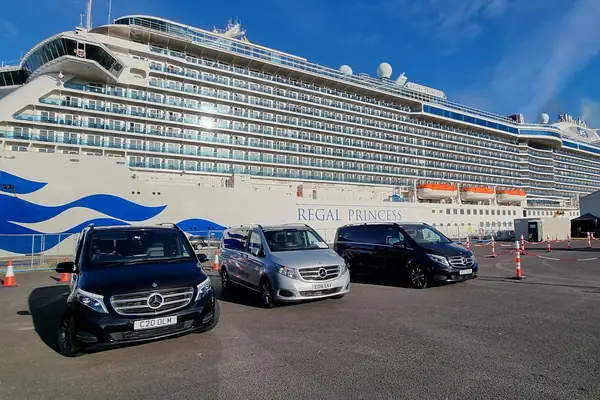
For cruise passengers, the bridge fits comfortably inside a normal Belfast call as part of a shore excursion, with the pre-booked slot and the walking time both built into the timing.
Frequently Asked Questions
Is the Carrick-a-Rede Rope Bridge safe?
Yes. The bridge is maintained and inspected by the National Trust, it has wire handrails on both sides, and the staff control how many people are on it at any one time. It is closed completely when the wind gets up. It feels exposed, because the drop underneath you is real, but the bridge itself is sound.
How do you pronounce Carrick-a-Rede?
Locally it is said carrick-a-reed. It comes from the Irish Carraig a’ Ráid.
What does Carrick-a-Rede mean?
It is usually translated as the rock in the road, the road being the route Atlantic salmon take along this coast to their rivers. Some sources give it instead as the rock of the casting, a reference to casting the nets. Either way the name comes from the fishery, not from the bridge.
How long is the Carrick-a-Rede Rope Bridge walk?
About two thirds of a mile each way from the car park to the bridge, so a mile and a third in all. Allow fifteen to twenty minutes in each direction at a steady pace. The first third of a mile is easy going, then it steepens with steps and uneven ground.
How long does a visit to Carrick-a-Rede take?
Allow an hour and a half for the whole thing. Twenty minutes out along the clifftop, time at the bridge and on the island, then twenty minutes back. Your timed ticket is for the crossing, not for your arrival, so the walking time goes on top of it.
What time does Carrick-a-Rede open and close?
The bridge is open daily, roughly 09:00 to 16:30, and the car park 09:00 to 18:00. The times shift with the season, so check the National Trust page the week you travel.
Is the Carrick-a-Rede Rope Bridge open today?
That depends on the wind. The National Trust makes the call on the morning and posts it on their page. Once the wind gets up around 35 miles an hour the bridge is shut until it drops. Check on the morning you travel, not the night before.
What happens if the bridge is closed when I get there?
The crossing is refunded automatically, straight back to the card you booked with, without you having to ask. The clifftop walk, the quarry and the viewpoints all stay open, so the trip is not wasted.
Do I need to book Carrick-a-Rede in advance?
Yes. Tickets are timed and booking ahead is essential, particularly from June to August when the slots sell out. National Trust members book a slot too, they just do not pay for it.
How much does it cost to walk the Carrick-a-Rede Rope Bridge?
Adult £16.00, child aged 5 to 17 £8.00, family of two adults and up to three children £40.00, single adult family £24.00. Under fives and National Trust members go free. Parking is included. The clifftop walk and the viewpoint over the bridge cost nothing, so you can see it without paying to cross.
How high is the Carrick-a-Rede Rope Bridge?
About a hundred feet above the rocks and the water below. The span across is roughly sixty six feet, and the crossing itself takes under a minute.
How far is Carrick-a-Rede from Belfast?
About an hour and a quarter by car, out along the Causeway Coastal Route and in on the B15. It is around ten minutes from the Giant’s Causeway, 7 miles from Bushmills and 5 miles from Ballycastle.
Is the Carrick-a-Rede Rope Bridge worth it?
For the setting, yes. The crossing itself lasts under a minute, so judged on the bridge alone it is expensive. Judged on the clifftop walk, the view back at the white chalk cliffs from the island and the seabirds, it earns the ticket.
Can children cross the Carrick-a-Rede Rope Bridge?
Yes, and child tickets start at age five. Under fives go free. The bridge has handrails on both sides and the crossing is short, but the drop is real, and a child who is nervous of heights will find it hard going.
Can I bring a dog to Carrick-a-Rede?
Dogs are welcome on leads along the coastal path, but they are not allowed on the bridge itself.

Belfast Tours NI is a local tour company for travellers who want a personal, relaxed way to explore Northern Ireland, offering private tours, tailored itineraries, and local insight to help you plan a memorable visit.
Written by Murat Yilmaz · Last updated:
Keep Exploring the Causeway Coast
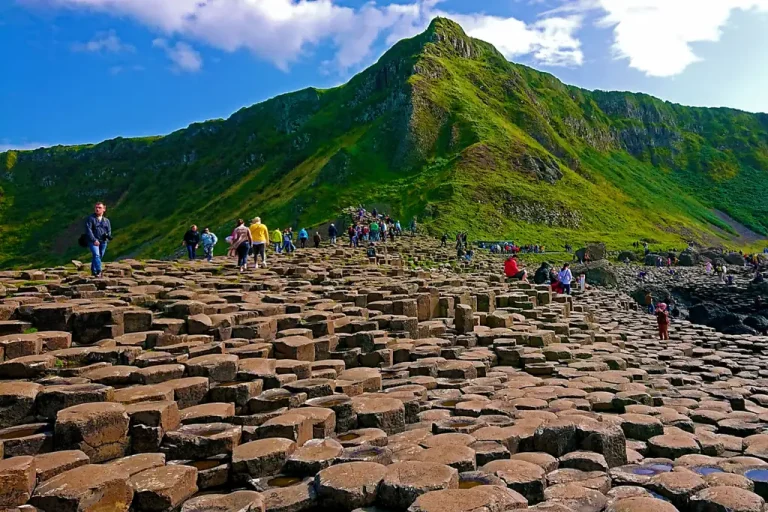
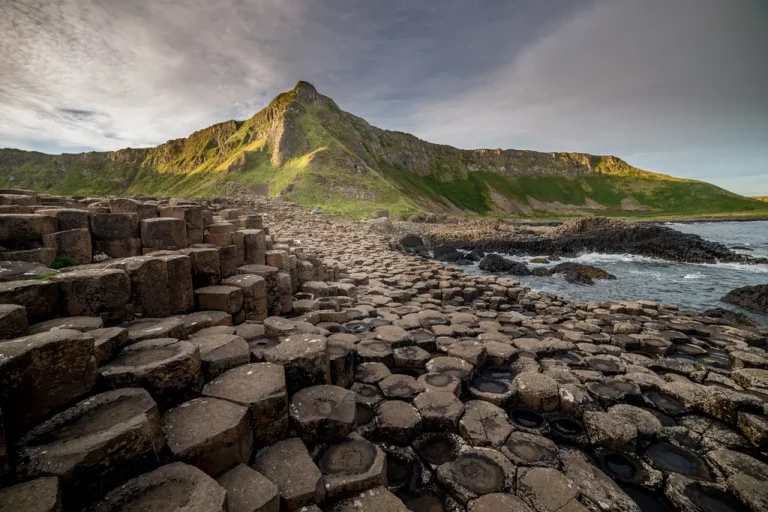
Walk the Giant’s Causeway Stones
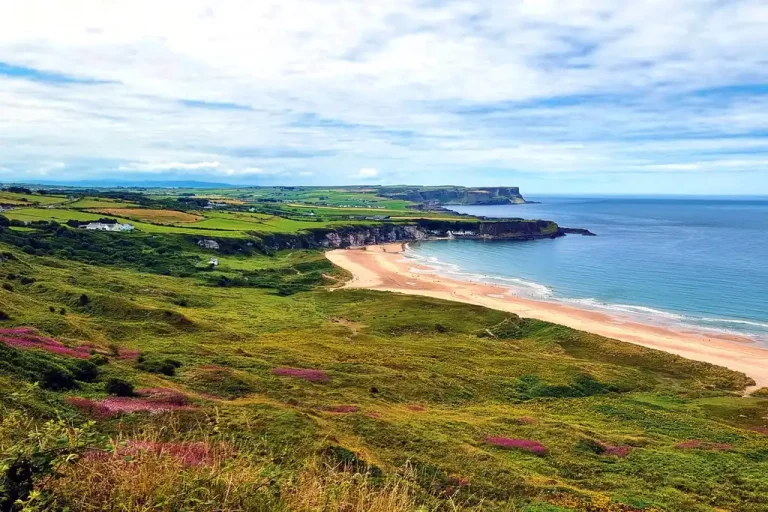
White Park Bay, the Quiet Causeway Beach
Let Ireland Inspire You
The Causeway Coast does not stop at the rope bridge. The same road carries the Giant’s Causeway, Dunluce Castle, Old Bushmills and the Dark Hedges, all within a short drive of Ballintoy, and the Causeway Coastal Route runs on well past them. These posts pick up where this one leaves off, whether you are planning a single day on the Antrim coast or a longer trip through Northern Ireland.

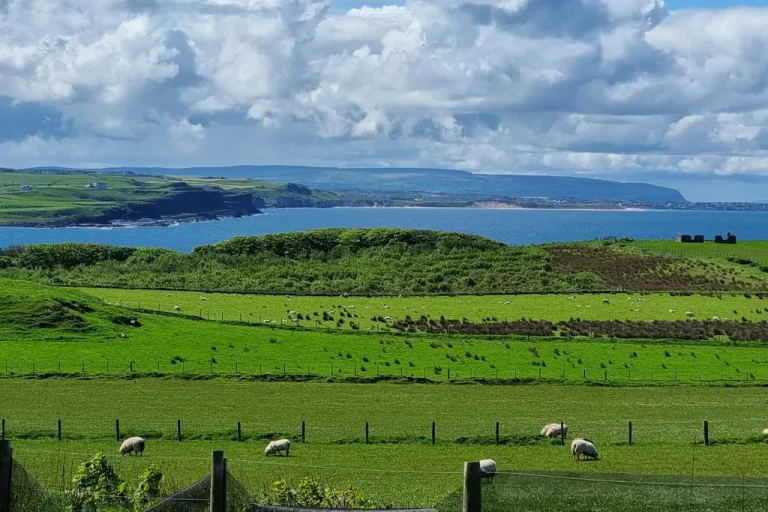
Private Tours in Belfast and Northern Ireland
Belfast Tours NI offers private, chauffeur-led tours and bespoke day trips throughout Northern Ireland and Ireland. From exploring Belfast’s historic streets to visiting the Giant’s Causeway or enjoying a relaxed shore excursion from Belfast Cruise Terminal, every journey is planned around you.
Our service combines comfort, local knowledge, and personal attention. Your chauffeur is not just a driver, but a local expert who adds depth to your experience with insight, stories, and carefully chosen routes that showcase the best of each destination.
We work closely with leading hotels and accommodation partners to ensure a seamless, high-quality experience from start to finish. Attention to detail, punctuality, and discretion are central to every tour we provide.
As a trusted private tour provider in Belfast, we design personalised itineraries based on your interests, whether that means coastal scenery, historic castles, cultural landmarks, or iconic filming locations. Whether visiting for leisure or arriving by cruise ship, Belfast Tours NI offers a refined, stress-free way to experience Ireland at its best.
Giants Causeway Tour
A full day at the Giant’s Causeway from Belfast, travelling the Causeway Coastal Route with your own local driver-guide and time for photos at every stop.

Game of Thrones Tour
Visit the real Game of Thrones filming locations across Northern Ireland, including the Dark Hedges and Ballintoy Harbour, on a fully private tour.
Belfast Shore Excursions
Private shore excursions from Belfast Cruise Terminal, planned around your ship’s schedule with a guaranteed return before departure.
Planning a private tour of Northern Ireland? ➔ Get in touch to discuss your ideas.
Connect with Us
We are at Carrick-a-Rede most weeks of the year, and we post what we see. When the bridge is open or closed for wind, how busy the car park is, and the views along the cliff path.
If you are planning a trip and want to ask something, a message on any of the channels below is the quickest way to reach us. We are happy to answer questions about the rope bridge, tickets, the Causeway Coast or anything else you are trying to fit into your days here, whether or not you end up booking a tour with us.
Follow along for new photographs, short videos from the road, and a note when opening times or prices change at the places people ask about most.