

Dunseverick Castle, the Free Clifftop Ruin on the Causeway Coast
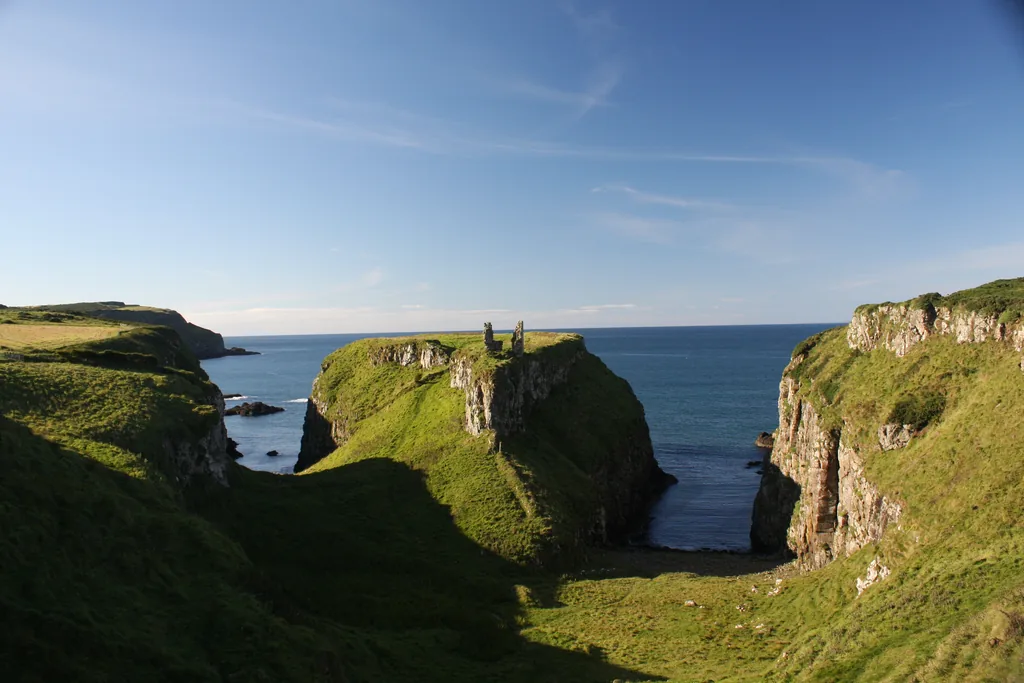
Pull into the small car park on the coast road east of the Giant’s Causeway, walk out onto the grass and you are on a headland that people have fortified for around 1,500 years. Dunseverick Castle is the ruin on the basalt stack in front of you, a single broken tower and a set of low earthworks with the sea on three sides. It sits under three miles east of the Causeway, it costs nothing to visit, and there is no ticket office or queue.
The headland was first fortified, the National Trust records, by a chieftain called Sobhairce from around the fifth century AD. It was later held by the Dál Riata, attacked by Vikings, fought over by the O’Cahans and the MacDonnells, and finally destroyed in the wars of the 1640s and 1650s. Tradition also says one of the great royal roads of ancient Ireland ended here, running all the way from Tara.
The catch is that there is not much left standing, so come for the setting and the story rather than for battlements. There are no toilets at the castle car park, the cliffs are steep and unfenced, and the weather on this headland can turn quickly. The good news is that the facilities you need are under a mile away at Dunseverick Harbour.
I am on the Causeway Coast most weeks of the year, and Dunseverick is one of the places I would never skip. Below I cover the history of the castle, what you can see today, Dunseverick Harbour, the Dunseverick Castle walk along the North Antrim Cliff Path to the Giant’s Causeway, how to stay safe on the clifftop, and what else is close by.
Table of Contents
ToggleDunseverick Castle, a Headland Fort Older Than Dunluce
Dunluce Castle gets most of the attention on this coast, yet the fortress at Dunseverick is far older and the coast road runs right past it. The ruin stands on a stack of basalt joined to the mainland, with steep to almost vertical sides dropping into the sea, and you walk to it across a grassy field from the car park.
The land and the peninsula were given to the National Trust in 1962 by a local farmer, Jack McCurdy, and the Trust has looked after them ever since. The remains are a Scheduled Historic Monument, protected by the Department for Communities. That means you are free to walk round the site, but you must not climb on or disturb the stonework. The National Trust’s Dunseverick Castle page has more on its history and archaeology.
Why Dunseverick Castle is worth the stop
On a coast where the famous sites now need tickets and timed arrivals, Dunseverick is one of the few places you can simply pull in and walk up to. There is no gate, no visitor centre and no ticket office. A quick visit to the headland takes fifteen to thirty minutes, and the views west along the cliffs towards the Causeway headlands are some of the best on the coast.
It is also the eastern end of the North Antrim Cliff Path, so it works as a start or finish point for a walk to the Giant’s Causeway. If you have seen Dunluce Castle and wondered what else this coast has to show, Dunseverick is a good answer. It is quieter, and it is far older.
Toilets and safety at Dunseverick Castle
There are no toilets at the castle car park, so use the ones at Dunseverick Harbour or at the Giant’s Causeway. The car park and picnic area are suitable for most visitors, but the ground beyond is rough grass on a clifftop. Keep well back from the edges, especially with children and in wind.
Visitor information
Opening times. Open access, with no gate and no published opening hours. Visit in daylight, as there is no lighting on the headland.
Guide prices. Free. There is no ticket, and parking in the National Trust car park is free.
Booking. No booking needed. The National Trust’s guided Clifftop Experience walk, which starts here, must be booked in advance.
Facilities. Free car park with picnic tables and a bus stop. No toilets. The nearest toilets are at Dunseverick Harbour, open 24 hours with disabled access.
Where it is. Causeway Road (B147), Dunseverick, near Bushmills, County Antrim, BT57 8SY. The site is under three miles east of the Giant’s Causeway on the coast road. From Belfast it is a little over 60 miles by the M2 and A26, so allow around an hour and a half. The year round 172 bus and the summer 402 Causeway Rambler stop at Dunseverick Castle.
What is nearby. Dunseverick Harbour, the Giant’s Causeway, White Park Bay and the Carrick-a-Rede Rope Bridge.
Dunseverick Castle History, From a Royal Road to a Ruin
The story of Dunseverick starts long before anything you can see today. The Irish Annals call the site Dun Sobhairce, the fort of Sobhairce, after the chieftain who is said to have first fortified it from around the fifth century AD, and possibly earlier. The council’s Causeway Coast Way guide describes it as reputed to stand at the end of one of the five great roads that ran out from Tara, the seat of the High Kings of Ireland.
Tradition also says Saint Patrick visited Dunseverick and baptised a local man called Olcán, who went on to become a bishop. The National Trust treats this as tradition rather than record, and so should we. An oval patch of wet ground in the north of the site is thought to be a holy well and is known as St Patrick’s Well.
The Dál Riata and the Viking raids on Dunseverick
From around the seventh century the fort was held by the Dál Riata, a Gaelic kingdom whose lands stretched across the sea from north Antrim to the west of Scotland. Some accounts also link the site to Fergus Mór mac Eirc, a king of Dál Riata. Looking out from the headland, you can see why the sea was a road for these people rather than a barrier, because Scotland is close on a clear day.
Dunseverick did not escape the Vikings. The Irish Annals record two raids, in 871 and again in 924. The fort survived both and remained an important place for centuries afterwards.
The Earls of Ulster, the O’Cahans and the MacDonnells
Between about 1250 and 1350 it was a centre of the Earls of Ulster. From 1560 it became a stronghold of the O’Cahans and later of the MacDonnells, the family most people know from Dunluce. In 1642 a Scottish army under General Robert Munro destroyed the castle, and in the 1650s Cromwellian troops captured and destroyed it again.
After that it was never refortified and never lived in again, which is why so little stands today. When you walk across the headland, you are walking over more than a thousand years of use worn down to its outline.
What You See at Dunseverick Castle Today
Set your expectations before you arrive. Dunseverick is not a great shell of walls and windows like Dunluce. What survives is one small ruined masonry tower and a set of low earthworks, and the drama comes from where it sits rather than what is left.
The ruined tower at Dunseverick Castle
The obvious ruin is a small residential tower on the southern edge of the stack. In 1978 the rock face below it collapsed into the sea and took part of the tower with it, and the remains were later repaired and stabilised. A fence now keeps visitors back from it, so please respect it. The rock here is still falling away slowly.
The earthworks on the Dunseverick headland
Around and on top of the stack are low earthworks. There is a wide bank with an outer ditch across the approach, and the National Trust records at least three rectangular enclosures on the southern summit that probably mark the sites of buildings. The stack is reached through a natural break in its south western side, while every other side is steep to almost vertical. These features are subtle, so walk slowly and look at the shape of the ground.
Excavations and research at Dunseverick
The site has never been fully excavated. The main dig so far was in a cave on the western inlet in 2007 and 2008, which found a medieval rubble wall near the cave mouth. It also turned up medieval pottery and animal bones, including souterrain ware that was probably made on site.
Research is still going on. Queen’s University Belfast and the University of Aberdeen have been studying the site as part of a Leverhulme funded project, using LiDAR and geophysical surveys. It is quite possible that the story of Dunseverick will grow over the next few years.
Where to photograph Dunseverick Castle
The classic photograph is from the field on the landward side, looking out at the tower with the sea behind it. In the evening the light comes in low from the west and catches the stone. On a clear day you can also see along the coast to the Causeway headlands from the cliff path just west of the car park.
Dunseverick Harbour, Toilets and a Quiet Quay Below the Village
A lot of people confuse Dunseverick Castle with Dunseverick Harbour, but they are two different stops. The harbour sits under a mile east of the castle, below the small village of Dunseverick, and it is reached from the same coast road. It is a tiny harbour owned by Causeway Coast and Glens Borough Council, with a slipway and an eastern quay.
Public toilets at Dunseverick Harbour
For anyone planning a day on this part of the coast, the most useful thing about Dunseverick Harbour is its public toilets. They are open 24 hours, all year, and include a disabled toilet with a RADAR lock. On a stretch of coast where facilities are thin, that is worth remembering, because there are no toilets at the castle or at White Park Bay.
The harbour is also a pleasant place to stop for a picnic or a stretch before the next drive. If you go down onto the rocks, the weed is slippery, so watch your footing and keep an eye on the sea.
Walking east from Dunseverick Harbour
Dunseverick Harbour is on section five of the Causeway Coast Way, which runs 4.8 miles from Dunseverick Castle to Ballintoy Harbour. Heading east from here, the path leads on towards Portbradden and White Park Bay. This section depends on the tide, and the National Trust warns of rockfall between White Park Bay and Portbradden, so the crossing along the beach should only be made at low tide.
The trail notices for the Causeway Coast Way have also reported improvement works on a run of steps near the harbour, with diversions signed on the ground. Check the latest notices before you set out, and follow any diversion signs you meet. The way west from the harbour to the castle and on to the Causeway is the North Antrim Cliff Path, covered below.
Visitor information
Opening times. Open access. The public toilets are open 24 hours, all year.
Guide prices. Free.
Booking. No booking needed.
Facilities. Car park and public toilets, including a disabled toilet with a RADAR lock. No café or shop.
Where it is. 204 Causeway Road, Dunseverick, County Antrim, BT57 8SY, below Dunseverick village and under a mile east of Dunseverick Castle on the coast road. The 172 and 402 buses stop at Dunseverick Road nearby.
What is nearby. Dunseverick Castle, Portbradden, White Park Bay and Ballintoy Harbour.
The Dunseverick Castle Walk to the Giant’s Causeway on the North Antrim Cliff Path
This is the reason many walkers come to Dunseverick at all. The castle is the eastern end of the North Antrim Cliff Path, which follows section four of the Causeway Coast Way about 4.5 miles west to the Giant’s Causeway. It is graded strenuous, on grassy cliff edge paths with stiles, and I think it is the finest stretch of the whole Causeway Coast.
What you pass on the walk to the Giant’s Causeway
The path runs past Port Moon, once the site of a salmon fishery, and over a run of named headlands including Benbane Head and Weir’s Snout. Hamilton’s Seat is the highest point on the entire Causeway Coast Way, at around 330 feet. Further on, the path looks down on Port na Spaniagh, where the Armada ship Girona was wrecked in 1588, before you reach the Causeway.
At the end you can stay on the cliff top to the visitor centre, or go down the Shepherd’s Steps, all 162 of them, to the stones. Keep your eyes open for birds on the way, because peregrine falcons and fulmars both use these cliffs. Allow a good half day for the walk with stops.
Which way to walk the North Antrim Cliff Path
You can walk it in either direction. On the Dunseverick Castle to Giant’s Causeway walk, starting at Dunseverick and walking west has one big advantage, because you finish at the Giant’s Causeway, where there are toilets, a café and the bus. The 172 runs all year and the 402 Causeway Rambler runs in summer, and both stop at Dunseverick Castle, so you can leave a car at one end and ride back. For a full day, the path carries on from the Causeway along section three to Portballintrae, 2.7 miles of dunes and cliff top that end at the free car park in the village.
The National Trust guided Clifftop Experience
If you would rather not walk it alone, the National Trust runs a guided Clifftop Experience. You meet at the Giant’s Causeway visitor centre by 10.45am, take the Rambler bus out to Dunseverick at 11am and walk five miles back to the stones. It takes about three and a half hours, with around two and a half hours of walking. Groups are capped at 16, children must be 12 or over, and booking ahead is essential. The National Trust lists it at £55 per person, including entry to the visitor experience and the bus, so check the latest dates and price when you book.
Clifftop Safety at Dunseverick, Cliffs, Weather and Livestock
Dunseverick looks gentle from the car park, but it is a clifftop site, and the cliff path beyond it is serious walking. The National Trust is direct about the hazards on this stretch: unfenced cliff edges, high winds, steep steps and rock falls. A few simple habits make all the difference.
Staying safe on the Dunseverick headland
The stack has steep to almost vertical sides, and the tower sits above a rock face that has already collapsed once. Keep to the obvious approach, stay behind the fence and keep well back from the edges. Children should be held close, and in strong wind it is best to admire the headland from the field rather than walk out onto it.
Staying safe on the North Antrim Cliff Path
The path climbs to cliff edges of up to 400 feet, with steep slopes and stiles, so a reasonable level of fitness is needed. Wear proper walking boots with a good grip, because the grass is slippery when wet. Bring waterproofs and a warm layer even in summer, along with water, as there is nowhere to buy anything until you reach the Causeway.
Check the forecast before you set out, and turn back if the wind gets up or the cloud comes down. There is no shame in walking a short way out from Dunseverick and coming back. The views are good from the very first headland.
Dogs and livestock on the cliff path
The path crosses a National Trust organic farm with grazing cattle, so dogs must be kept on a lead throughout. Close every gate behind you and give the cattle plenty of room, especially if there are calves.
Getting help in an emergency on the cliffs
If someone is in difficulty on the cliffs or in the sea, call 999 and ask for the Coastguard. Tell someone your plans before you set out, especially if you are walking alone or late in the day.
How to Get to Dunseverick Castle by Car, Bus or on Foot
Dunseverick Castle is on the coast road between the Giant’s Causeway and Ballintoy, under three miles east of the Causeway. It is part of the Causeway Coastal Route, so if you are driving the coast you will pass it whether you plan to or not. The National Trust car park is right beside the road, with the castle a short walk away across the field.
Getting to Dunseverick Castle by car
From Belfast, the quickest way is the M2 and A26 north towards Ballymena and Ballymoney, then on to Bushmills and the coast. It is a little over 60 miles, and I would allow around an hour and a half. If you have more time, the Antrim Coast Road through the Glens to Ballycastle is the slower and far more scenic route, and it brings you to Dunseverick from the east.
The National Trust car park is free and needs no booking, unlike the main car park at the Giant’s Causeway. Take care pulling out onto the coast road, especially in summer. If you are walking the cliff path, this is also the obvious place to leave a car.
Getting to Dunseverick Castle by bus
Ulsterbus service 172 runs all year between Coleraine and Ballycastle and stops at Dunseverick Castle. In the summer months the 402 Causeway Rambler covers the same stretch of coast. Both also stop at the Giant’s Causeway, Portbradden, White Park Bay and Ballintoy, which makes linear walks easy. Check the Translink timetable for the current times, as services are less frequent outside summer.
Getting to Dunseverick Castle on foot
Walkers usually reach Dunseverick along the Causeway Coast Way, either from the Giant’s Causeway on the North Antrim Cliff Path or from Ballintoy and White Park Bay to the east. Both routes are signed with waymarkers. Remember the tide on the eastern route, because the boulders at White Park Bay can be impassable at high water.
For anyone not driving, a private tour is the easiest way to reach Dunseverick and the rest of this coast in one day.
What Is Near Dunseverick Castle on the Causeway Coast
Dunseverick sits between the Giant’s Causeway and Carrick-a-Rede, which makes it an easy addition to almost any day. Within a short drive in either direction you have a World Heritage Site, a rope bridge, a harbour from Game of Thrones and one of the finest beaches in Northern Ireland.
West from Dunseverick to the Giant’s Causeway
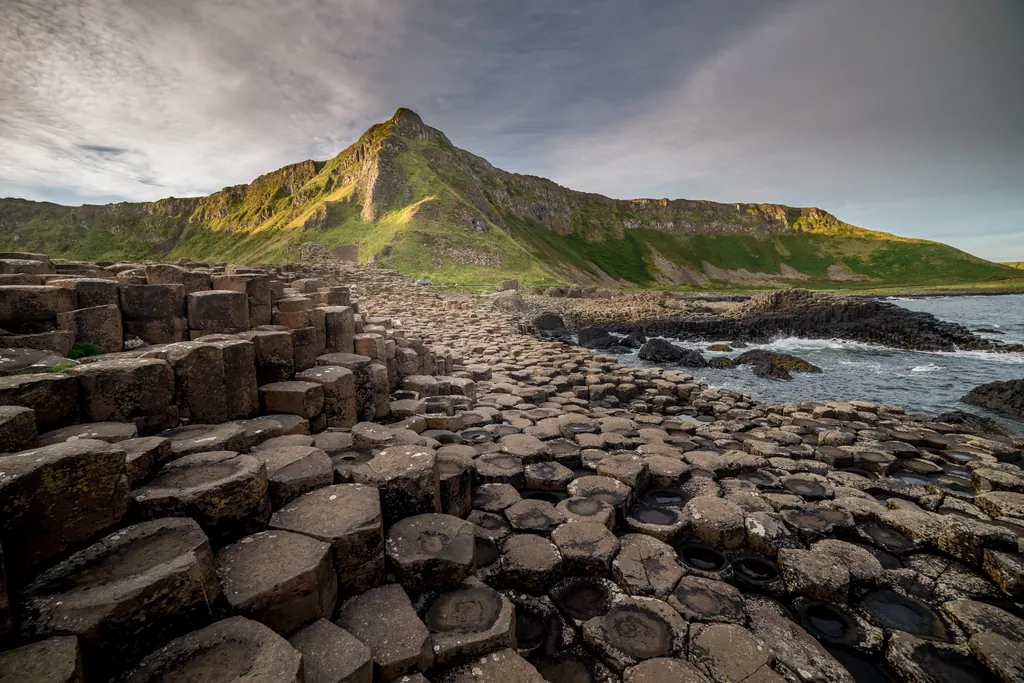
The Giant’s Causeway is under three miles west by road, with its 40,000 or so basalt columns formed around 60 million years ago. Beyond it are Bushmills, home of the Old Bushmills Distillery, and the cliff top ruins of Dunluce Castle. If you visit the Causeway early in the day, Dunseverick makes a calm stop afterwards when the crowds are at their peak.
East from Dunseverick to White Park Bay and Ballintoy
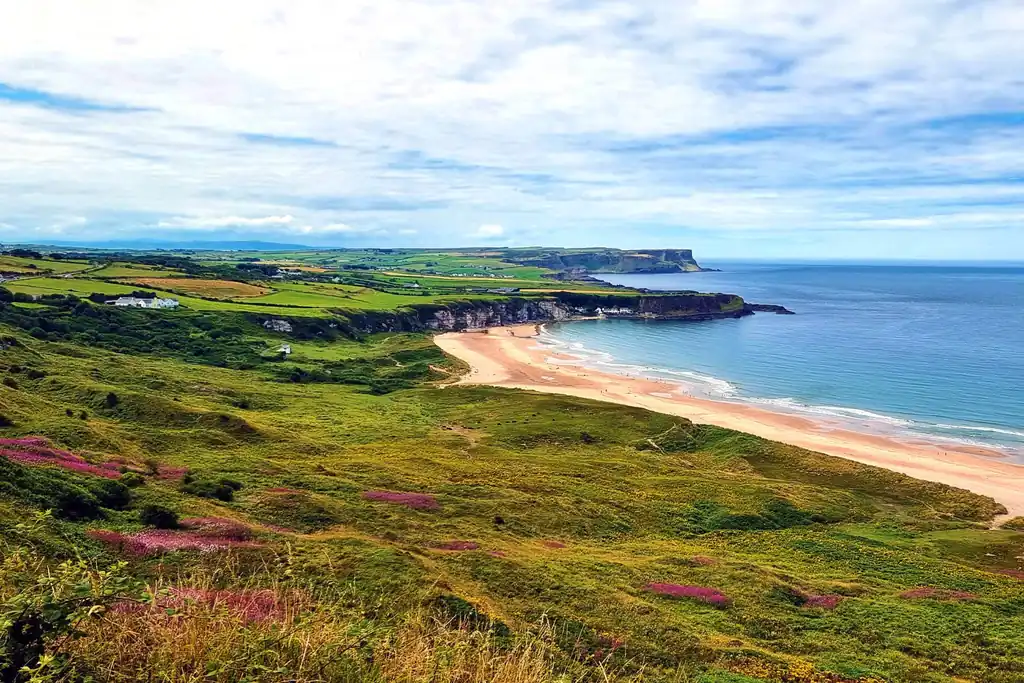
A couple of miles east is White Park Bay, a long arc of white sand between two headlands, with the hamlet of Portbradden tucked under the cliffs at its western end. Further on is Ballintoy, where the little harbour at the bottom of a steep lane was used as a filming location for Game of Thrones. You can read about it in my guide to Game of Thrones filming locations.
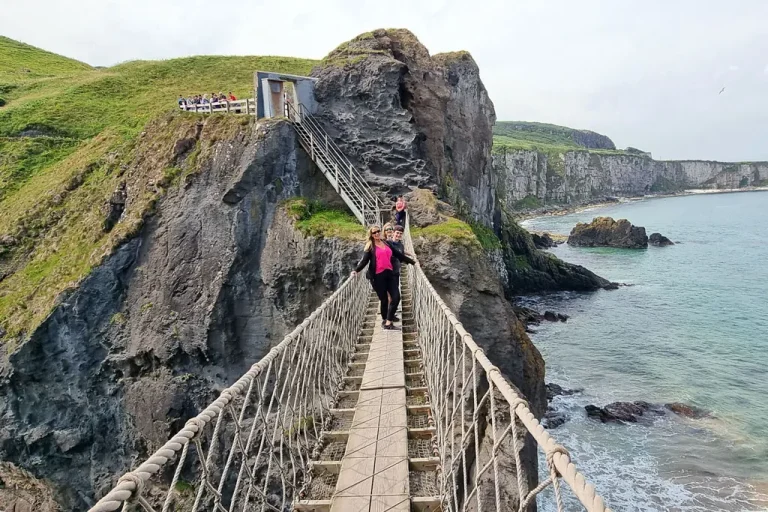
Just past Ballintoy village is the Carrick-a-Rede Rope Bridge, which needs a timed ticket. Dunseverick works well as a stop before or after it, because you can arrive at any time without booking.
Planning a day around Dunseverick Castle
If you have a single day on this coast, I would suggest the Giant’s Causeway first, Dunseverick and White Park Bay in the middle, and Carrick-a-Rede and Ballintoy in the afternoon. If you are a walker, give the cliff path its own morning and save the driving for later. Either way, Dunseverick is a place to slow down, take in the view and let the history do the rest.
Dunseverick Castle FAQ
Where is Dunseverick Castle?
Dunseverick Castle is on the Causeway Coast in County Antrim, Northern Ireland, under three miles east of the Giant’s Causeway. It stands on a headland beside the coast road between Bushmills and Ballintoy.
How old is Dunseverick Castle?
The headland has been fortified for around 1,500 years. The National Trust records that a chieftain called Sobhairce first fortified it from around the fifth century AD, possibly earlier, and the ruined tower you see today is much later.
What is the history of Dunseverick Castle?
It was held by the Dál Riata from around the seventh century, raided by Vikings in 871 and 924, and later held by the Earls of Ulster, the O’Cahans and the MacDonnells. It was destroyed in 1642 by a Scottish army under General Robert Munro and again by Cromwellian troops in the 1650s, and it was never reoccupied.
Does it cost anything to visit Dunseverick Castle?
No. There is no ticket office and no admission charge, and the National Trust car park at the castle is free. The only paid option is the National Trust’s guided Clifftop Experience walk, which starts here.
What are the opening hours of Dunseverick Castle?
There are no published opening hours, because the site is open access with no gate. It is best visited in daylight, as the headland has no lighting and steep cliff edges.
Is there a car park at Dunseverick Castle?
Yes. The National Trust has a free car park beside the castle, with picnic tables and a bus stop, but there are no toilets there. The nearest toilets are at Dunseverick Harbour, under a mile east.
Are there toilets at Dunseverick Harbour?
Yes. The public toilets at Dunseverick Harbour, 204 Causeway Road, BT57 8SY, are open 24 hours all year and include a disabled toilet with a RADAR lock.
How long is the walk from Dunseverick Castle to the Giant’s Causeway?
The North Antrim Cliff Path from Dunseverick Castle to the Giant’s Causeway is about 4.5 miles. It is graded strenuous, with grassy cliff edge paths and stiles, so allow a good half day with stops.
Is there a bus from the Giant’s Causeway to Dunseverick Castle?
Yes. Ulsterbus service 172 runs all year between Coleraine and Ballycastle and stops at both, and the 402 Causeway Rambler covers the same route in summer. Check the Translink timetable before you travel.
Is Hamilton’s Seat on the walk from Dunseverick Castle?
Yes. Hamilton’s Seat is on the North Antrim Cliff Path between Dunseverick and the Giant’s Causeway, and at around 330 feet it is the highest point on the Causeway Coast Way.
Can you walk from Dunseverick Castle to Ballintoy Harbour?
Yes. Section five of the Causeway Coast Way runs 4.8 miles from Dunseverick Castle to Ballintoy Harbour by way of White Park Bay. Check the tide before you go, because the boulders at White Park Bay can be impassable at high tide.
Can you walk from Dunseverick to Portbradden?
Yes, Portbradden is on the Causeway Coast Way east of Dunseverick Harbour. The National Trust warns of rockfall between Portbradden and White Park Bay, so check the tide and the latest trail notices before you set out.
How far is Dunseverick Castle from Dunluce Castle?
Dunluce Castle is about 5.5 miles west of Dunseverick, past the Giant’s Causeway and Bushmills. It is a short drive along the coast road.
Are there tours of Dunseverick Castle?
There are no tours of the castle itself, as it is an open ruin with no visitor centre. The National Trust runs a guided Clifftop Experience walk that starts at Dunseverick Castle and finishes at the Giant’s Causeway, and it must be booked in advance.

Belfast Tours NI is a local tour company for travellers who want a personal, relaxed way to explore Northern Ireland, offering private tours, tailored itineraries, and local insight to help you plan a memorable visit.
Written by Murat Yilmaz · Last updated:
Keep Exploring the Causeway Coast
White Park Bay, the Quiet Causeway Beach
Cross the Carrick-a-Rede Rope Bridge
Private Tours in Belfast and Northern Ireland
Dunseverick Castle is an easy stop to add to a private day on the Causeway Coast with one of our local guides. Because there is no ticket and no timed entry, we can fit it in wherever the day has room, whether that is a quiet half hour on the headland or dropping you off for the cliff path and meeting you at the Giant’s Causeway. Our Giant’s Causeway tour from Belfast is the natural home for it.
We pick you up from your hotel in Belfast, from Belfast airport or from Belfast Cruise Terminal. If you are based in Dublin, the drive north is a chauffeur service, and the guided part of your day takes place in Northern Ireland.
Up to 7 passengers travel in a Mercedes-Benz V-Class, 8 in a Ford Tourneo Custom, and parties of 9 or more in two V-Class vehicles travelling together. The day is yours alone, so you choose how long to stay at each place and which stops to add.
Let us know your dates, your numbers and what you would most like to see, and we will build the day around you.

Game of Thrones Tour
Visit the real Game of Thrones filming locations across Northern Ireland, including the Dark Hedges and Ballintoy Harbour, on a fully private tour.
Giants Causeway Tour
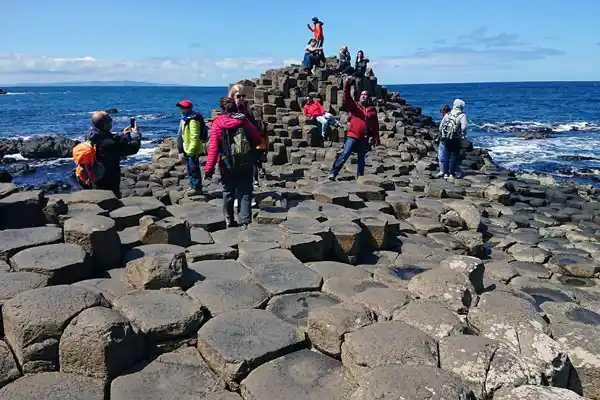
A full day at the Giant’s Causeway from Belfast, travelling the Causeway Coastal Route with your own local driver-guide and time for photos at every stop.
Giant’s Causeway Half Day Tour
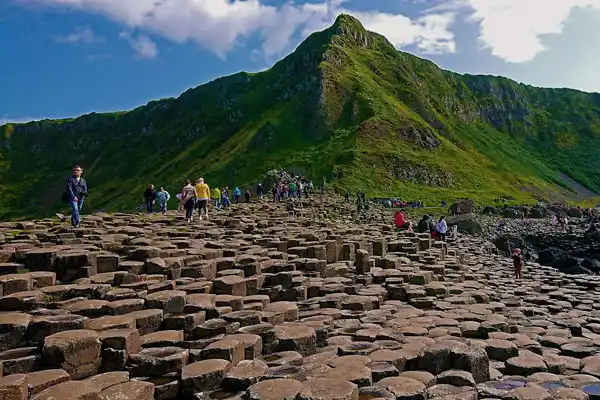
Short on time? A private half-day run to the Giant’s Causeway and the Antrim Coast, ideal if your day in Belfast is already busy.
Planning a private tour of Northern Ireland? ➔ Get in touch to discuss your ideas.
Connect with Us
Our social channels follow the Causeway Coast through the seasons, from the ruin at Dunseverick in evening light to wild days on the cliff path. If you like history and coastline, there is plenty there to help you plan.
A message on any of the channels below is the quickest way to ask us anything about Dunseverick or the coast around it. We are glad to help whether or not you book with us.