
Things to do in Derry
Derry Travel Guide: Top Things to do in Derry Unique and Fun Things to do in Derry-Londonderry, Ireland Written by Murat Yilmaz Last updated: September 22, 2026 The Walled City offers a

Written by Murat Yilmaz · Last updated:
Almost every Game of Thrones filming location that people travel for is in Northern Ireland, and most of them are within two hours of Belfast. The Wall was built in a quarry outside Larne. Winterfell is a farmyard in County Down. The Kingsroad is a lane between two fields in County Antrim.
We have been driving people to these places for nine years, so this guide is written the way we would talk you through the day: what was filmed where, what is actually standing there now, what it costs, and whether you can walk up to it or only look from the road. Some of these are free and open all year. Two of them are private land where you go no further than the path.
This is where to see the best Game of Thrones locations in Northern Ireland, listed in the order you would meet them on a drive, starting north out of Belfast on the Causeway Coastal Route, turning inland, and finishing in County Down. If you are landing off a ship, our Belfast shore excursions reach several of them inside a port day. Twenty three locations, and you could not do them all in one day.
The Game of Thrones Northern Ireland story did not begin with the scenery. Northern Ireland Screen funded the pilot and got the production into the Paint Hall at Titanic Studios in Belfast, a building with the ceiling height the sets needed, and when the show outgrew it they helped build more stages.
The rest was practical. A skilled local crew, an hour from London, and landscapes that already looked like the Westeros in the scripts. One HBO executive put it simply, saying the vistas of Northern Ireland fulfilled that production wish.
It paid its way. Between season one and season eight, a conservative estimate puts spending on production goods and services in Northern Ireland at close to £206 million. That is why so many of the people you meet on the coast have a story about the crew being in their village. It also left the country with a tourism industry, and a list of must visit attractions in Northern Ireland that now includes a fair few farmyards.
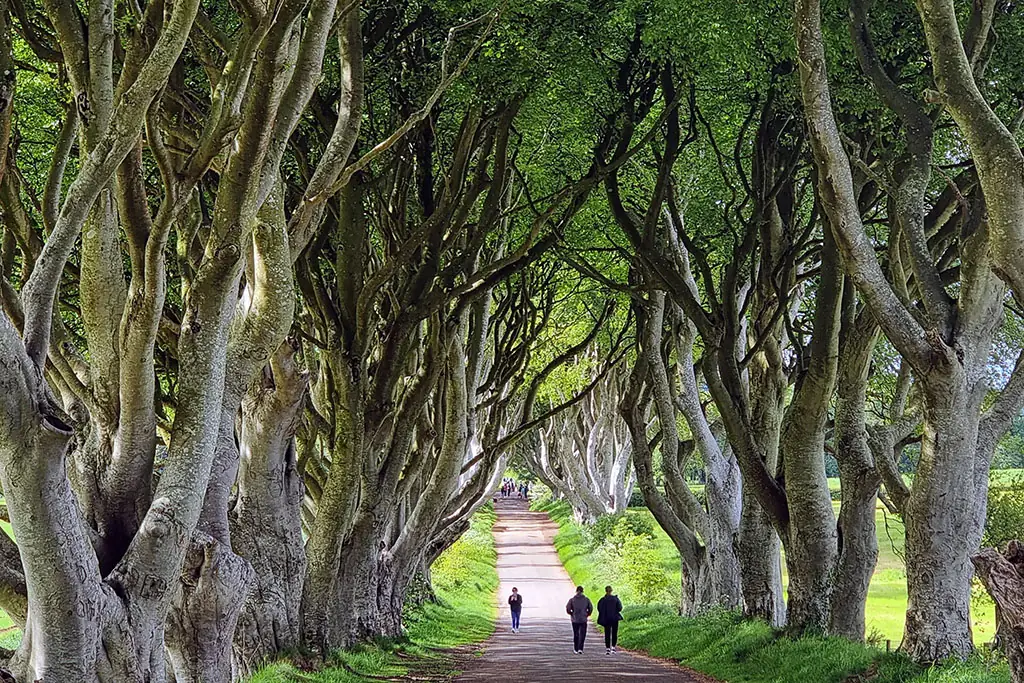
If you have seen one image of Game of Thrones in Northern Ireland, it is this one. Two rows of beech trees leaning across a country lane, branches knitted together overhead into a tunnel that closes out the sky.
The Stuart family planted them in the 18th century along the approach to their Georgian house, Gracehill, and the intention was theatrical from the start. They wanted visitors arriving for dinner to be impressed before they ever reached the door. Two hundred and fifty years later the trees have grown into something the family could not have imagined, and storms have taken several of them, including the beeches that were carved into the ten Game of Thrones doors.
On screen it is the Kingsroad. In season two, episode one, Arya Stark escapes King’s Landing in the back of a cart, hair cut short and dressed as a boy, riding north with Yoren and the new recruits for the Night’s Watch. The scene is barely a minute long and it made this lane one of the most photographed places in Ireland.
The avenue is free and it is closed to traffic, which people are always surprised by. You park at The Hedges Hotel and walk the short distance. Go first thing or in the evening if you want the tunnel without twenty other people in the frame, and be careful in high wind, because these are old trees and branches do come down. Our full guide to the Dark Hedges covers the history and the best time to go.
Opening times. Open access all year. There are no gates and no closing time.
Guide prices. Free to walk, and free to park in the lay-by at the Ballykenver Road end. The Hedges Estate car park at the other end says charges may apply and publishes no amount.
Facilities. Nothing at the lay-by but bins. Car and coach parking and toilets at The Hedges Estate, with the Hedges Hotel on the same site.
Where it is. Bregagh Road, Stranocum, County Antrim, BT53 8PX. Bregagh Road itself has been closed to vehicles since 2017, so you park at one end and walk the avenue. We use the gravel lay-by at the top end, on the left where Bregagh Road meets Ballykenver Road, and have done for nine years. Put Bregagh Road, Ballymoney, BT53 8TT into the sat nav, or the coordinates 55.132279, -6.377616. It puts you in at the quieter end of the avenue. The other option is The Hedges Estate car park at 139A Ballinlea Road, Ballymoney, BT53 8PX, a two minute walk from the trees.
What is nearby. Ballintoy Harbour, Carrick-a-Rede and Larrybane, Dunluce Castle and Bushmills, all within half an hour.
Castle Ward is worth the drive before you get anywhere near Game of Thrones. It is one of the strangest houses in Ireland, built in the 1760s with one half in Classical style and the other half Gothic, because Lord and Lady Bangor could not agree on a design and simply did both. You can walk from one century of taste into another by crossing a hallway.
The estate runs to 820 acres and drops down to the shore of Strangford Lough.
The part fans come for is Old Castle Ward, the stone farmyard at the bottom of the estate, which was the Winterfell set in season one. This is where King Robert and the royal party arrive in season one, episode one to make Ned his Hand, the courtyard where the Stark children shot at the archery butts, and the ground used for the Whispering Wood and the battle at Baelor. The farmyard is real and it was there long before the production arrived, which is why it looks like a place rather than a set.
The National Trust runs the estate and charges admission. Between the house, the gardens, the woodland trails and the lough shore you can spend half a day here without thinking about Westeros at all. There is also a separate operation at Old Castle Ward that puts you in costume and gives you a bow, with the estate’s own direwolf dogs on hand. That is booked directly with them, not the Trust, and it is usually the thing people remember from the County Down day.

Opening times. Seasonal. Grounds 10:00 to 17:00 and gardens 10:00 to 16:00. In autumn the house is guided tours only on Monday, Wednesday, Thursday and Friday 12:00 to 16:00, and self guided at weekends 11:00 to 16:00. The house closes from November to March. Check the National Trust page before you travel.
Guide prices. Adult £15.00, child 5 to 17 £7.50, family of two adults and up to three children £37.50. Under fives free. Off peak rates are lower. Free for National Trust members.
Facilities. Car park, toilets including an accessible toilet, and the Stableyard tea room.
Where it is. Strangford, Downpatrick, County Down, BT30 7BA. Use that postcode and follow the signs for Castle Ward. The estate cannot be reached by the Audleystown road.
What is nearby. Audley’s Castle on the same estate, Strangford village and the Portaferry ferry, and Inch Abbey at Downpatrick.
A single track lane drops steeply from Ballintoy village, turns through a series of tight bends, and puts you at a small stone harbour that photographers have been coming to for generations. Limestone cliffs behind, black basalt stacks out in the water, and rock formations along the shore you can pick your way around at low tide.
It is Lordsport Harbour on the Iron Islands. Theon Greyjoy comes home to Pyke here in season two, episode two, and is baptised in the water in episode three. Euron’s drowning and rebirth was shot here in season six, episode five, and Melisandre burned Stannis Baratheon’s bannerman on the beach alongside.
What surprises people is how small it is. The harbour is a working one, tiny, with a handful of boats, and the scale on screen was helped considerably by the camera. Standing on the slip you understand how much of Westeros was built out of ordinary places filmed well.
Ballintoy sits between the Carrick-a-Rede Rope Bridge and the Giant’s Causeway, so it costs almost nothing to add. It is free. There is a seasonal café at the harbour and parking is limited, which matters because the lane down is too narrow for two vehicles to pass comfortably in several places. If you are driving something large, think twice in the middle of August.

Opening times. Open all year round. There is a gate at the entrance to the car park and no closing time is published for it, so do not count on getting in very early or very late.
Guide prices. Free, and the council car park is free too, with 46 spaces.
Facilities. Toilets and a cafe beside the car park.
Where it is. Harbour Road, Ballintoy, County Antrim, BT54 6NA. The harbour is reached by a steep winding road down from the village.
What is nearby. Larrybane and Carrick-a-Rede two minutes west, White Park Bay, and the Dark Hedges twenty minutes inland.
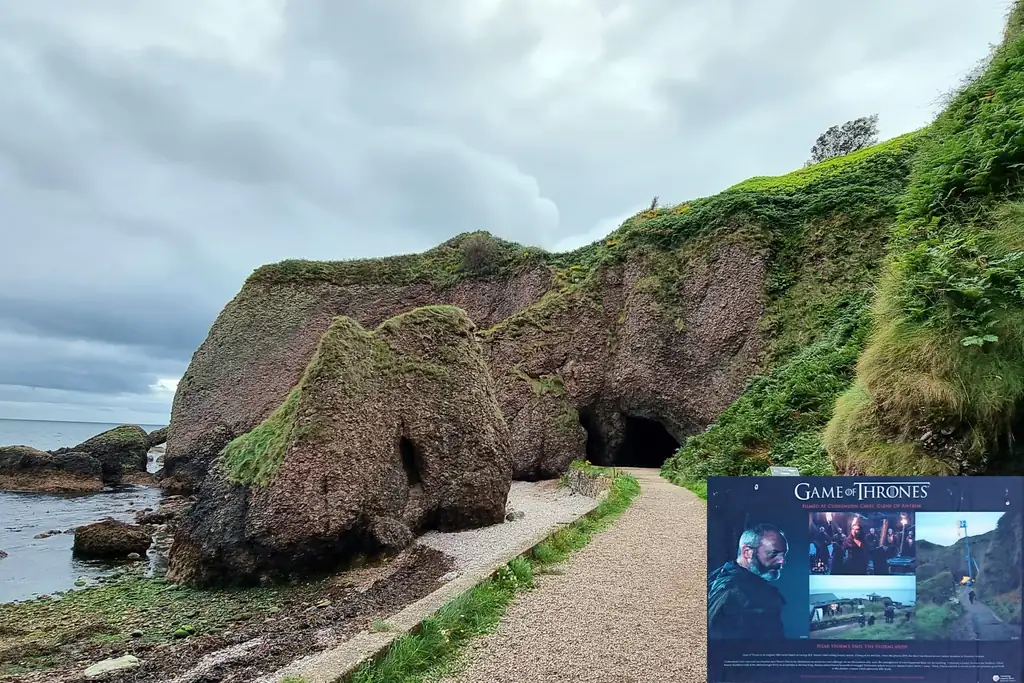
At the southern end of Cushendun beach, a short walk past the village, the cliffs open into a series of caves worn out of red conglomerate rock over roughly 400 million years. Water and weather cut them, and the colour of the stone gives them a strange warmth that photographs badly and looks extraordinary in person.
This is the cove where Melisandre gave birth to the shadow creature in season two, the scene that convinced a lot of viewers the show was not going to play safe. Stand inside and look back out through the mouth of the cave and the framing is identical.
The caves are free and open at any hour. They are genuinely a two minute walk from the village, which makes this one of the least demanding locations on the list.
Cushendun itself earns the stop on its own. It is a National Trust conservation village, built in a Cornish style by the architect Clough Williams-Ellis, and it looks like nowhere else in Ireland. There are tearooms, a beach, and on a clear day you can see Scotland. It is one of the stops on our Causeway Coastal Route guide.
Opening times. Dawn to dusk, all year.
Guide prices. Free, and both car parks are free.
Facilities. No toilets. The Corner House tea room is beside the car park and Mary McBride’s is in the village. Parking space is limited.
Where it is. Cushendun, County Antrim, BT44 0PH. Free car parks beside the Corner House tea room and at Glenmona House.
What is nearby. Carnlough Harbour and Glenarm south along the coast, Glenariff Forest Park, and the Torr Head road north.
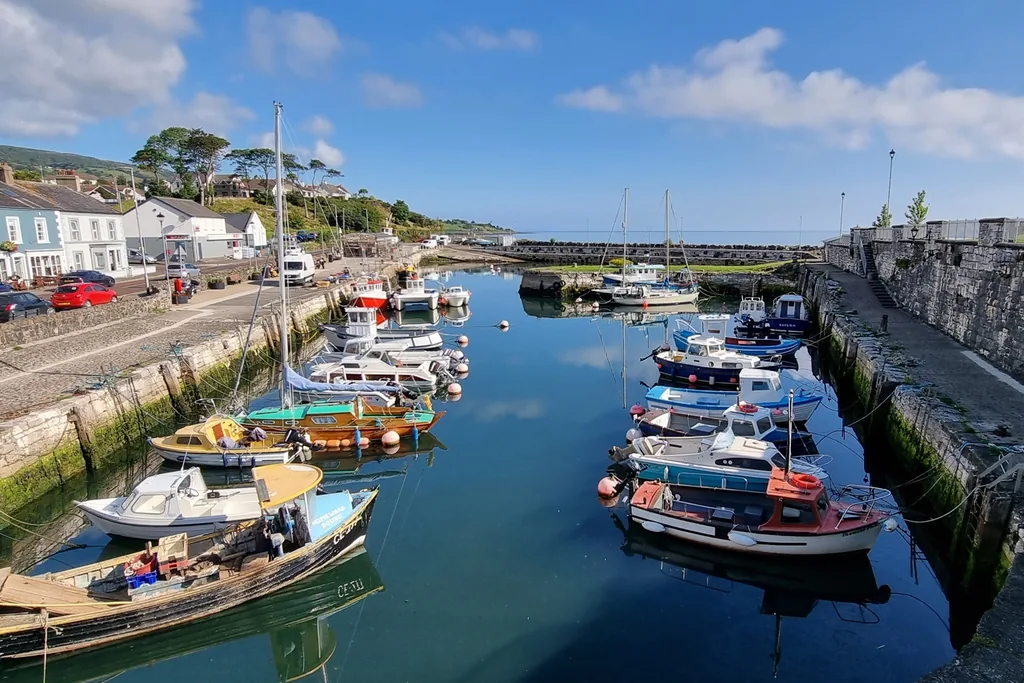
The worn stone steps on the quay at Carnlough are where Arya Stark dragged herself out of the water after the Waif stabbed her in the canals of Braavos, at the end of season six, episode seven.
The harbour has been there since 1854. It was not built for boats like the ones tied up in it now, but to ship limestone from the quarries above the village to the iron furnaces of Scotland. The Londonderry family commissioned it, and limestone came down to the quay on a three quarter mile inclined railway that was clever enough to run itself, the loaded wagons hauling the empty ones back up on a steel cable.
Two stone bridges that carried that railway still cross the main street of the village.
There is free parking at the harbour and there are toilets, which makes Carnlough one of the most practical stops on the entire coast. There is also a memorial to Paddy, a racing pigeon from the village who flew with the RAF and won the Dickin Medal.
We wrote a full guide to Carnlough Harbour with the history, the Cranny Falls walk above the village and where the good coffee is.
Opening times. Open access all year for pedestrians. There is no visitor berthing for boats.
Guide prices. Free. No admission charge, no ticket office and no booking.
Facilities. Toilets and parking at the harbour. Cafes, shops and the hotel are a short walk up into the village.
Where it is. Harbour Road, Carnlough, County Antrim, BT44 0EU. On the Antrim Coast Road, 27 miles from Belfast. Driving time from Belfast is 40 minutes to an hour depending on traffic and which route you take.
What is nearby. Cranny Falls, a 2.7 mile return walk from the village. Glenarm to the south, Cushendun and Glenariff to the north.
A long flat beach under a headland on the north coast, with Mussenden Temple standing on the cliff above it. This is Dragonstone. In season two, episode one, Melisandre burns the effigies of the Seven Gods of Westeros on this sand and tells Stannis the night is dark and full of terrors.
The National Trust puts it plainly: Mussenden Temple gave the crew the perfect view down onto Downhill Beach, which became Dragonstone in season two.
The temple itself has nothing to do with the show and is the better story. Frederick Hervey, the Earl Bishop of Derry, had it built in 1785 as a library, modelled on temples in Italy, and set it on the cliff edge deliberately. Erosion has since been halted by underpinning, but for years it looked like it might go over.
You can walk onto the beach for nothing and cars are allowed on the sand at the Benone end. The temple and Downhill Demesne are National Trust and charge admission. Our guide to Mussenden Temple covers the estate properly.

Opening times. Grounds dawn to dusk. Facilities at Lion’s Gate 10:00 to 16:00. Mussenden Temple has seasonal closures, so check before you travel.
Guide prices. Parking is £10 per vehicle for the day at Lion’s Gate, paid at the machine or through the JustPark app. Free for National Trust members and Blue Badge holders. There is no separate admission charge for the grounds.
Facilities. Accessible toilet and Al’s Coffee Bar at Lion’s Gate.
Where it is. Mussenden Road, Castlerock, County Londonderry, BT51 4RP. One mile west of Castlerock and five miles west of Coleraine on the A2 coast road.
What is nearby. Park once and everything is on foot: Mussenden Temple on the clifftop, the ruins of Downhill House, the Bishop’s Gate and the Lion’s Gate, and the walled garden with its apple trees. Benone Strand is next along, and Portstewart Strand is twenty minutes east.
Murlough Bay takes commitment. A steep single track road drops off the headland between Fair Head and Torr Head in a series of hairpins, and there is nowhere to turn if you change your mind. What waits at the bottom is one of the most unspoilt corners of the whole Antrim coast: wildflower meadows, scattered woodland running down to the shore, and views across to Rathlin and the Scottish coast.
The National Trust looks after it. On screen it is the Iron Islands, and it is where Theon meets his sister Yara in season three. Slaver’s Bay scenes were shot along the same shore.
There is no ticket, no facilities and no phone signal worth relying on. That is the appeal. Of everywhere on this list, Murlough Bay is the one where you are most likely to have the place to yourself.
Drive it slowly. In wet weather the road is genuinely demanding, and it is not the place to discover your hire car has poor brakes.

Opening times. Open access. No gates and no closing time.
Guide prices. Free.
Facilities. None. The nearest toilets, cafes and shops are in Ballycastle, five miles away.
Where it is. Signed off the Torr Road east of Ballycastle, County Antrim. The National Trust car park list gives BT54 6RG. No official source describes the road down to the lower bay. Travel guides call it narrow, steep and winding with blind bends, so the clifftop car park is the safer stop in anything bigger than a car.
What is nearby. Fair Head on the same headland, Torr Head, Ballycastle and Rathlin Island.
Larrybane is a disused chalk quarry on the headland beside the Carrick-a-Rede car park, and the white of the stone against the sea is unlike anything else on this coast. It was worked for lime until the 1970s, and what is left is a wide open bowl with the cliffs falling away to Rathlin Island beyond.
It became Renly Baratheon’s camp in the Stormlands in season two, episode three, where Brienne of Tarth beat Ser Loras in single combat and was named to Renly’s Kingsguard. The Kingsmoot was staged here too, in season six, episode five. The Stormlands tents stood on the flat ground you park on.
This is the easiest location on the list to combine with something else, because it shares a site with the Carrick-a-Rede Rope Bridge. You can walk out to the quarry viewpoint without buying a bridge ticket at all, which is worth knowing if the bridge is sold out or the wind has closed it.

Opening times. Seasonal. Car park 09:00 to 18:00, rope bridge 09:00 to 16:30, coastline dawn to dusk.
Guide prices. Crossing the rope bridge is adult £16.00, child 5 to 17 £8.00, family of two adults and up to three children £40.00, and the ticket includes the car park. Pre booking is essential for everyone, members included. You can drive in and park without a bridge ticket.
Facilities. Toilets open during car park hours, and the Weighbridge Tea Room.
Where it is. 119a Whitepark Road, Ballintoy, County Antrim, BT54 6LS. On the B15, seven miles east of Bushmills and five miles west of Ballycastle.
What is nearby. Ballintoy Harbour two minutes east, White Park Bay, and the Giant’s Causeway fifteen minutes west.
See the coastal locations in one day, privately guided from Belfast.
Fair Head is a wall of dolerite standing 600 feet straight out of the sea east of Ballycastle, and it is the largest rock climbing crag in Ireland. From the top you look across to Rathlin Island, and on a clear day the Scottish coast sits on the horizon as though you could reach it.
In the later seasons it is the clifftop of Dragonstone, where Jon Snow and Daenerys walked and argued.
Getting there is on foot across private farmland on marked paths from the car park at Coolanlough. It is not a long walk but it is rough underfoot, and there is no fence at the cliff edge. None. In wind it is a place to keep well back from and to keep children close.
There is no charge and no facilities. Good boots, and go on a clear day, because in low cloud you will see nothing at all.
Opening times. Open access. No gates and no closing time.
Guide prices. Free. WalkNI lists a farm car park at the end of Fairhead Road at £3 per vehicle.
Facilities. None. The nearest toilets and cafes are in Ballycastle, five miles away.
Where it is. Fairhead Road, Ballycastle, County Antrim, BT54 6RD, reached from the A2 by the Torr Road. The route crosses working farmland with livestock, the cliff edges are unfenced and dogs are not allowed.
What is nearby. Murlough Bay below the headland, Torr Head, Ballycastle and Rathlin Island.
Tollymore has the distinction of being where the whole thing started. The opening scene of season one, episode one, where the rangers Waymar, Will and Gared find the wildling bodies beyond the Wall and meet the White Walkers, was filmed in these woods. Later in the same episode the Starks find the direwolf pups here.
It was Northern Ireland’s first state forest park and it sits at the foot of the Mourne Mountains, which gives it a backdrop most forests would envy. The Shimna River runs through it under a series of old stone bridges, there are gothic follies and gate arches scattered through the grounds, and a stand of giant redwoods that feel wrong and wonderful in County Down.
Trails run from flat riverside walks of half an hour to longer climbs with mountain views. There is a car park charge. If forest walks are your thing, Glenariff Forest Park up on the Antrim side is the other one worth the detour. Facilities are good, there is a café, and it handles families better than almost anywhere else on this list.

Opening times. Open all year, with short closures in severe winter weather. The park is open every day of the year, from 10am until sunset.
Guide prices. Parking is paid on entry: car £5.00, minibus £13.00, coach £35.00, motorcycle £2.50 for the day. An annual car permit is £40.00.
Facilities. Toilets with wheelchair access, and showers and washing facilities. No cafe in the park. Newcastle is about five minutes away.
Where it is. Bryansford Road, Newcastle, County Down, BT33 0LE.
What is nearby. Newcastle seafront, the Mourne Mountains, and Castlewellan Forest Park.
Cistercian abbey ruins on the bank of the River Quoile, founded around 1180 by the Norman knight John de Courcy with monks brought over from Furness in England. De Courcy built it as penance, the story goes, for destroying another abbey nearby.
What is left is roofless and quiet and set in flat green ground with the water beside it, and across the river Down Cathedral sits up on its hill.
This is the Riverlands camp where Robb Stark was proclaimed King in the North, swords raised, the scene people quote back at you on tour. Catelyn Stark’s scenes with the northern lords were shot in the same ruins.
It is free, it is open, and it is ten minutes from Downpatrick. It takes twenty minutes to see and it is one of the loveliest places on the County Down route, show or no show.

Opening times. Open access all year. Public access is sometimes restricted for works, so check before you travel.
Guide prices. Free. Children under 16 must be with an adult.
Facilities. On site car park. No toilets or cafe are listed. Downpatrick is a few minutes away.
Where it is. Inch Abbey Road, Downpatrick, County Down, BT30 9AX. A path runs from the car park to the ruins.
What is nearby. Down Cathedral and Downpatrick, Castle Ward and Audley’s Castle at Strangford.
This is the only official Game of Thrones Studio Tour in the world, and it is not a museum of replicas. It sits at Linen Mill Studios in Banbridge, which is where a great deal of the series was actually filmed, so you are walking through the building it was made in.
Inside are original sets across 110,000 square feet, including the Throne Room with the Iron Throne itself. Real costumes, real props, the weapons, the armour, and behind the scenes exhibits showing how the effects were done. For anyone who wants to understand how the thing was built rather than just where it was pointed, this is the stop.
Allow two hours as a minimum and book ahead, because it does sell out. Book through the official Studio Tour site. It is open daily from 10am to 6pm at Ballievey Road, Banbridge, BT32 3RX, about 30 minutes from Belfast and 90 minutes from Dublin.
Tickets are priced inside their booking calendar only.
Opening times. Open daily, with the site listing 10:00 to 18:00. Hours vary seasonally, so check the booking calendar.
Guide prices. No price is published anywhere on their site, so check the booking calendar before you travel. They are only shown inside the booking calendar and are not published on the site. The House Passes are published: Stark Pass £56.50, Targaryen Pass £55, Tyrell Pass £62, Lannister Pass £62, and the Hand of the King or Queen Pass £80.
Facilities. Free on site parking including accessible spaces, toilets, the Lobby Cafe and a restaurant.
Where it is. Linen Mill Studios, Ballievey Road, Banbridge, County Down, BT32 3RX.
What is nearby. Inch Abbey and Downpatrick, Tollymore Forest Park and the Mournes, all under an hour.
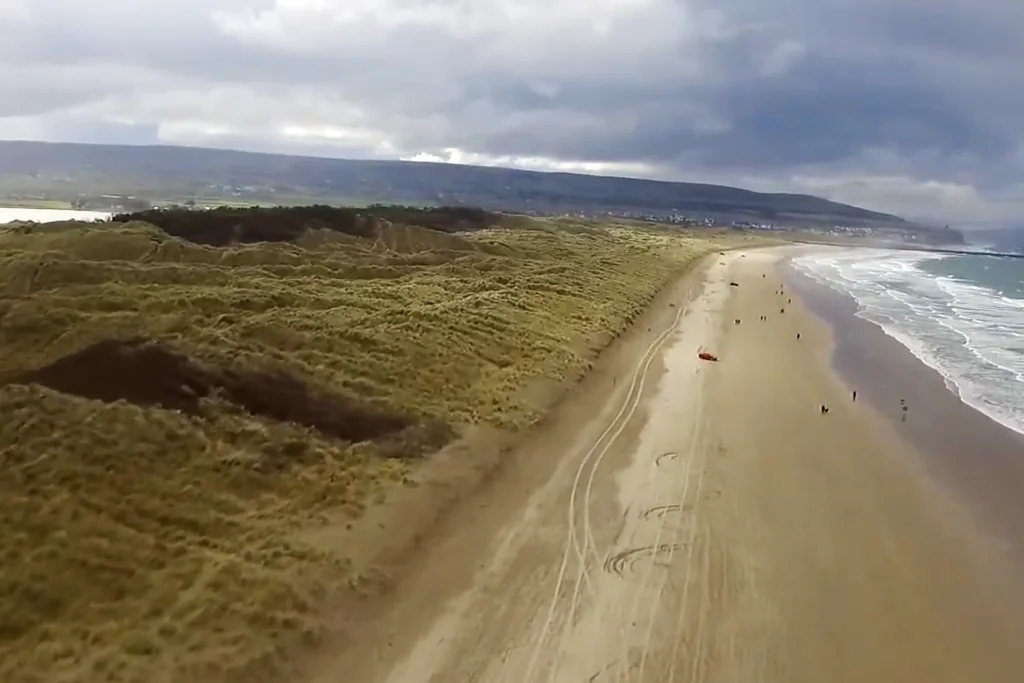
Two miles of golden Blue Flag sand on the Causeway Coast, backed by one of the finest dune systems in Northern Ireland, and one of very few beaches in the country where you can drive your car straight onto the sand and park facing the sea.
The National Trust describes it exactly: the dune covered beach made the perfect stand in for the Dornish coastline, where Jaime and Bronn came ashore.
The dunes behind the beach are a protected habitat with a marked trail through them, and they are the reason the location worked, because nothing about the skyline says Ireland once you are down among them.
It is twenty minutes from Derry at the far end of the coast road. There is a visitor facility and a café at the entrance. A vehicle charge applies unless you are a National Trust member, and walking on costs nothing.
Opening times. Beach dawn to dusk. Car park 10:00 to 17:00 and toilets 11:00 to 16:00. Times can change with the weather.
Guide prices. £8.50 per car, contactless card only. Free for National Trust members and Blue Badge holders. Cars drive onto the sand and must be off the beach by the time shown at the entrance.
Facilities. Toilets, including a Changing Places facility with a hoist and an adult sized changing bench. Harry’s Shack sits on the strand itself, although it is not run by the National Trust.
Where it is. 118 Strand Road, Portstewart, County Londonderry, BT55 7PG. A few minutes from the centre of Portstewart, and about an hour and a quarter from Belfast.
What is nearby. Portrush and Royal Portrush, Downhill Strand and Mussenden Temple, and the Giant’s Causeway.
Slemish is the plug of an extinct volcano standing alone out of flat farmland near Broughshane, and the valley spread out beneath it became the grasslands of the Dothraki Sea in season one. This is where Daenerys rode out with Khal Drogo’s khalasar in the early episodes, before any of it had gone the way it went.
The valley is open countryside, seen from the quiet roads that ring the mountain, and there is a car park at the foot of Slemish for anyone who wants to climb it. It is a short climb but a steep and rocky one.
Slemish carries a much older story. Saint Patrick is said to have worked here as a slave boy tending sheep, and people still walk up on Saint Patrick’s Day. It is a rare spot that satisfies two completely different pilgrimages.
Opening times. Open all year. No gate hours are published.
Guide prices. Free, and the car park is free too.
Facilities. Free car park with 40 spaces, interpretation boards, a picnic area and toilets including an accessible toilet. No cafe.
Where it is. Slemish car park, 7 Carnstroan Lane, Broughshane, County Antrim, BT42 4PF. Reached by minor country lanes, about fifteen minutes from Broughshane. The summit path is a steep rocky track.
What is nearby. Broughshane, Glenarm and the Antrim Coast Road, and Carnlough.
A 15th century tower house standing on a rocky rise above the narrows of Strangford Lough, built by the Audley family to watch the water. It is small, square, and beautifully placed, and it sits inside the Castle Ward estate.
On screen it appeared as The Twins, and the ground around it was Robb Stark’s camp. If you have walked the Winterfell farmyard already, this is the second half of the same story, a ten minute drive away.
A short walk from the car park brings you to it, with the lough spread out towards Portaferry below. It is free and it is in State Care, so it is open ground rather than a ticketed attraction.
Go up to it in the evening if you can. The light off the lough at that hour is the reason the location scouts stopped here.

Opening times. The tower house interior is published as Sundays 10:00 to 16:00, last admission 15:45, closed Monday to Saturday. Worth a phone call before you go. The field and the outside of the castle are open with the Castle Ward estate.
Guide prices. Free.
Facilities. None at the castle itself. Toilets and the tea room are at Castle Ward.
Where it is. Audleystown Road, Portloughan, Strangford, County Down, BT30 7LP. Approach through Castle Ward from the A25 out of Downpatrick. The estate cannot be reached by the Audleystown road.
What is nearby. Castle Ward, Strangford village and the Portaferry ferry, and Inch Abbey.
Above the Coast Road at Cairncastle the land climbs and then opens into Sallagh Braes, a vast natural amphitheatre of basalt cliffs curving round a green bowl. It is one of the most dramatic inland landscapes in County Antrim and most people driving the coast below never know it is up there.
This countryside stood in for the lands around Winterfell. It was near here that Ned Stark beheaded the Night’s Watch deserter in the very first episode, the scene that told the audience what kind of world this was going to be.
It is open countryside. No ticket, no visitor centre, no signs pointing at it. You look at it from the viewpoints along the Ulster Way and the local roads, and the walking here is genuinely good if you have the time and the footwear.
Opening times. Open access. No booking and no published hours.
Guide prices. Free. Linford car park is free.
Facilities. None. No toilets and no cafe. There are Game of Thrones interpretation panels in the car park.
Where it is. Linford car park, Feystown Road, Ballygally, County Antrim, BT40 2LZ. From Ballygally take the Cairncastle Road, right onto Drumnagreagh Road, left onto Ballycoose Road, then two miles on Feystown Road. The walk starts over a stile at the south end of the car park and crosses grazed farmland, so dogs are not allowed at all.
What is nearby. Ballygally and the Antrim Coast Road, Glenarm, and Carnlough.
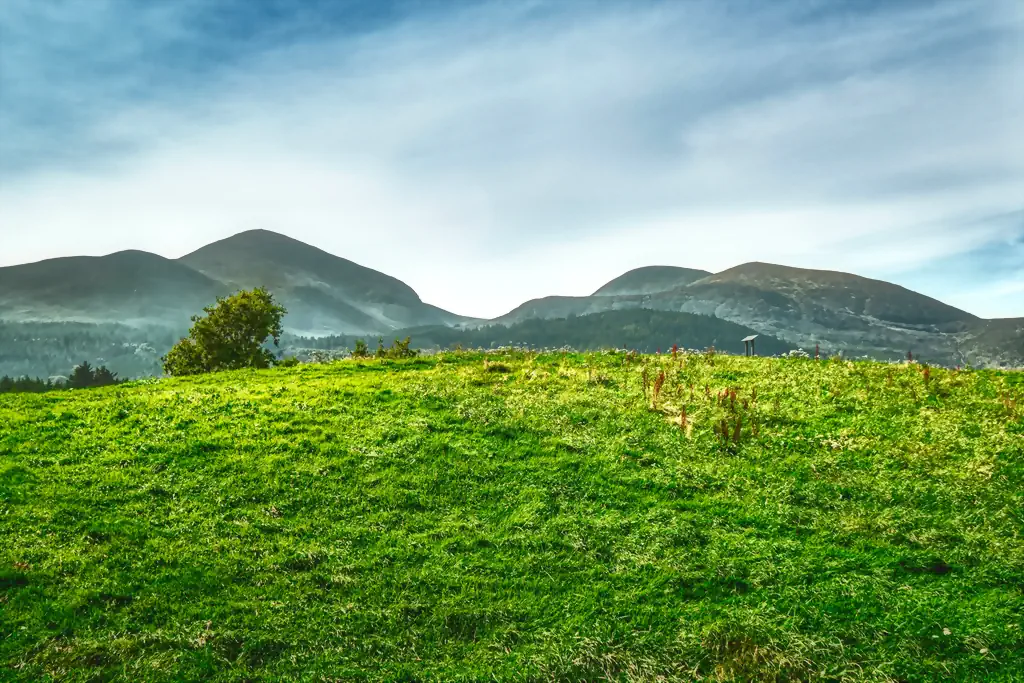
The Mournes rise straight out of the County Down coast behind Newcastle, twelve peaks over 600 metres with Slieve Donard the highest in Northern Ireland. A dry stone wall, the Mourne Wall, runs 22 miles over fifteen of the summits, built by hand in the early 20th century to enclose the reservoir catchment.
Their scale and emptiness made them the backdrop to the Dothraki lands and Vaes Dothrak, the one city of the horselords, where Daenerys went to be accepted by the dosh khaleen. The Mournes appear in the pilot and through season one.
They inspired Narnia too. C S Lewis grew up in Belfast looking at them and said the country of his imagination came from that skyline.
They sit alongside the rest of the things to do in Northern Ireland on the southern side. Walking here ranges from an easy riverside hour to a serious mountain day on Donard. Weather closes in fast and the paths are rough. This is the one place on the list where you want to check a forecast and tell someone where you are going.
Opening times. Open access on the hills, all year.
Guide prices. Free to walk. Parking varies by car park. Meelmore Lodge is £4.00 a day. Donard Park and the Trassey Road car park are both free.
Facilities. Donard Park in Newcastle has 215 spaces with a 12 hour limit, coach parking, toilets and a picnic area. Meelmore Lodge, near Trassey, charges £4 a day and has a cafe and toilets. The Trassey Road car park itself has neither.
Where it is. Donard Park, Central Promenade, Newcastle, County Down, BT33 0EU for Slieve Donard. Trassey Road for the Hare’s Gap approach.
What is nearby. Tollymore Forest Park, Newcastle seafront, and Castlewellan Forest Park.
Standing in a field where something was filmed is only part of it. Northern Ireland has built a set of experiences around the show that are worth planning into the trip, and one of them is not where the internet says it is.
The tapestry is an 87 metre hand woven record of the whole series, made from linen spun by Fergusons of Banbridge, woven by specialist weavers in Bristol, and finished with over a thousand hours of hand embroidery by museum staff and local textile guild volunteers. It is a genuinely extraordinary object.
It is also not on display. Each panel is currently rolled, wrapped and kept in climate controlled storage behind the scenes at the Ulster Museum. Plenty of guides still send people to Belfast to see it. You can view the whole thing online instead, and it is worth doing before you travel so you recognise the places when you reach them.
At Old Castle Ward you can put on the cloak, pick up a bow and shoot at the butts in the courtyard where the Stark children did, with the estate’s own direwolf dogs on hand. It is booked directly with the operator rather than through the National Trust, and for most families it is the best two hours of the County Down day.
Two free trails. Six stained glass windows along Belfast’s Maritime Mile, and ten carved doors scattered through pubs and hotels across the country, listed in full further down this page. Between them they take you into places a filming location list would never send you, and the Belfast trail sits beside Titanic Belfast and the rest of the things to do in Belfast.
Ballygally Castle serves a Game of Thrones afternoon tea, booked ahead. It is the kind of thing that sounds gimmicky and turns out to be the photograph everyone keeps.
Several of the best locations are walks rather than car parks. Fair Head, Murlough Bay, the Mourne ridges and the Cranny Falls path above Carnlough all reward an hour on foot, and the coast between Ballintoy and Larrybane is one of the finest short walks in Ireland whether or not you have seen an episode.
When Storm Gertrude brought down beech trees at the Dark Hedges in 2016, the wood was carved into ten doors, one for each episode of season six, and placed in pubs and hotels around Northern Ireland. They are free to see and they are still in the bars they were given to, which means finding them takes you into ten real places rather than ten visitor centres.
| Door 1 | The Cuan, Strangford, County Down |
| Door 2 | Fiddlers Green, Portaferry, County Down |
| Door 3 | Percy French, Newcastle, County Down |
| Door 4 | Blakes of the Hollow, Enniskillen, County Fermanagh |
| Door 5 | Owens, Limavady, County Londonderry |
| Door 6 | Fullerton Arms, Ballintoy, County Antrim |
| Door 7 | The Dark Hedges Hotel, Stranocum, County Antrim |
| Door 8 | Mary McBride’s, Cushendun, County Antrim |
| Door 9 | Ballygally Castle, Ballygally, County Antrim |
| Door 10 | The Dark Horse, Belfast |
There is a second trail in Belfast. The Glass of Thrones is six stained glass windows, each showing a key House, designed by hand illustrators and stained by the Bangor artist Debra Wenlock, now on permanent display in the Titanic Quarter along the Maritime Mile. Free, and walkable in under an hour.
Four of the doors sit beside locations already on this list. Door 6 is in Ballintoy, door 7 at the Dark Hedges, door 8 in Cushendun and door 9 at Ballygally, so a coastal day picks up almost half the set without a detour.
That is the seventeen worth building a day around. Six others come up often enough to be worth knowing about, including three that people drive a long way to find and then cannot get near.
Titanic Studios, Belfast. The Paint Hall, where the interiors were shot, from the Throne Room to the crypts of Winterfell. It is a working studio and it is not open to the public, but it is the reason the whole production came here.
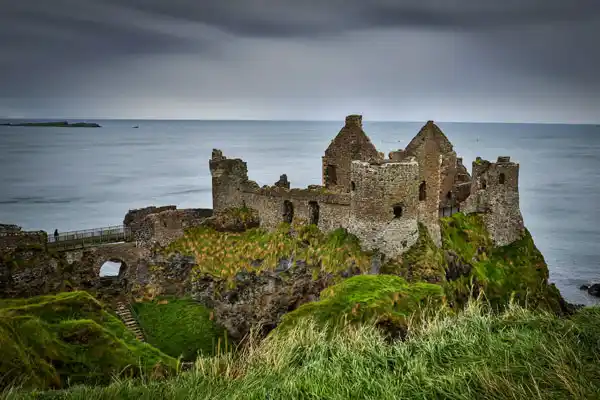
Dunluce Castle. Nothing was filmed here. The ruin on its basalt stack inspired the look of Pyke, the Greyjoy seat, which is a different thing and worth saying honestly. It is a magnificent stop on its own terms, ten minutes from the Old Bushmills Distillery.
The Steensons, Glenarm. The crowns and jewellery worn on screen were made in this working goldsmith’s workshop in the village. You can watch the craftsmen at the bench and buy from the showroom. Free, and a few minutes from Carnlough.
Magheramorne Quarry. Castle Black and the Wall were built in this disused quarry on Larne Lough, and Hardhome was staged here. It is private with no public access. You can only see it from the road between Larne and Whitehead.
Shane’s Castle. The O’Neill family estate on Lough Neagh, used for the tournament grounds and other scenes. It opens for events only, so a visit has to be planned around its own calendar.
Galboly. An abandoned 19th century village under Garron Point that became Runestone in season six, where Lord Royce trained Robin Arryn. It sits on working farmland among livestock and is viewed from the path. Not entered.
People ask us constantly whether they can do the lot. The honest answer is no. The coast and County Down are in opposite directions from Belfast, so they are two separate days at the very least.
What most people want is the coastal run: the Dark Hedges, Ballintoy, Cushendun, Carnlough and the Causeway sites, which sits comfortably in a full day and takes in the best of the scenery at the same time. County Down works as its own day around the Studio Tour and Winterfell. If you have longer, a two day Northern Ireland tour covers both sides without rushing either.
If you are driving it yourself, Tourism Northern Ireland publishes a free Game of Thrones Territory filming locations map in six languages, and you can pick one up at any Visitor Information Centre. It is the best free planning tool there is.
On a private Game of Thrones tour we shape the route around what you actually care about, because a fan who wants the Winterfell courtyard and a family who want the Dark Hedges and a beach are not looking for the same day out.
Across the whole country, but mostly along the Antrim coast and in County Down. The Antrim side holds the Dark Hedges, Ballintoy, Cushendun, Carnlough, Larrybane, Fair Head and Murlough Bay. County Down holds Winterfell at Castle Ward, Inch Abbey, Tollymore Forest and the Studio Tour at Banbridge.
Almost all of them, and most are free and open all year. The exceptions are Magheramorne Quarry, which is private with no access, Shane’s Castle, which opens only for events, and Galboly, which is on farmland and viewed from the path.
Old Castle Ward, on the National Trust’s Castle Ward estate at Strangford in County Down. The farmyard was the season one Winterfell set, and the courtyard, the archery range and the gate are all still there.
More than twenty that are worth a visit. This guide covers 22, including the three you can only see from a distance. Many more scenes were shot inside the studios at Banbridge and Titanic Quarter in Belfast.
No. The Antrim coast and County Down are in opposite directions from Belfast, so it is two days at the very least. Most people do the coastal run in one day, which covers the Dark Hedges, Ballintoy, Cushendun and Carnlough along with the Causeway Coastal Route scenery.
If you want to stand in the Throne Room and see the real costumes and props, yes. It is the only official studio tour in the world, it holds original sets, and you should allow two hours minimum. It is at Banbridge, about 30 minutes from Belfast, open daily 10am to 6pm.
Ten doors were carved from beech trees that fell at the Dark Hedges during Storm Gertrude, each telling the story of one episode, and placed in pubs and hotels across Northern Ireland. Door Number 9 is at Ballygally Castle on the Coast Road.
Effectively yes. Public transport does not reach the Dark Hedges, Cushendun, Fair Head or Murlough Bay, and several are down single track lanes. That is why most visitors either hire a car or take a private tour with a driver who knows the roads.
Most are. The Dark Hedges, Ballintoy, Cushendun Caves, Carnlough, Larrybane, Inch Abbey, Audley’s Castle, Tollymore and the coastal viewpoints are all free. The Studio Tour, Dunluce Castle and Castle Ward charge admission, and Portstewart Strand has a vehicle fee.
The Dark Hedges is near Stranocum in County Antrim, roughly an hour and a quarter from Belfast depending on the route and the traffic. It is usually combined with Ballintoy and the Causeway on the same day.
The opening scene of the first episode, beyond the Wall, was shot in Tollymore Forest Park in County Down. The same forest is where the Stark children found the direwolf pups later in that episode.
No. It is the assumption almost everyone makes, and the Causeway never appeared in the series. The coastal scenes people are thinking of were shot at Ballintoy, Larrybane, Murlough Bay, Downhill and Portstewart. The Giant’s Causeway is worth the visit anyway, and it sits on the same road as several of the real locations.
Not the original one. The interiors were shot at Titanic Studios in Belfast, in the Paint Hall, and it is a working studio closed to the public. The sets you can walk through are at the Game of Thrones Studio Tour in Banbridge, about 30 minutes away.
Six. Each stained glass window depicts a key House from the show, and they are on permanent display in the Titanic Quarter as part of Belfast’s Maritime Mile, a short walk from Titanic Belfast. The trail is free and you can walk the lot in under an hour.
Follow us for travel inspiration, local insights, and real moments from our private tours across Northern Ireland. Stay updated with new experiences, seasonal highlights, and guest stories.
The coastal run in one day: the Dark Hedges, Ballintoy, Cushendun and Carnlough with a local guide.
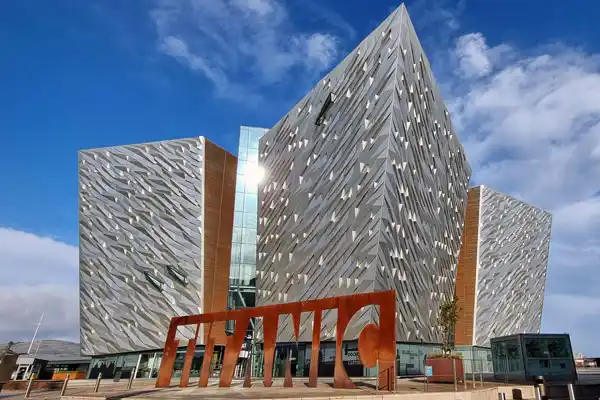
Filming locations in the morning, Belfast and the Glass of Thrones trail in the afternoon.
Northern Ireland is small enough that the filming locations sit alongside everything else worth seeing, often on the same road. These guides go deeper on the places in this list and the drives that connect them.
Derry Travel Guide: Top Things to do in Derry Unique and Fun Things to do in Derry-Londonderry, Ireland Written by Murat Yilmaz Last updated: September 22, 2026 The Walled City offers a
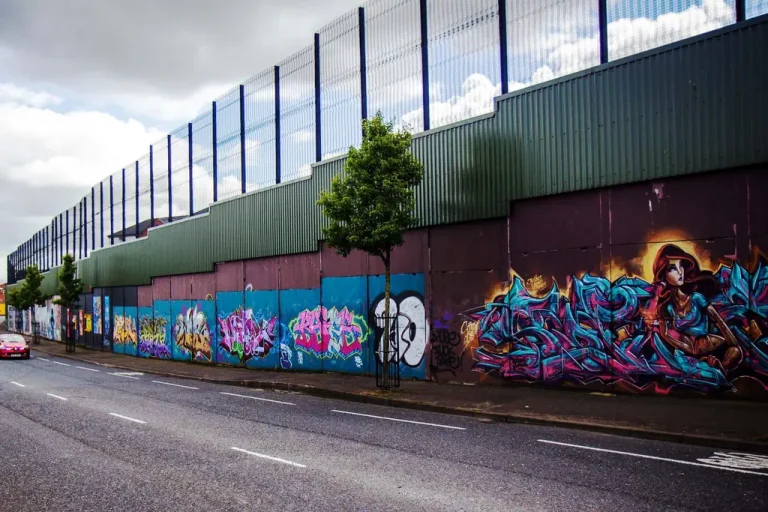
Top 5 Attractions in Belfast Written by Murat Yilmaz Last updated: January 12, 2026 Belfast, the capital of Northern Ireland, is a city shaped by shipbuilding, political history, culture, and resilience.
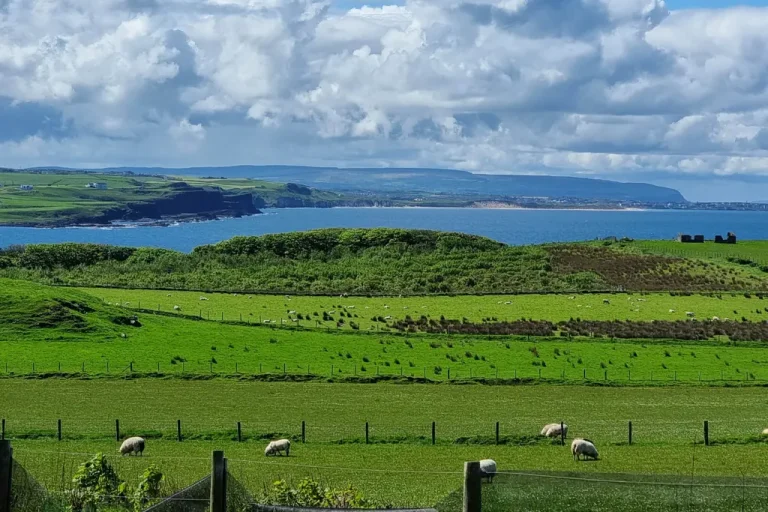
Travel Guide to Causeway Coastal Route Written by Murat Yilmaz Last updated: January 12, 2026 Discover the enchanting beauty of the Causeway Coastal Route, a journey like no other. Immerse yourself
Belfast Tours NI offers a range of resources to help visitors plan a trip to Belfast, Northern Ireland. Our blog post highlights the best things to do in the area and provides insider tips to ensure visitors have an unforgettable experience.
We encourage you to explore our social media channels as well, where you can find additional information and travel inspiration. Trust our team of experts to guide you through the planning process and provide you with the tools you need to fully immerse yourself in the culture and attractions of Ireland.