

Best Time to Visit Northern Ireland, Month by Month and Why
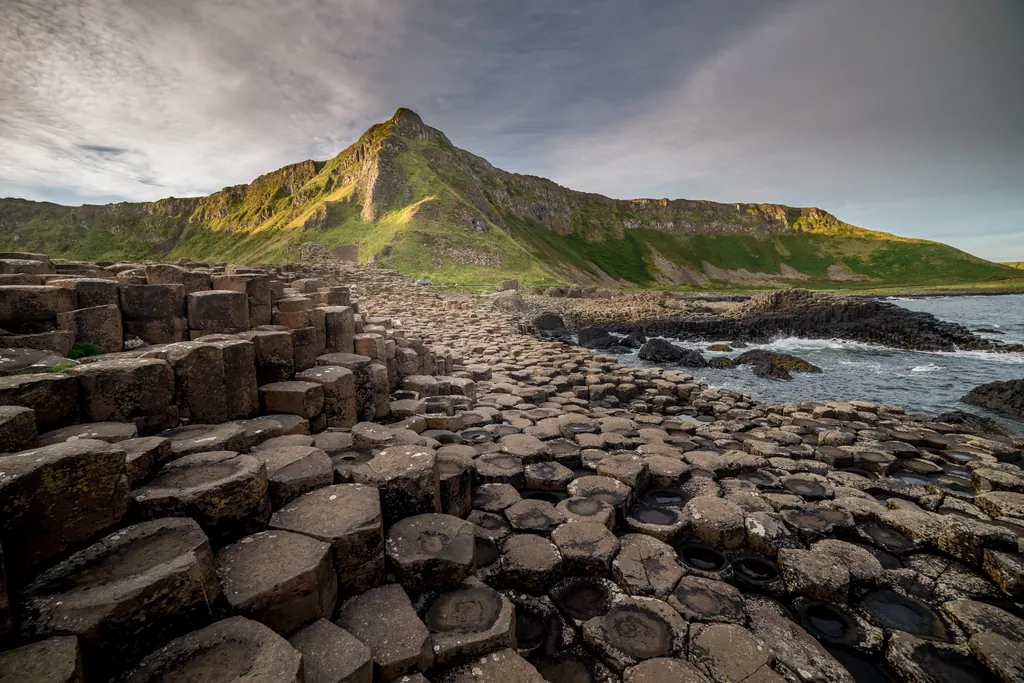
Picture the north coast on a clear May evening, the light still on the sea after nine o’clock and the stones of the Giant’s Causeway quiet once the day’s coaches have gone. That is what choosing your dates well can give you. For most people the best time to visit Northern Ireland is May or September, and this guide shows why, month by month. Belfast averages around 37 inches of rain a year and a July high of about 20°C (68°F), so the choice is never really about heat or cold.
Northern Ireland sits on the edge of the Atlantic, and the ocean keeps the climate mild and changeable in every season. Winters rarely bite and summers rarely bake. The real differences between the months are daylight, rain and how many other people are standing on the same clifftop as you. Daylight swings further than most visitors expect, from about seven hours and twenty minutes at midwinter to more than seventeen hours in late June.
The catch is that the calendar shapes what you can do as much as the weather does. Some places are seasonal, such as the RSPB Seabird Centre on Rathlin Island, and Carrick-a-Rede Rope Bridge can close at short notice in high winds. High summer brings cruise ships, school holidays and full car parks on the Causeway Coast. Winter brings quiet roads but short days, so a long day on the coast has to be planned around the light.
I am a local guide, and I am out on these roads in every month of the year. Below you will find the Met Office averages for Belfast in plain figures, what each season is like on the ground, which attractions change with the calendar, the events worth timing a trip around in 2026 and 2027, and my own verdict on which month suits which kind of trip. Use it to choose your dates first, and then build the rest of the trip around them.
Table of Contents
ToggleBest Time to Visit Northern Ireland, the Short Answer
If you can choose any month, I would suggest May or September. May is the sunniest month of the year in Belfast, with an average of 185 hours of sunshine, and it sits in the driest part of the calendar, with about 2.3 inches of rain. The days are long, the gorse is out along the coast roads and the summer crowds have not yet arrived. If you only have one week to give Northern Ireland, May is the safest bet.
September is the other strong choice. The average high in Belfast is still 17°C (63°F), only a degree below June, and the rain total is almost exactly the same as June’s. The school holidays are over, and there are fewer cruise calls in Belfast than in high summer, which takes some of the pressure off the busiest stops on the Causeway Coast. The evenings shorten through the month, but you still have more than twelve and a half hours of daylight in mid September.
June runs a close third. It has the longest days of the year, with the sun setting after ten o’clock in the evening around midsummer, and it is drier than July and August. The months I would think twice about are July and August if you dislike crowds, and November if rain is what worries you, because November is the wettest month in the Belfast figures.
None of this makes any month a bad one. It means each month suits a different kind of trip. A winter visit can be one of the best things you do here if you plan around the light, and a summer trip works well with an early start. The sections below give you the figures and the detail so you can choose for yourself.
Northern Ireland Weather by Month, and Why It Changes by the Hour
The first thing worth knowing about the weather here is that you can have four seasons in one hour. A bright morning at the Giant’s Causeway can turn to rain by the time you walk back to the car, and twenty minutes later the sun is out again over the sea. A forecast for the coast is a guide rather than a promise, and it often changes through the day.
What you can count on is that the weather here is never extreme. Summers are mild rather than hot, and winters are mild rather than cold, with snow rare at sea level. Rain can fall in any month, but it mostly comes as showers that pass rather than rain that lasts all day.
Because it changes so quickly, the best thing you can do is check the Met Office forecast for Northern Ireland on the morning of each day. It is the official UK forecast, and it shows the next few hours as well as the days ahead.
How the weather changes through the year
Spring brings the brightest weather and the longest run of dry days, and the gorse turns the coast roads yellow. Summer has the longest and mildest days, with light until after ten o’clock at night in June. Autumn turns wetter from October, with wild seas and strong colour in the glens. Winter is mild but dark early, and the coast is at its most dramatic in a storm.
What to wear for Northern Ireland weather
Because the weather changes so fast, I would suggest dressing for all of it at once. A light waterproof jacket with a hood is worth packing in every month, along with layers you can add or take off as the sun comes and goes. The wind on the coast always feels colder than the city, so bring one warm layer even in summer. Comfortable shoes with good grip matter more than anything, because the stones and the cliff paths are often wet.
My advice is never to cancel a day because of the forecast. A wet morning often clears by lunchtime, and some of the best light on the north coast comes straight after a shower.
Northern Ireland in May and the Rest of Spring, March to May
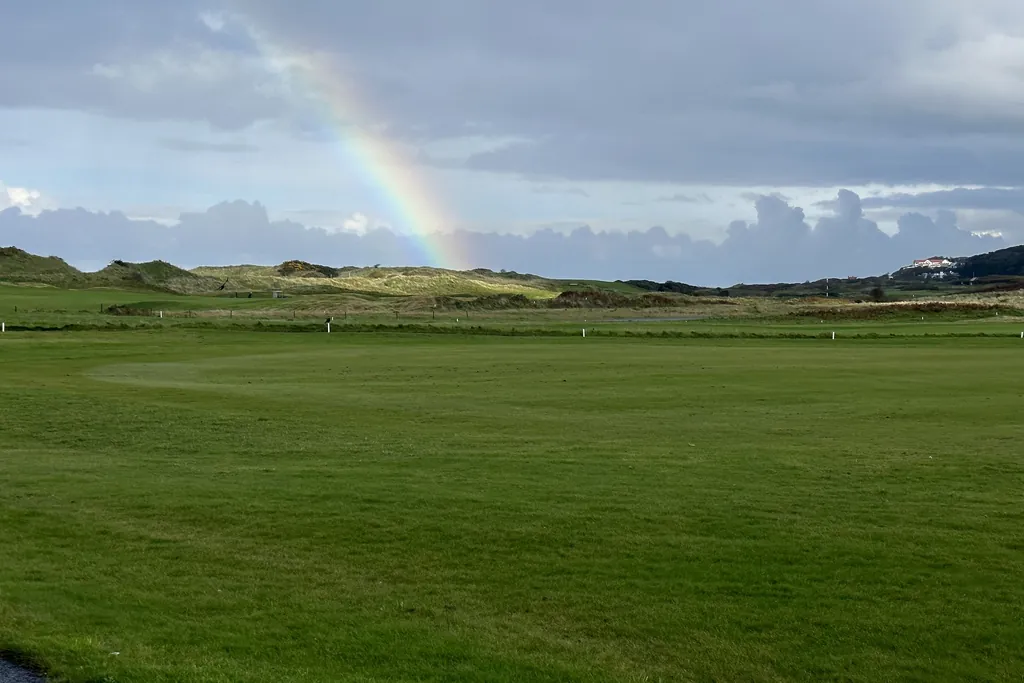
Spring is the best season to visit Northern Ireland for most first-time visitors. March is still cool, with highs around 10°C (51°F), but sunshine rises sharply between March and April, and by May the days are long and bright. On 20 March the sun is up for just over twelve hours in Belfast. By mid May it rises a little after five in the morning and sets around twenty-five past nine, which gives you more than sixteen hours of daylight.
March opens the calendar with St Patrick’s Day on 17 March, a public holiday across Northern Ireland, and in 2027 it falls on a Wednesday. Easter is the first busy holiday of the year. In 2027 Good Friday is 26 March and Easter Monday is 29 March, so the coast will be lively around that weekend. Outside those dates, early spring is one of the quietest times on the Causeway Coast.
Attractions that reopen in spring
Several seasonal places come back to life in these months. The Gobbins cliff path at Islandmagee reopened for its 2026 season on 20 March, after storm damage in January, and it is a guided walk that must be booked ahead. The summer ferry timetable to Rathlin Island began on 3 April in 2026, and the puffins return to the island’s cliffs from late April. Belfast’s cruise season also starts in April, and by May there were 28 ship calls on the 2026 schedule.
Northern Ireland in May
May is the month I rate highest of all. It has the most sunshine of the year and some of the lowest rainfall, and the school summer holidays are still weeks away. The one thing to plan around is the North West 200, the motorcycle road races held each May on closed public roads between Portrush, Portstewart and Coleraine. In 2026 race week ran from 4 to 9 May, and the area is very busy on race days.
There are also two bank holiday weekends, on 3 May and 31 May in 2027, and accommodation on the coast books up early for both. If you are planning a Northern Ireland road trip, May gives you the light to fit a full coast day without rushing. Midweek dates away from those weekends are the easiest of all.
Northern Ireland in Summer, June to August
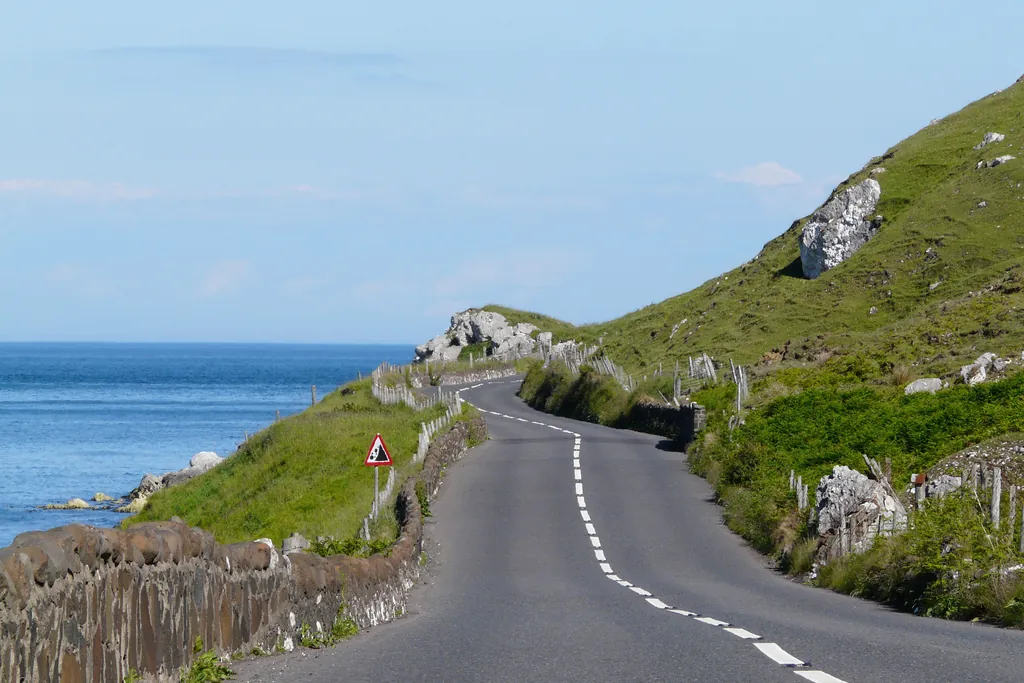
Summer is the warmest and busiest time of year. July is the warmest month in Belfast, with an average high of 20°C (68°F), and August is barely cooler. A hot day here is unusual rather than normal, so a summer trip is about long, mild days rather than heat. Rain picks up again through the season, from 2.7 inches in June to 3.3 inches in August.
The daylight is the real prize. Around midsummer the sun rises at about a quarter to five and sets just after ten o’clock, more than seventeen hours of daylight. You can fit an evening walk on a beach after a full day of sightseeing, and the light on the north coast late in the day is worth staying out for.
Crowds, cruise ships and the Twelfth
This is also when everyone else comes. School holidays in Northern Ireland and across the UK fill July and August, and the 2026 cruise schedule had around 30 ship calls a month in June and July. The Giant’s Causeway and the beaches around Portrush feel it most. The car parks at the most popular stops fill early on warm days, and the coast road is slower than at any other time of year.
The Twelfth of July is a public holiday, and in 2027 it falls on Monday 12 July. Orange Order parades take place in towns across Northern Ireland that day, roads in some town centres close for them, and some shops and businesses shut. It is worth knowing about if your trip falls that week, so you can plan your driving around it.
Tips for visiting Northern Ireland in summer
My advice for summer is simple. Start early, book anything that can be booked, and keep the most popular stops for the first or last hours of the day. RNLI lifeguards cover the main Portrush beaches daily in July and August from 10am to 6pm, which makes this the best season for a swim. Late August brings the Ould Lammas Fair in Ballycastle, which ran from 22 to 25 August in 2026.
Northern Ireland Weather in September and the Autumn Months
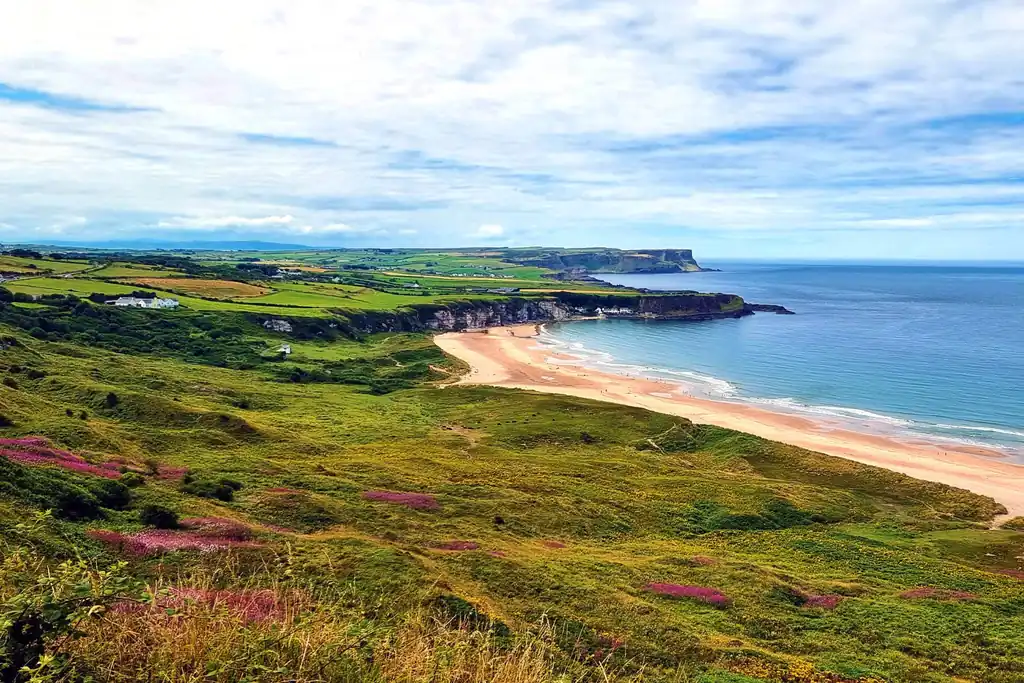
September is the month I would choose for myself. The average high is still 17°C (63°F), the rain total is almost the same as June, and the coast quietens down from the first week as the schools go back. In mid September you still have nearly thirteen hours of daylight, with sunset around twenty to eight. The cruise calls fall away too, from 27 in August to 20 in September on the 2026 schedule.
October is when the weather turns. Rain rises to 3.8 inches, sunshine drops to 92 hours, and the evenings close in quickly once the clocks go back at the end of the month. The colour in the forest parks can be at its best, though, and a walk in Glenariff Forest Park after rain, when the waterfalls are full, is one of my favourite autumn days. The last cruise ship of the 2026 season was due on 16 October.
Festivals and events in autumn
October is the strongest month for events. The Belfast International Arts Festival runs from 14 October to 8 November in 2026, across more than 30 venues in the city. Derry Halloween runs from 28 October to 1 November in 2026, marking 40 years of the festival, with parades and fireworks across the city. If you want a city break with something on every night, late October is hard to beat. Our things to do in Derry guide covers the rest of the city.
November, the wettest month
November is the wettest month in the Belfast figures, with 4.0 inches of rain over about 16 wet days, and only 53 hours of sunshine. It is also one of the quietest months to visit. If you are happy to dress for the weather and keep the days a little shorter, you will meet very few other visitors on the coast. Keep in mind that the Rathlin summer ferry timetable ends on 30 September and the RSPB Seabird Centre has already closed for the year.

Visiting Northern Ireland in Winter, December to February
Visiting Northern Ireland in winter is a different trip, and a good one if you plan for it. It is mild rather than cold. The average high in December and January is about 8°C (47°F), and night-time lows sit around 2°C (36°F). There are around seven nights of air frost a month in December and January at the Belfast station, so icy mornings do happen, but deep cold is rare.
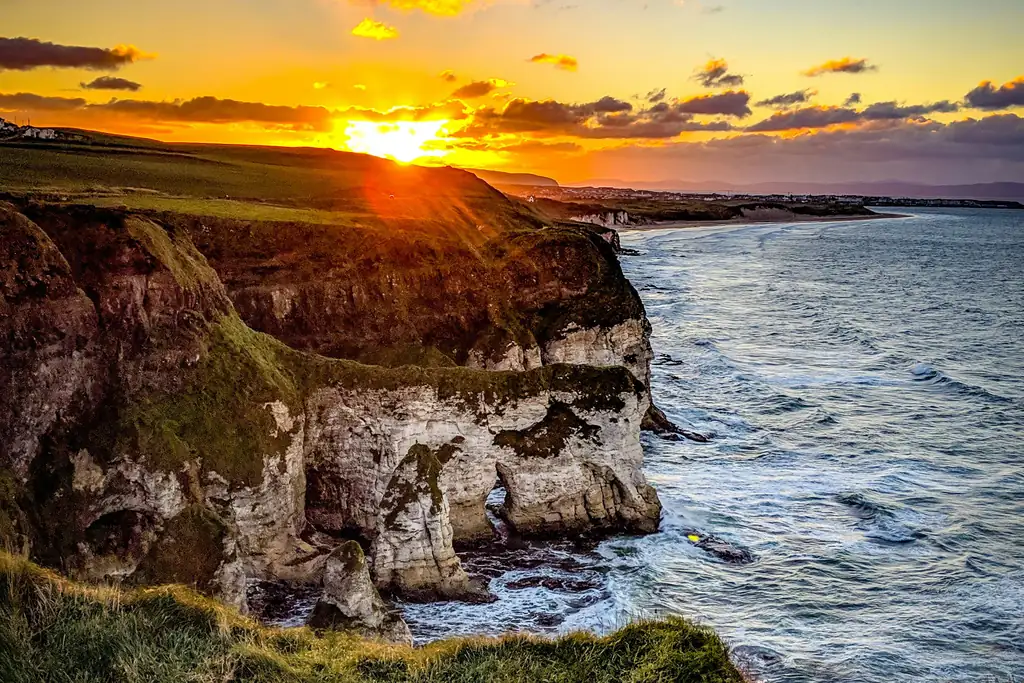
Daylight is the thing to plan around. At midwinter the sun rises at about twenty to nine and sets just after four o’clock, giving a little over seven hours of daylight. A full day on the Causeway Coast is still possible, but it means leaving Belfast in the dark and arriving at the first stop as the light comes up. December is also the dullest month, with only 35 hours of sunshine in the Belfast figures.
Why a winter trip is worth it
The reward is space. On a winter weekday you can have long stretches of the north coast almost to yourself, and a rough sea against the basalt is a sight summer visitors rarely get. The Giant’s Causeway visitor centre stays open in the darker months, with hours of 9am to 5pm in late 2026, and the coastline itself is open from dawn to dusk all year.
Belfast at Christmas
December is the month Belfast comes into its own. The Christmas market fills the grounds of City Hall in the weeks before Christmas, with the 2026 dates announced by the council in the autumn, and the city centre is lively in the evenings. A Belfast city tour works well at this time of year, because most of it can be done whatever the weather. Bear in mind the public holidays on 25 and 28 December 2026 and 1 January 2027, when many attractions close or keep shorter hours.
January and February are the quietest months of all. Some seasonal attractions are closed, and others keep winter hours, so check each place before you travel rather than assuming it is open. The upside is that the places which are open are rarely busy.

Carrick-a-Rede Rope Bridge in Every Season
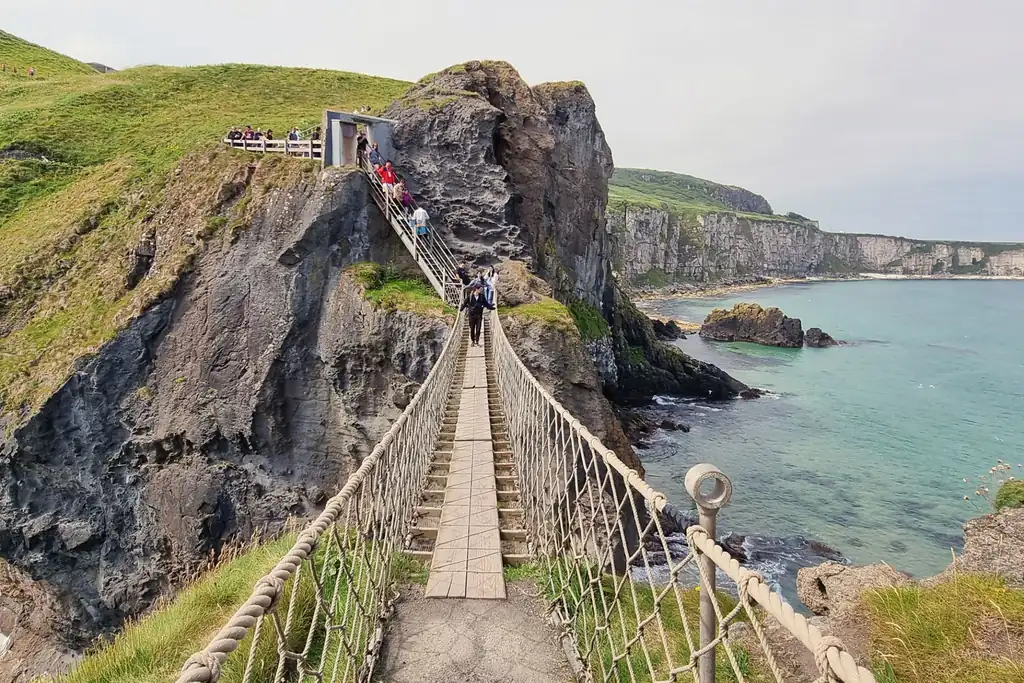
Carrick-a-Rede is the attraction on the coast most affected by the weather, which is why it gets its own section here. The rope bridge, first put up by salmon fishermen in 1755, hangs nearly 100 feet above the sea and crosses a gap of about 66 feet to a small island. It is run by the National Trust, and everyone who wants to cross must book a ticket online in advance, members included.
The bridge is open all year, but the hours change with the seasons, and it can close at short notice in high winds. That is the part that catches people out. A windy day is common on this coast in any month, not only in winter. If your crossing time is early in your trip, you have room to rebook if the bridge closes on the day.
The best time of year to visit Carrick-a-Rede
In spring and early autumn the path out to the bridge is at its most pleasant, and the timed tickets are easier to get. In July and August the slots fill well ahead, so book as soon as you know your dates. In winter, with so few hours of daylight, I would plan it for the first half of the day. The walk out from the car park is about a mile along the cliffs, and after the first stretch it has steep paths, steps and uneven ground, so allow time for it.
Whatever the month, the view from the island across to Rathlin and, on a clear day, Scotland, is worth the effort. Our Carrick-a-Rede Rope Bridge guide has more on the walk and the history. It is one of the views on this coast I never tire of.
Visitor information
Opening times. The coastline is open from dawn to dusk. In early October 2026 the rope bridge was open from 9am to 4.30pm and the car park from 9am to 6pm. Hours change with the season, so check the National Trust calendar for your date. The bridge can close in high winds.
Guide prices. At peak times in 2026, adult £16, child (5 to 17) £8, family £40 and single adult family £24. National Trust members cross free but must still book.
Booking. Pre-booking online is essential for everyone crossing the bridge, National Trust members included.
Facilities. Weighbridge Tearoom, accessible toilet and a car park included with bridge tickets. Dogs on leads are welcome on the coastal path but cannot cross the bridge. The first part of the path is accessible, and the rest has steep paths, steps and uneven ground.
Where it is. 119a Whitepark Road, Ballintoy, County Antrim, BT54 6LS. It is on the B15 coast road between Ballycastle and Ballintoy, about 59 miles from Belfast, roughly an hour and a quarter to an hour and a half by road.
What is nearby. Ballintoy Harbour, White Park Bay, the Giant’s Causeway and Ballycastle.
Rathlin Island and the Puffin Season, Late April to Early August
If seeing puffins is on your list, Rathlin Island decides your dates for you. The island lies off Ballycastle, and the RSPB West Light Seabird Centre sits on its western cliffs, looking down on the island’s seabird colony. The RSPB says the best time to see the puffins and other seabirds is from late April through to early August, when they gather in their thousands to raise their chicks.
The Seabird Centre is seasonal. It has already closed for 2026 and is due to reopen in spring 2027, so a winter trip to the island will not include the viewing platform. The island itself is reachable all year. The summer ferry timetable ran from 3 April to 30 September in 2026, with an extra early return crossing at weekends, and a reduced winter timetable runs outside those dates.
How to see the puffins on Rathlin Island
Plan a full day for this. The ferry leaves from Ballycastle harbour, and once you land, the Seabird Centre is 4.5 miles from the harbour, reached by the island’s minibuses or by hired bike. There are 98 steps down to the viewing platform and 64 steps in the lighthouse, plus a steep path, so it suits anyone reasonably fit.
Book the ferry ahead in summer, because the crossings are popular and the weather can cancel sailings. I would suggest pairing Rathlin with a quiet evening in Ballycastle, or keeping it for the day after a long coast drive, rather than squeezing it into the same day as the Giant’s Causeway. There is more to see along this stretch in our Causeway Coastal Route guide.

Visitor information
Opening times. Summer ferry timetable 3 April to 30 September 2026, with a reduced winter timetable outside those dates. The RSPB West Light Seabird Centre is seasonal, has closed for 2026 and reopens in spring 2027. Puffins are best seen from late April to early August.
Guide prices. Fares are set by the ferry operator and shown when you book. The RSPB Seabird Centre at the West Light publishes its own admission on the RSPB website.
Booking. Ferry tickets can be booked up to the day of travel, subject to space, as long as you book at least 30 minutes before departure.
Facilities. Minibuses and bike hire on the island to reach the Seabird Centre. There are 98 steps down to the viewing platform, 64 steps in the lighthouse and a steep path.
Where it is. Rathlin Island Ferry, Bayview Road, Ballycastle, County Antrim, BT54 6BT. Ballycastle is about 56 miles from Belfast by road. The Seabird Centre is 4.5 miles from Rathlin harbour.
What is nearby. Ballycastle seafront, Carrick-a-Rede Rope Bridge, Ballintoy Harbour and the Ould Lammas Fair in late August.
Events Worth Planning a Trip Around in 2026 and 2027
A few dates in the calendar change the feel of a trip, for better or worse. Some are worth building a visit around, and others are worth knowing about so they do not surprise you. These are the ones I would look at first, with the dates confirmed by the organisers or the government where they are published.
- Derry Halloween, 28 October to 1 November 2026. Forty years of the festival this year, with parades and fireworks across the city.
- Belfast International Arts Festival, 14 October to 8 November 2026. A programme of events in more than 30 venues across Belfast.
- Belfast Christmas Market, City Hall, dates announced each autumn. Market stalls in the grounds of City Hall in the run-up to Christmas.
- St Patrick’s Day, Wednesday 17 March 2027. A public holiday across Northern Ireland, with a parade and events in Belfast.
- Easter, 26 to 29 March 2027. Good Friday and Easter Monday are both public holidays, and the coast is busy over the weekend.
- North West 200, May. Motorcycle road racing on closed roads between Portrush, Portstewart and Coleraine. Race week ran from 4 to 9 May in 2026, and the 2027 dates are announced by the organisers early in the year.
- The Twelfth, Monday 12 July 2027. A public holiday with parades across Northern Ireland.
- Ould Lammas Fair, Ballycastle, late August. County Antrim’s oldest traditional fair, which ran from 22 to 25 August in 2026.
Planning your trip around these events
If an event is the reason for your trip, book your accommodation early, because the towns that host them fill up quickly. If you would rather avoid the busiest days, check this list against your dates and keep your coast day away from the North West 200 in May and the bank holiday weekends in summer. For more ideas on what to see once you are here, our guide to things to do in Northern Ireland covers the whole country.

Choosing Your Month by What Matters Most to You
Every trip has a different priority, so here is my verdict by what you care about most. All the weather figures come from the Belfast averages above. Use it alongside the season sections, not instead of them.
- The best chance of sunshine: May, with 185 hours, then April with 157.
- The driest weeks: April to June, each with less than 3 inches of rain.
- The longest days: June, with more than seventeen hours of daylight around midsummer.
- The warmest weather and the best swimming: July and August, when the lifeguards are on the Portrush beaches.
- Puffins on Rathlin: late April to early August.
- Festivals and city life: late October for Derry Halloween and the Belfast arts festival, and December for Christmas in Belfast.
- Quiet roads and space on the coast: November to early March, outside Christmas, accepting short days and closed seasonal attractions.
My verdict on the best month to visit
If you asked me for the best month to visit Northern Ireland, I would say May, with September a very close second. Both give you long enough days for the coast, good odds of dry weather, and room to breathe at the places everyone comes to see. If your dates are fixed in July or August, the trip will still be a good one with an early start and a little planning.
If you are coming by sea, our Belfast cruise port guide explains how the cruise season works from the terminal side. On a ship day your hours ashore set the plan, whatever the month. Wherever you start, the shape of your days matters more than the forecast.
Best Time to Visit Northern Ireland FAQ
When is the best time to visit Northern Ireland?
May and September suit most visitors best. May is the sunniest month and one of the driest, and September keeps mild weather with fewer crowds once the school holidays end.
What is the best month to visit Northern Ireland?
May is the best single month for most trips. It has the most sunshine of the year in Belfast, about 185 hours, with only around 2.3 inches of rain and more than sixteen hours of daylight by mid month.
What is the rainiest month in Northern Ireland?
November is the wettest month in the Met Office figures for Belfast, with about 4.0 inches of rain over 16 wet days. October, December and January are close behind.
What is the driest month in Northern Ireland?
May is the driest month in Belfast, with about 2.3 inches of rain, and April is almost the same at 2.4 inches. The whole stretch from April to June is the driest part of the year.
How many days a year does it rain in Northern Ireland?
At the Belfast Newforge station at least 0.04 inches of rain falls on about 156 days a year. Most of that comes as showers rather than all-day rain, so a wet morning often clears.
What is Northern Ireland weather like in September?
September is mild, with average highs of about 17°C (63°F) and lows of 10°C (49°F) in Belfast. Rain is moderate at about 2.7 inches, and there are still nearly thirteen hours of daylight in mid month.
What is Northern Ireland like in May?
Northern Ireland in May is bright, mild and still fairly quiet. Highs average 16°C (60°F), sunshine peaks for the year, and the summer crowds have not yet arrived, apart from North West 200 race week and the bank holiday weekends.
What is the weather like in Northern Ireland in summer?
Summer is mild rather than hot, with July averaging a high of 20°C (68°F) in Belfast. Days are very long, with sunset after ten o’clock around midsummer, and rain increases towards August.
Is it worth visiting Northern Ireland in winter?
Yes, if you plan around the short days. Visiting Northern Ireland in winter means mild weather, quiet roads and a dramatic coast, but only around seven hours of daylight at midwinter and some seasonal attractions closed.
What is Northern Ireland weather like in December?
December averages a high of 8°C (47°F) and a low of 2°C (36°F) in Belfast, with about 3.7 inches of rain. It is the dullest month, with only 35 hours of sunshine.
What is Northern Ireland like in October?
October is mild but wetter, with about 3.8 inches of rain and highs around 14°C (57°F). It is a strong month for events, with Derry Halloween and the Belfast International Arts Festival both running in late October 2026.
When is the cheapest time to visit Northern Ireland?
Demand is lowest from November to early March, outside Christmas and Easter, so that is usually when you have the most choice. Flight and hotel prices change with every booking, so compare your own dates.
When is the best time to visit the Giant’s Causeway?
May, June and September give the best mix of daylight and lighter crowds. At any time of year, arriving early in the morning or late in the afternoon means fewer people on the stones, and the coastline is open from dawn to dusk.
When can you see puffins on Rathlin Island?
The RSPB says late April to early August is the time to see puffins at the West Light Seabird Centre. The centre is seasonal and reopens in spring 2027.

Belfast Tours NI is a local tour company for travellers who want a personal, relaxed way to explore Northern Ireland, offering private tours, tailored itineraries, and local insight to help you plan a memorable visit.
Written by Murat Yilmaz · Last updated:
Keep Exploring Northern Ireland

Plan Your First Trip to Northern Ireland

Why Choose a Private Tour
Private Tours in Belfast and Northern Ireland
Choosing the month is half the plan. The other half is shaping each day around the light and the crowds you will meet, and that is where a private tour with a local guide helps. In May or September we can give you a long coast day at an easy pace, and in winter we start early so the best of the Causeway Coast falls in the hours of daylight.
Your guide collects you from your Belfast hotel, Belfast International or George Best Belfast City Airport, or the cruise terminal. If you are flying into Dublin, we can bring you north by chauffeur service, with the guided part of your trip starting once you are in Northern Ireland. The route is built around your dates, so a windy day becomes a different order of stops rather than a lost day.
Up to 7 passengers travel in a Mercedes-Benz V-Class, 8 in a Ford Tourneo Custom, and 9 or more in two V-Class vehicles travelling together. Have a look at our Giant’s Causeway tour or our Game of Thrones tour for how a day can run.
Tell us when you are thinking of coming and what you most want to see, and we will tell you how those dates will look on the ground. Get in touch and we will start from there.
Giants Causeway Tour
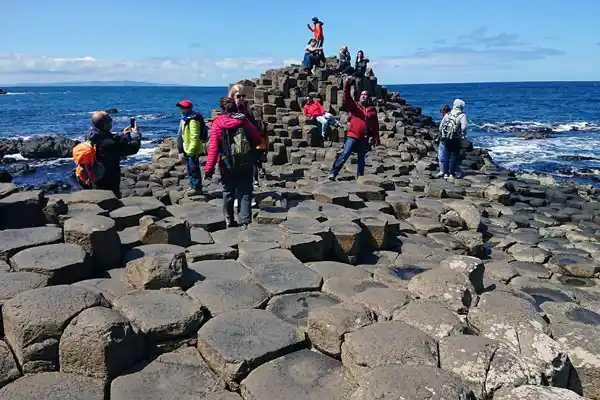
A full day at the Giant’s Causeway from Belfast, travelling the Causeway Coastal Route with your own local driver-guide and time for photos at every stop.

Game of Thrones Tour
Visit the real Game of Thrones filming locations across Northern Ireland, including the Dark Hedges and Ballintoy Harbour, on a fully private tour.

Titanic Museum and City Tour
Belfast city highlights combined with a visit to Titanic Belfast, exploring the museum at your own pace with a local guide.
Planning a private tour of Northern Ireland? ➔ Get in touch to discuss your ideas.
Connect with Us
Our social channels follow the year as it happens on the coast: the first puffins on Rathlin, the summer evenings at the Causeway, the autumn colour in the glens and the winter seas against the cliffs. It is a good way to see what a month really looks like before you book your flights.
If you have a question about timing, the weather or what will be open on your dates, send us a message on any of the channels below. It is the quickest way to reach us, and we are happy to help whether or not you book a tour with us.