

Northern Ireland Travel Guide: Plan Your First Trip Like a Local
Written by Murat Yilmaz · Last updated:
Picture the morning you set off up the coast from Belfast, with the Irish Sea on your right, the glens rising on your left and a whole country ahead of you that is small enough to cross before lunch. The Giant’s Causeway is about 60 miles north of the city, Derry is about 70 miles to the north west, and the Mourne Mountains are little more than 30 miles to the south. This Northern Ireland travel guide is for the trip before all of that, the planning that decides whether those miles feel easy or rushed.
Northern Ireland is part of the United Kingdom, and it has been since the island of Ireland was partitioned in 1921. It shares the island with the Republic of Ireland, which is a separate country with its own currency, its own speed limits and its own entry rules. Most people cross the border without noticing it, because there are no checks on the road. The rules still change the moment you do, and that catches out more first time visitors than anything else.
There are a few other catches worth knowing early. Visitors from the United States and Canada now need an electronic travel authorisation before they fly, and that applies even if you drive up from Dublin. The coast roads look short on a map and take far longer in real life. Summer accommodation on the north coast is limited, and it goes early.
I have been running private tours from Belfast for nine years, and the questions below are the ones I hear every season. If you are visiting Northern Ireland for the first time, I cover getting here, the ETA, money, driving on the left, getting around without a car, how many days you need and where to sleep, the weather, safety and the main regions. Where we have a detailed guide to a place, I have linked it rather than repeat it here.
What Is in This Guide
- 1Getting to Northern Ireland: Airports, Dublin and the Ferries
- 2Northern Ireland Travel Requirements: The ETA for US, Canadian and UK Visitors
- 3Money in Northern Ireland: Pounds, Cards and Unfamiliar Banknotes
- 4Driving in Northern Ireland: The Left, Miles and Narrow Roads
- 5Getting Around Northern Ireland Without a Car
- 6How Many Days in Northern Ireland, and Where to Base Yourself
Getting to Northern Ireland: Airports, Dublin and the Ferries
Most visitors arrive by air, and there are two airports serving Belfast. They suit different trips, so it is worth knowing which one your flight uses before you plan the first evening.
George Best Belfast City Airport
Belfast City Airport sits on the shore of Belfast Lough, and the airport itself calls it a five minute hop to the city centre. The Airport Express 600 bus runs to Belfast Grand Central Station every 20 minutes at peak times, and the journey takes around ten minutes. Of the two, it is by far the closer to the city.
Belfast International Airport
Belfast International is 18 miles north west of the city, near Antrim, and it carries most of the longer and low cost routes. By road you take the M2 north, leave at Junction 5 and follow the A57. The Airport Express 300 bus runs into Belfast seven days a week, every 15 minutes at peak times on weekdays.
Flying into Dublin and travelling north to Belfast
Many visitors from the United States and Canada fly into Dublin, because it has the widest choice of transatlantic flights. Tourism Northern Ireland puts the travel time from Dublin Airport to Northern Ireland at under two hours, and Belfast is about 100 miles away by road. If you would rather take the train, the Enterprise leaves Dublin Connolly for Belfast Grand Central every hour, 15 times a day Monday to Saturday and eight times on a Sunday, stopping at Newry and Portadown on the way.
Arriving in Northern Ireland by ferry or cruise ship
From Scotland, Stena Line sails from Cairnryan to Belfast and P&O Ferries sails from Cairnryan to Larne. From England, Stena Line runs a route from Liverpool to Belfast. If you are coming in on a cruise ship, your hours ashore are fixed, and our Belfast cruise port guide explains how the terminal works. For anyone landing at any of these and not wanting to drive, a chauffeur service is the easiest way into the city with your luggage.
Northern Ireland Travel Requirements: The ETA for US, Canadian and UK Visitors
This is the section to read twice. The ETA for Northern Ireland is the same as the ETA for the rest of the United Kingdom, because Northern Ireland is part of the UK. If you hold a passport from the United States or Canada, you need one before you travel, and you apply for it online.
What the Northern Ireland ETA is and how much it costs
An electronic travel authorisation, or ETA, costs £20 and lets you visit the UK for up to six months at a time. It is linked electronically to your passport and lasts for two years, so one ETA covers several trips in that time. Every person travelling needs their own, including babies and children. You apply through the official UK government ETA page, and I would suggest doing it as soon as your flights are booked rather than in the week you leave.
Travelling from the Republic of Ireland into Northern Ireland
There are no immigration controls on the land border between the Republic of Ireland and Northern Ireland. Tourism Northern Ireland is clear that the ETA is still mandatory, and will be strictly enforced, for everyone arriving into or travelling through the UK who does not need a visa. Driving or taking the train up from Dublin does not exempt you. Ireland has its own entry rules for the part of your trip spent in the Republic, so check those separately with the Irish authorities.
Who does not need a UK ETA
You do not need an ETA if you hold a British or Irish passport, or if you already have a UK visa or permission to live, work or study in the UK. Visitors from Great Britain are travelling within their own country, so there is no passport control on flights or ferries from England, Scotland or Wales. Airlines and ferry companies do ask for photo identification, though, so check what your carrier accepts before you go.
These rules have changed more than once in the last few years. Check the official page close to your departure date, even if you have read this guide.
Money in Northern Ireland: Pounds, Cards and Unfamiliar Banknotes
Northern Ireland uses the pound sterling, the same currency as the rest of the UK. The Republic of Ireland uses the euro. If your trip takes in both, you will be handling two currencies within a few miles of each other, and the change happens at the border without any sign to tell you.
Can you use euro in Northern Ireland?
Do not rely on it. Some larger stores accept euro, but a charge may apply and the exchange rate is rarely in your favour. Tourism Northern Ireland advises visitors to bring sterling, because smaller businesses may not accept euro at all. In a village café on the coast or at a car park machine, euro coins are not going to help you.
Northern Ireland banknotes, and why they look different
This one surprises almost everybody. Three banks in Northern Ireland issue their own sterling banknotes: Bank of Ireland, Danske Bank and Ulster Bank. They are legal sterling and are used everywhere here, but they look nothing like the Bank of England notes you may know. Shops in Great Britain sometimes hesitate over them, so if you are heading on to London or Edinburgh, it is worth spending them before you leave.
Paying by card, carrying cash and tipping
Cards, including contactless and phone payments, are accepted in most places, from city restaurants to coastal attractions. I would still carry a little cash for small cafés, honesty boxes at harbours and the odd rural car park. Tipping is not compulsory. If no service charge has been added to the bill and you are happy with the service, Tourism Northern Ireland suggests 10 to 15 per cent as a guide.
One last point for visitors from North America. Prices in shops include VAT, so the figure on the label is what you pay at the till.

Driving in Northern Ireland: The Left, Miles and Narrow Roads
Driving in Northern Ireland is straightforward once you have adjusted to the left side of the road, and the main roads are good. The coast roads are a different matter, and they are where most of the sightseeing is. Here is what is worth knowing before you book a hire car.
Road rules and speed limits in Northern Ireland
You drive on the left, and hire cars are right hand drive. Speed limits here are shown in miles per hour, while across the border in the Republic they are metric, which catches people out on cross border days. The usual limits are 30 mph in built up areas, 60 mph outside them, and up to 70 mph on motorways and dual carriageways. Lower 20 mph limits are increasingly common in towns. Seat belts are compulsory for everyone in the car, and using a hand held phone while driving is illegal.
Driving with a US or Canadian licence
According to the Northern Ireland government’s own guidance, a visitor with a full licence from outside the EU, such as a US or Canadian licence, may drive a car here for up to 12 months from the date of coming into the UK. A provisional or learner licence issued abroad is not valid. Hire companies set their own age rules and extra charges, so check those when you book.
Hiring a car, manual or automatic
Manual gearboxes are far more common here than in North America, so if you only drive an automatic, ask for one specifically and book early, especially for July and August. If you plan to cross into the Republic, check that your hire agreement allows it and whether a fee applies, because the companies differ.
Why coast journeys take longer than the map suggests
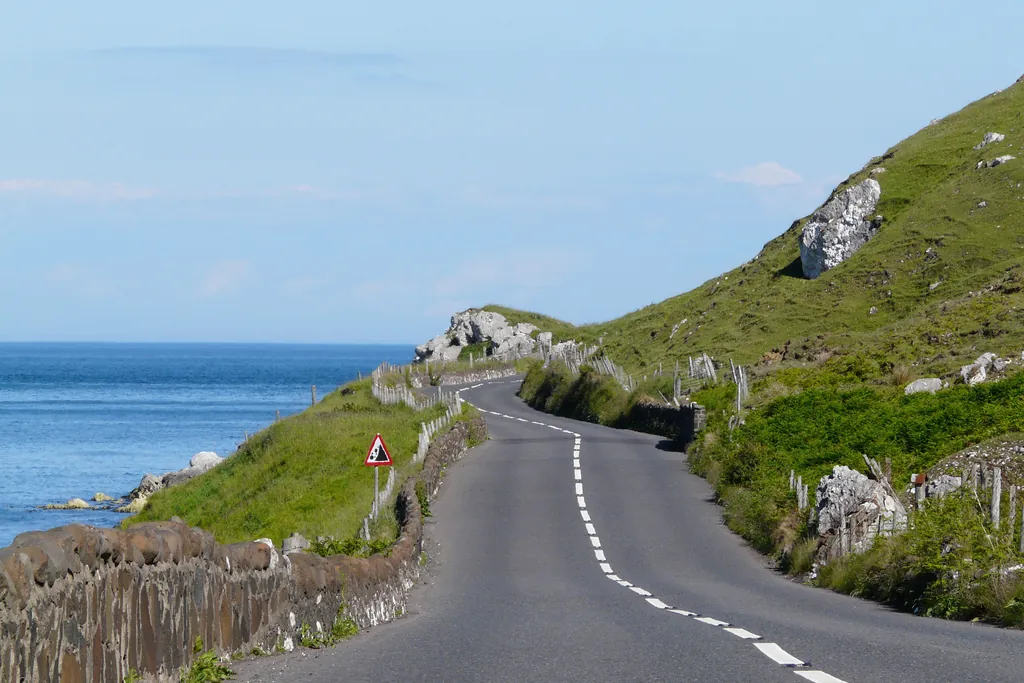
The Causeway Coastal Route runs about 120 miles between Belfast and Derry, and on a map it looks like a morning. The road is narrow in places, it winds round every headland, and in summer you share it with tour coaches, cyclists and farm traffic. The driver also sees least of the view. That is the main reason so many visitors choose to leave the driving to someone else for the coast days, and our Northern Ireland road trip guide has more on the route itself.
Getting Around Northern Ireland Without a Car
You can see a good part of Northern Ireland without driving, as long as you plan around what public transport does well and accept what it does not. Translink runs the trains and most of the buses, and its journey planner is the place to check every time and connection.
Train travel in Northern Ireland
Belfast Grand Central is the main bus and rail station, opened beside the city centre in 2024. From there, trains run north west to Coleraine and Derry, with a branch to Portrush, east to Bangor and north to Larne, as well as south to Dublin on the Enterprise. The line between Coleraine and Derry follows the shore past Castlerock, and it is one of the best train rides on the island.
Buses and coaches in Northern Ireland
Ulsterbus and Goldliner coaches link the towns, and the Airport Express services connect both Belfast airports with the city. In Belfast itself, the Glider buses run east to west across the city and stop outside Titanic Belfast. Rural services are thinner, especially on Sundays and outside the summer, so check the timetable before you build a day around one.
Where public transport does not reach on the coast
The trouble is the coast. The places most visitors come for, such as the Carrick-a-Rede Rope Bridge, Ballintoy Harbour, the Dark Hedges and the quieter stops along the Antrim Coast Road, are spread along roads that see a bus every hour or two at best. You can reach several of them in a day by bus, but not many, and not in the order that makes most sense.
Seeing the coast without a car, tours and private drivers
That gap is why so many visitors without a car use a tour for the coast days and public transport for everything else. Belfast and Derry are both compact and easy to see on foot, and the train between them is simple. For the stretch in between, a coach tour gets you to the headline stops, and a private driver with a local guide gets you to the headline stops and the ones in between, at your own pace.
How Many Days in Northern Ireland, and Where to Base Yourself
How many days in Northern Ireland is the question I am asked most, and the best starting point is that the country is small but slow. The Causeway Coastal Route’s own official guidance suggests three to five days for the route alone if you want to enjoy it rather than drive it. Here is how the time works in practice.
Northern Ireland in one day
One day is enough for one thing done properly, either Belfast or the north coast. Trying to fit both into the same day is the most common mistake I see, and it leaves you seeing the Giant’s Causeway through a windscreen. If the city is your choice, our 24 hours in Belfast guide lays out a realistic day.
Northern Ireland in two to three days
This is the shape I would suggest for most first trips, and it moves you along the coast rather than back to Belfast every night. On day one, take the Antrim Coast Road north from Belfast, stop properly on the way and sleep in Ballycastle or Bushmills. On day two, pick up where you left off, take in the Causeway Coast and finish in Derry. Day three is Derry itself, a walled city that deserves more than the hour or two most people give it.
Northern Ireland in four to five days
With four or five days you can add the Mourne Mountains and Strangford Lough in County Down, or Fermanagh and its lakes in the far west. Each of those needs a day of its own, because they sit in different directions from the north coast.
Where to stay in Northern Ireland
Belfast is the natural base for the city, the restaurants and the transport links, and it suits the first and last nights of any trip. Ballycastle, Bushmills and Portrush suit the north coast. Derry suits the west, and Newcastle sits at the foot of the Mournes. The reason to move rather than stay in one place is simple arithmetic. If you base yourself in Belfast for three days, you drive the same road to the coast and back twice over, and those are hours you could have spent somewhere new. Book the coast early for July and August, because there is not much accommodation and it goes.
Weather in Northern Ireland and What to Pack
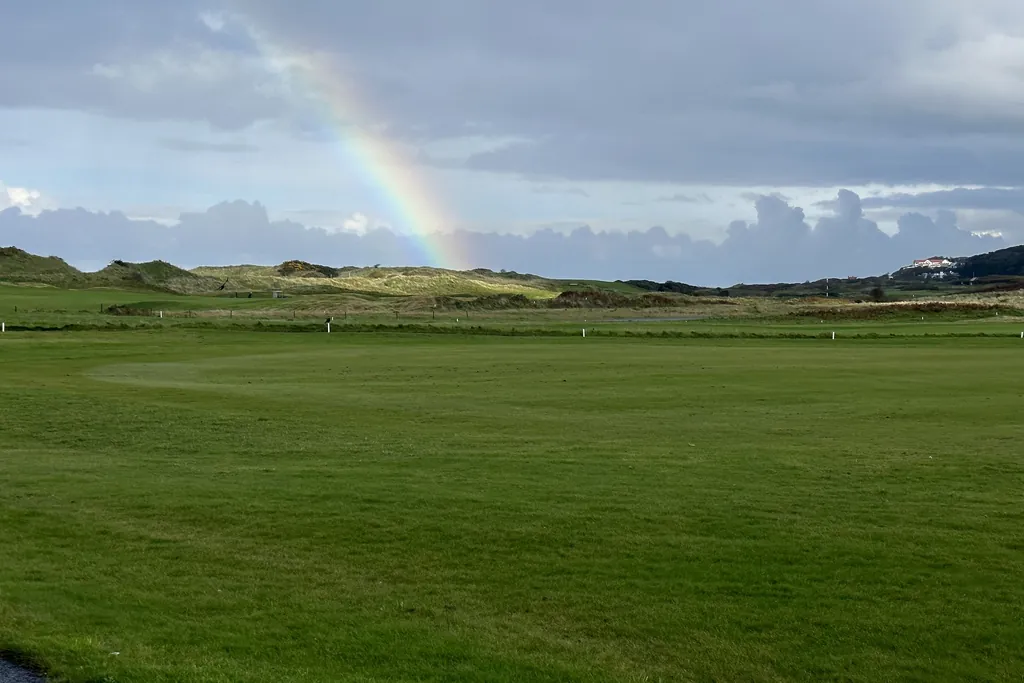
The weather here is mild and changeable, and it is shaped by the Atlantic. Winters are rarely very cold and summers are rarely hot. It can rain in any month, but it rarely rains all day, and the light after a shower on the north coast is one of the reasons I never tire of that road.
Northern Ireland temperatures and rainfall
Met Office figures put July as the warmest month, with average daily highs from about 63°F (17.5°C) on the north coast and in the hills to almost 68°F (20°C) in low lying areas. In January, average overnight lows run from about 33°F (0.5°C) in the uplands to about 36°F (2.5°C) on the coast, and snow rarely lies at sea level. October to January are the wettest months everywhere, and late spring and early summer are the driest. Sunshine peaks in May.
Which season suits your trip
Spring and early summer are dry by local standards, and the days are long. July and August are the warmest and busiest months, when the coast roads and the main sites are at their fullest. September is often settled and much quieter. Winter brings short days and wild seas, and you will have much of the coast to yourself, though some smaller attractions close or shorten their hours.
What to pack for Northern Ireland
A waterproof jacket with a hood, in every season, is the one thing I would never leave out. Bring layers rather than one heavy coat, because a sunny morning in Belfast can turn into a cold wind at the Giant’s Causeway. Comfortable shoes with grip matter more than anything else on your feet, because the Causeway stones, the cliff paths and the steps at Carrick-a-Rede are uneven and often wet. Add a plug adaptor, since the supply here is 240 volts with three pin plugs, and a small bag for the car or coach so your wet jacket is not on your lap all day.
My one rule for the weather is not to rearrange a whole day around a forecast. The forecast for the coast often changes by the hour, and the showers usually pass.
Is Northern Ireland Safe? Travel Advisory and Practical Advice
Yes. Tourism Northern Ireland describes it as a safe place to visit, and the usual advice for any city applies here as it does anywhere. For most visitors the question comes from the history, so it is worth putting it in context.
Northern Ireland today, and the Troubles
The Troubles, the conflict that lasted roughly thirty years, ended with the Good Friday Agreement in 1998. Today you can walk the murals and peace walls of west Belfast, the Bogside in Derry and the city centres in the evening as you would in any other UK city. The US State Department rates the United Kingdom as a whole at its Level 2, exercise increased caution, and mentions a risk of isolated dissident violence in Northern Ireland that mainly targets police and the military. It also notes that tensions can be higher during the summer marching season, particularly around the 12 July holiday. In practice that means checking the news if you are here in early July and avoiding parades and bonfire sites, nothing more.
Staying safe in Belfast and on the coast
Belfast is a compact city with ordinary city crime, so keep an eye on bags in busy bars and on phones at bus stops. On the coast, the bigger risks are natural ones. Stay behind the barriers on cliff paths, keep well back from the edge of the sea on the Causeway stones in a swell, and respect closures at Carrick-a-Rede when the wind is high.
Emergency number, phone roaming and calling codes
The emergency number is 999, for police, ambulance, fire and coastguard. Near the border your phone can pick up a stronger signal from the Republic, and Ofcom warns that this can lead to roaming charges, so check your plan. To call a Northern Ireland number from the Republic, dial 048 and then the number. To call the Republic from here, dial 00 353. Many of the larger sites publish detailed access information, and the Giant’s Causeway lends wheelchairs and mobility scooters, so if mobility is a concern it is worth checking each site before you go.

The Main Regions of Northern Ireland at a Glance
Northern Ireland breaks down into a handful of regions, each worth a day or more. Knowing where they sit makes every other decision easier, because the biggest planning mistakes come from treating places in different corners of the country as if they were next door.
Belfast, the capital city
The capital is where most trips begin and end. Titanic Belfast, City Hall, the murals and peace walls, the Cathedral Quarter and Crumlin Road Gaol are all within a short drive of each other. Our things to do in Belfast guide has the detail.
The Antrim Coast and the Glens of Antrim
North of Larne, the Antrim Coast Road follows the shore through Ballygally, Glenarm, Carnlough and Waterfoot, with the nine Glens of Antrim running inland. It is a drive to take slowly rather than a single destination.
The Causeway Coast
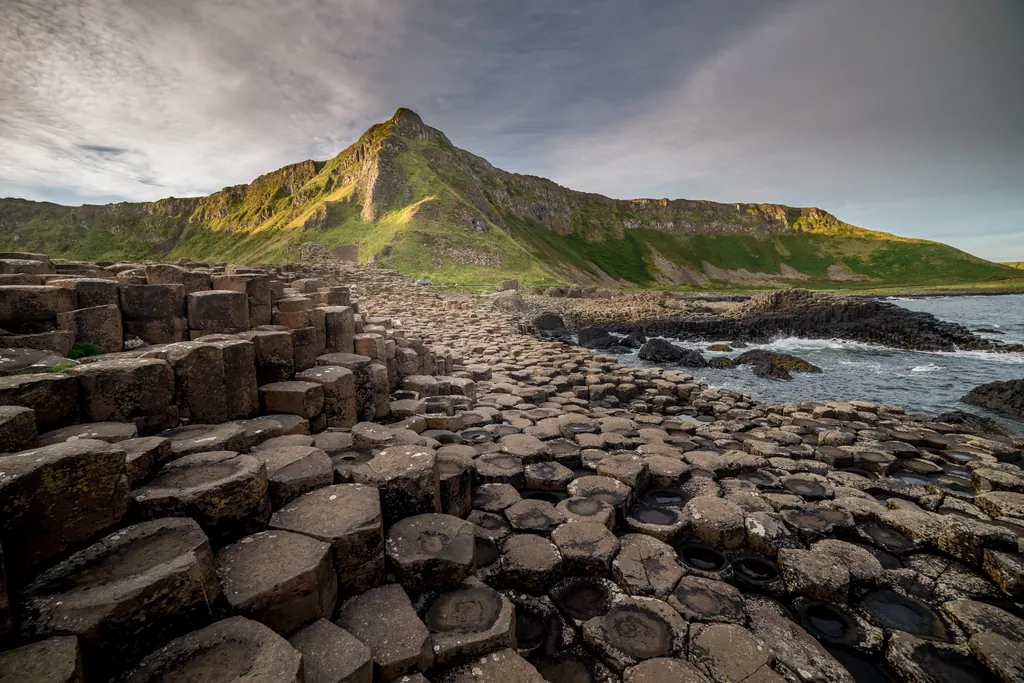
This is the stretch most visitors come for. The Giant’s Causeway, Carrick-a-Rede, Ballintoy Harbour, White Park Bay, Dunluce Castle, the Dark Hedges and the Old Bushmills Distillery all sit within a few miles of each other.
Derry and the north west of Northern Ireland
Derry is the only city in Ireland with its walls still complete, and it is about 70 miles from Belfast. On the way from the Causeway Coast you pass Mussenden Temple and Downhill. Our guide to things to do in Derry covers the city.
County Down, the Mournes and Strangford
South of Belfast, the Mourne Mountains rise behind Newcastle, and Slieve Donard reaches 2,795 feet, the highest point in Northern Ireland. Strangford Lough, Castle Ward and Mount Stewart are close by.
Fermanagh and the lakes in the west
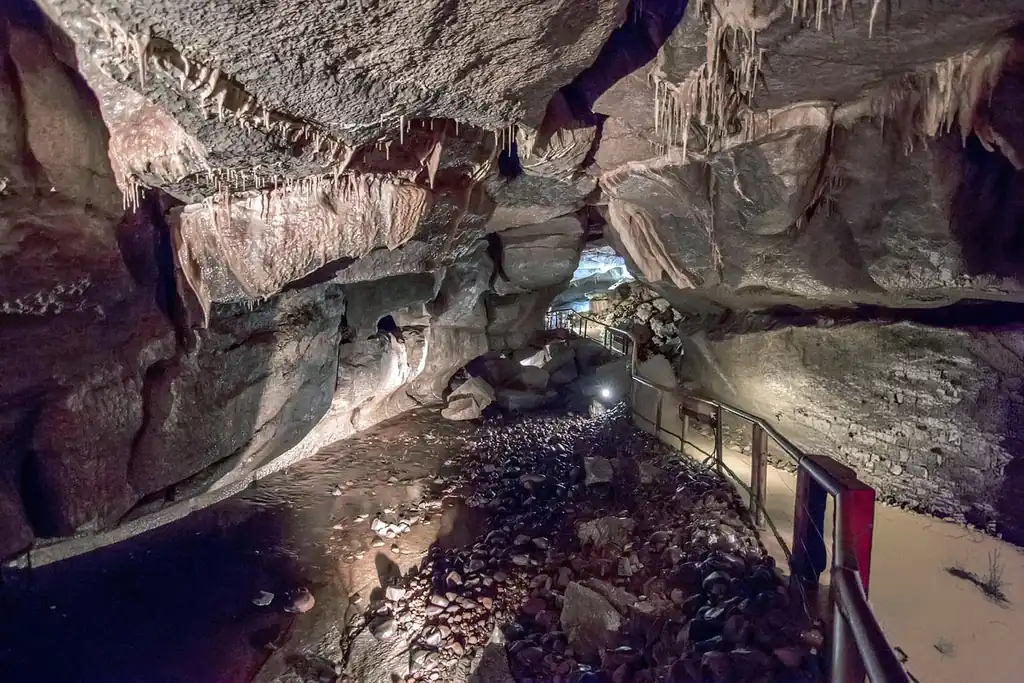
Fermanagh is lake country, built around Lough Erne and the island town of Enniskillen, with the Marble Arch Caves nearby. It is the furthest region from Belfast and the quietest. For a wider view of what is worth seeing across all of these, our guide to the Northern Ireland top attractions is a good next step.
Northern Ireland Travel Guide FAQ
Do Americans need an ETA for Northern Ireland?
Yes. US passport holders need an electronic travel authorisation to visit any part of the UK, including Northern Ireland. It costs £20, lasts two years and allows visits of up to six months at a time.
Do Canadians need an ETA for Northern Ireland?
Yes. Canadian passport holders need an ETA to visit Northern Ireland, in the same way as for England, Scotland and Wales. Every traveller needs their own, including babies and children.
Do I need an ETA to drive into Northern Ireland from Dublin?
Yes. There are no checks on the land border, but Tourism Northern Ireland says the ETA is mandatory and strictly enforced for everyone entering the UK who does not need a visa. Crossing by road or rail from the Republic does not exempt you.
Do I need a passport to go to Northern Ireland from England?
No. Northern Ireland is part of the UK, so there is no passport control on flights or ferries from Great Britain. Airlines and ferry companies do ask for photo identification, so check what your carrier accepts.
Is Northern Ireland part of the UK?
Yes. Northern Ireland is one of the four countries of the United Kingdom, together with England, Scotland and Wales. The Republic of Ireland, which shares the island, is a separate country.
Can you use euro in Northern Ireland?
Not reliably. Northern Ireland uses the pound sterling, and while some large stores accept euro, a charge may apply. Smaller businesses often do not take it, so bring sterling or use a card.
How many days do you need in Northern Ireland?
Two to three days covers Belfast and the north coast at a sensible pace. One day means choosing between the city and the coast, and four to five days lets you add Derry, the Mournes or Fermanagh.
Can you drive in Northern Ireland with a US licence?
Yes. A visitor with a full US licence may drive a car in Northern Ireland for up to 12 months from the date of entering the UK. Hire companies set their own rules on age and extra charges.
What side of the road does Northern Ireland drive on?
The left, as in the rest of the UK and the Republic of Ireland. Hire cars are right hand drive, and many have a manual gearbox, so book an automatic if you need one.
Is it safe for an English person to visit Northern Ireland?
Yes. Northern Ireland is part of the UK, and Tourism Northern Ireland describes it as a safe place to visit, for visitors from England as for anyone else. The usual city advice applies, and around the 12 July holiday it is worth keeping away from parades and bonfire sites.
Is Northern Ireland safe to visit right now?
Yes. Tourism Northern Ireland describes it as a safe place to visit, and ordinary city precautions apply. Tensions can be higher around the 12 July holiday, so it is worth avoiding parades and bonfire sites at that time.
What is the best way to travel to Northern Ireland from the USA?
Fly into Belfast directly if a route suits you, or fly into Dublin and travel north. Tourism Northern Ireland puts the journey from Dublin Airport at under two hours, and the Enterprise train links Dublin and Belfast every hour from Monday to Saturday.
What are the top 5 places to visit in Northern Ireland?
For most first visits, I would suggest the Giant’s Causeway, Titanic Belfast, Carrick-a-Rede Rope Bridge, the Dark Hedges and the walls of Derry. The first four sit within a day of Belfast, and Derry is about 70 miles to the north west.
Can you visit Northern Ireland without a car?
Yes, for the cities. Trains link Belfast with Derry, Portrush, Bangor, Larne and Dublin, but buses along the coast are infrequent, so most visitors without a car use a tour for the coast days.
What is the best month to visit Northern Ireland?
May and September suit most visitors. May is the sunniest month and late spring is the driest time of year, while September is usually quieter than the summer peak.
Follow Us for Tour Updates & Travel Inspiration
Follow us for travel inspiration, local insights, and real moments from our private tours across Northern Ireland. Stay updated with new experiences, seasonal highlights, and guest stories.
Private Tours in Belfast and Northern Ireland
If this guide has convinced you that the coast deserves more than a hurried drive, a private tour with one of our local guides is the simplest way to see it. The day is yours alone, with no strangers on board, and the route bends to what you want to see rather than to a fixed timetable.
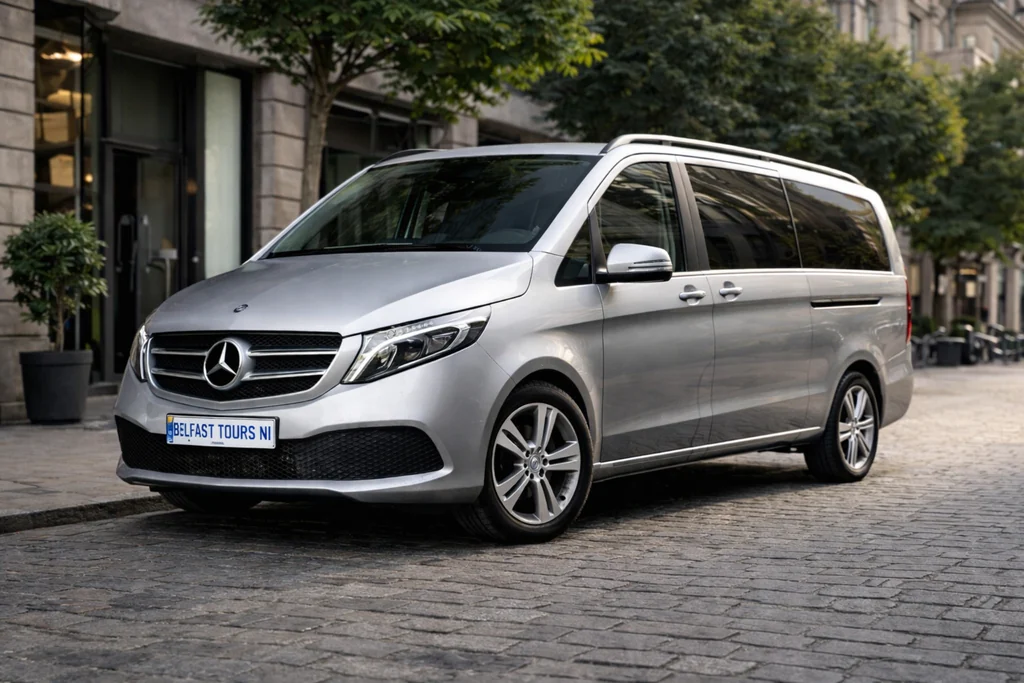
We collect you from your Belfast hotel, from either Belfast airport or from the cruise terminal. If you land in Dublin, the journey north is a chauffeur service, and the guided part of your day begins once you are in Northern Ireland. Up to 7 passengers travel in a Mercedes-Benz V-Class, 8 in a Ford Tourneo Custom, and parties of 9 or more in two V-Class vehicles travelling together.
We run single days to the Giant’s Causeway, the Game of Thrones locations and around Belfast, and we build multi-day tours that follow the coast and sleep where the day ends. Send us your dates, where you are arriving and what you most want to see, and we will come back with a plan that fits. You can reach us through our contact page.
Giants Causeway Tour
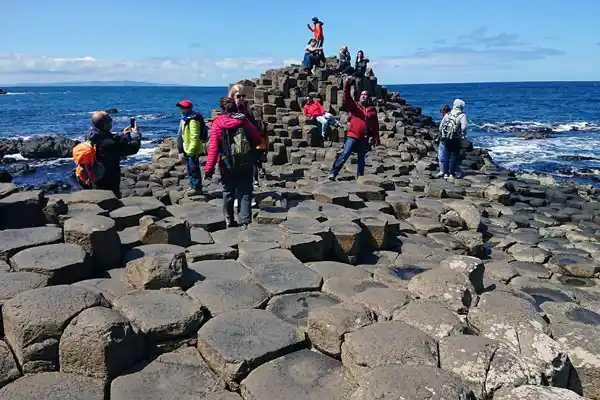
A full day at the Giant’s Causeway from Belfast, travelling the Causeway Coastal Route with your own local driver-guide and time for photos at every stop.

Game of Thrones Tour
Visit the real Game of Thrones filming locations across Northern Ireland, including the Dark Hedges and Ballintoy Harbour, on a fully private tour.

Titanic Museum and City Tour
Belfast city highlights combined with a visit to Titanic Belfast, exploring the museum at your own pace with a local guide.
Planning a private tour of Northern Ireland? ➔ Get in touch to discuss your ideas.
Connect with Us
On our social channels we share what the roads and the weather are doing week by week, new photographs from the coast, and small practical updates that do not need a whole blog post, such as a road closure or a change to an attraction’s hours.
If you are still planning and have a question about your trip, whether that is the ETA, which airport to use or where to stay, a message on any of the channels below is the quickest way to reach us. We are happy to help whether or not you book a tour.
Facebook
Pinterest
LinkedIn
WhatsApp