

Northern Ireland Sightseeing, the Best Places to Visit Day by Day
Written by Murat Yilmaz · Last updated:
Spread a map of Northern Ireland across the table and everything looks close. The Giant’s Causeway is about 60 miles from Belfast, Derry is about 70, the Mourne Mountains are just over 30, and you could cross the whole country in a couple of hours. Northern Ireland sightseeing works best when you stop seeing it as one long list of places and start seeing it as a handful of days, each built around places that sit naturally together.
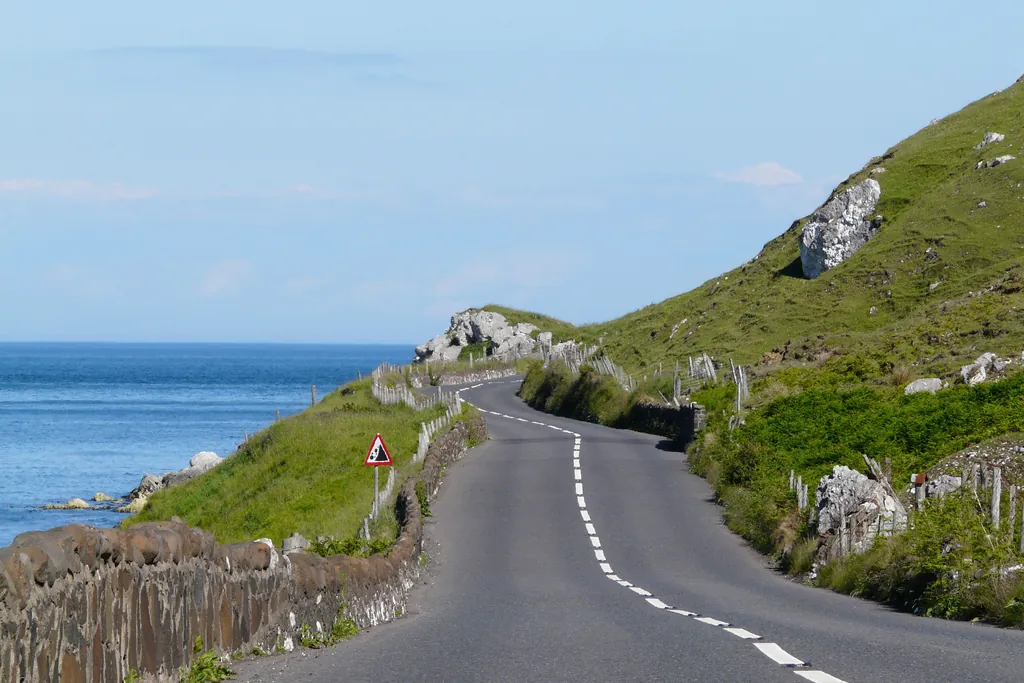
The reason is in the way the country is laid out. The best of it runs along the coast, and the roads follow the shore round every headland and bay, so the places string out in lines rather than circles. The Antrim Coast Road was cut along the foot of the cliffs in the nineteenth century, and it is still the only way to see that stretch properly. Belfast sits at one end of the line, Derry at the other, and the Mournes and Fermanagh lie off in different directions altogether.
The catch is time. The coast road from Belfast to the Causeway takes three to four hours if you drive it straight through, and eight to ten if you stop where it is worth stopping. Some places need a booked slot, some close in high wind, and in winter the light goes early. Get the order wrong and you can lose half a day to driving the same road twice.
I am on these roads most weeks of the year, and this guide is the way I would explain the country to a friend planning a first trip. I will group the sights into six days that work, give you the drive times between them, point out the sequencing mistakes that cost first timers hours, and suggest how many days to give each part. For the places themselves, I have linked our detailed guides rather than repeat them.
What Is in This Guide
- 1Northern Ireland Sightseeing Grouped Into Six Easy Days
- 2Belfast Sightseeing in One Day, Titanic Belfast and the City Centre
- 3The Antrim Coast Road and the Glens of Antrim in One Day
- 4The Giant’s Causeway and the Causeway Coast in One Day
- 5Derry in One Day, the City Walls and the Bogside
- 6The Mourne Mountains and Strangford Lough in One Day
Northern Ireland Sightseeing Grouped Into Six Easy Days
Almost all the places to visit in Northern Ireland on a first trip fall into six groups. Each one fills a day comfortably, and each one sits in its own part of the country. Once you see them this way, most planning questions answer themselves.
The four day groups along the coast from Belfast to Derry
Four of the six follow one another in a line. Belfast comes first, with Titanic Belfast, City Hall, the murals and Crumlin Road Gaol. North of Larne the Antrim Coast Road and the Glens take over, through Ballygally, Glenarm, Carnlough and Waterfoot. Round the top of the coast comes the Causeway Coast, with the Giant’s Causeway, Carrick-a-Rede, Ballintoy, Dunluce Castle and the Dark Hedges. At the far end of the line is Derry, with Mussenden Temple and Downhill on the way.
Together, those four make up the Causeway Coastal Route, which its official site puts at about 120 miles from Belfast to Derry. Because they run in a line, you can travel along them and sleep at the end of each day rather than return to Belfast every night.
County Down and Fermanagh, the two separate days
The other two do not join the line. The Mourne Mountains and Strangford Lough lie south and south east of Belfast in County Down. Fermanagh and its lakes lie far to the south west, closer to the border than to the coast. Each of these is a day in its own right, and neither combines well with the north coast in the same day.
Planning each day around one main attraction
In most of these days, one place is the main stop and everything else is planned around it. The main stop is the place with set hours, a ticket or a time you have to plan around, such as Titanic Belfast or the Giant’s Causeway. The free stops, the harbours, beaches and viewpoints, are what give a day room to breathe. In each section below I have given the main stop a visitor information panel, so you can see its hours, prices and location at a glance, and the rest are linked to their own guides.
Belfast Sightseeing in One Day, Titanic Belfast and the City Centre
Belfast is compact, and a full day here is enough to see the main sights at a comfortable pace. The trick is to give the city its own day rather than squeeze it in at the start or end of a coast day, when you will be tired and short of time.
Titanic Belfast, the main stop of a Belfast day
Titanic Belfast stands on the slipways where the ship was built, about a mile and a half from City Hall. Most people spend between an hour and a half and two and a half hours inside, plus up to an hour on SS Nomadic, the little tender that served Titanic and is moored next door. It is the place with the timed ticket, so I would suggest building the rest of the day around your slot.
What else to see in Belfast on the same day
City Hall is free to walk round, and guided tours run through the day. The murals and peace walls of west Belfast are the part of the city most visitors want to understand, and they are best seen with someone who can explain them. Crumlin Road Gaol is a short drive north, and the Cathedral Quarter is the place for an evening meal. Our guide to things to do in Belfast covers each of these in detail.
The best order for a Belfast sightseeing day
I would go to Titanic Belfast first, while you are fresh, and leave the city centre for the afternoon. The murals and the peace walls can be fitted in either side of lunch. Keep the evening free for the Cathedral Quarter.
Why Belfast and the Giant’s Causeway are too much for one day
A Belfast day and a Causeway day do not fit together. It is done, but it means a rushed hour at Titanic Belfast, well over two hours in the car and a rushed hour at the stones. If Belfast is your only base and you have two days, give one to the city and one to the coast.
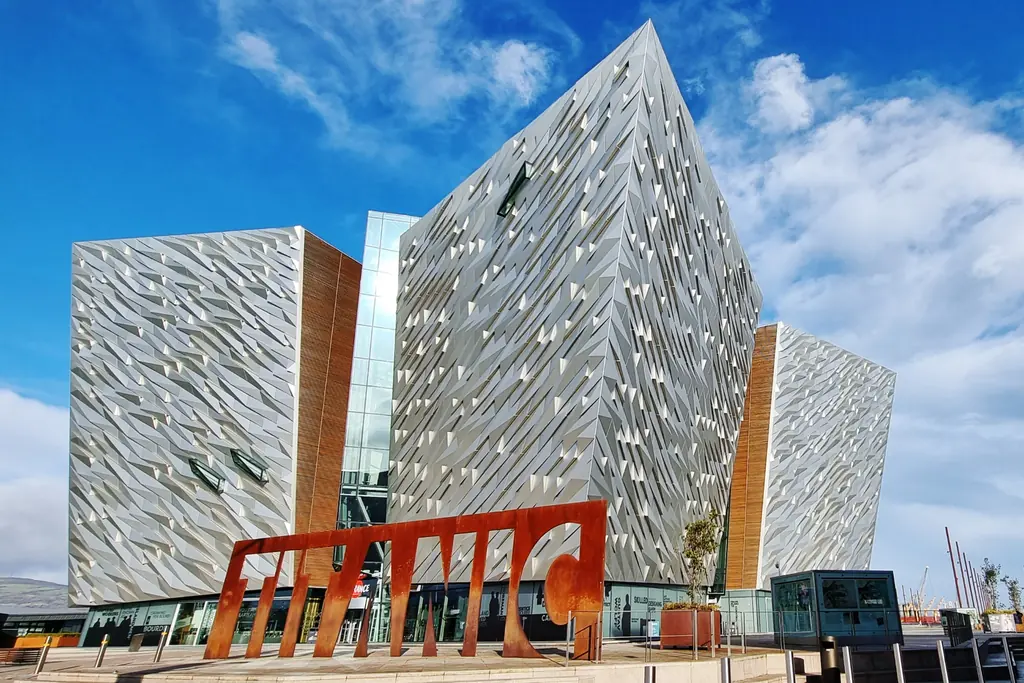
Visitor information
Opening times. January to March 9:45am to 5pm, April and May 8:50am to 6pm, June 8:30am to 7pm, July and August 8:30am to 7:30pm, September 8:30am to 6pm, October 8:50am to 6pm, November and December 9:50am to 5pm. Last admission is 1 hour 40 minutes before closing.
Guide prices. Titanic Experience: adult £24.95 and child £11 online, or adult £26.95 and child £13 at the door. Admission includes SS Nomadic.
Booking. Book online in advance, which is cheaper than paying at the door.
Facilities. Underground paid car park with 520 spaces, open 24 hours, height limit about 6 feet 10 inches. The building is accessible throughout, though the Shipyard Ride cannot take all wheelchairs or any mobility scooters.
Where it is. 1 Olympic Way, Queen’s Road, Titanic Quarter, Belfast BT3 9EP. About 1.5 miles from the city centre, a 25 to 30 minute walk. The Glider stops outside, and Titanic Quarter train station is about 15 minutes away on foot.
What is nearby. SS Nomadic, HMS Caroline, Belfast City Hall and the Cathedral Quarter.
The Antrim Coast Road and the Glens of Antrim in One Day
The Antrim Coast Road is the stretch most first timers underestimate. It begins at Larne, about 23 miles north of Belfast, and runs up the shore to Waterfoot and Cushendall, with the Glens of Antrim opening inland one after another. It is not a single sight. It is a day of short stops, each one a few minutes from the last.
Villages and harbours on the Antrim Coast Road
Ballygally has a sandy beach and a castle built in 1625. Glenarm has its castle and walled garden, home to the MacDonnells for 400 years. Carnlough Harbour is a good place for a coffee and a walk along the harbour wall. Further north, Waterfoot sits at the foot of Glenariff, and Cushendun has its sea caves.
Glenariff Forest Park, the main stop in the Glens
Glenariff Forest Park is where I would spend the longest. The waterfall walk follows a boardwalk through a gorge, past a series of falls, and it is the best short walk on this coast. Allow a couple of hours if you want to do the full loop without rushing.
Planning the Antrim Coast Road as part of a two day coast trip
This stretch works best as the first half of a two day coast trip, followed by the Causeway Coast the next morning. Driven this way, you end the day in Ballycastle or Bushmills and wake up close to the Giant’s Causeway, ahead of the traffic from Belfast. If you only have one day for the whole coast, you can still drive the Antrim Coast Road on the way north, but you will have to choose two or three stops rather than see them all.
One small point on timing. Leaving Belfast between half seven and eight in the morning puts you on the coast before the weekday traffic and well ahead of the coaches heading north. That one change makes more difference to the day than any single stop.

Visitor information
Opening times. Open daily. Walkers can enter at any hour, but the car park gates open by 8am and are locked at dusk.
Guide prices. Car £5, minibus £13, motorcycle £2.50 (Forest Service charges for 2026/27).
Booking. No booking needed.
Facilities. Toilets and showers, including an accessible shower room, a tea house and several waymarked trails, among them the Waterfall walk of about 1.9 miles.
Where it is. Glenariff Road (A43), near Waterfoot, County Antrim, BT44 0QX. About 44 miles from Belfast, roughly an hour by the inland roads and longer by the Antrim Coast Road. Ulsterbus service 150 from Ballymena stops at the entrance gate, Monday to Saturday only.
What is nearby. Waterfoot and Red Bay, Cushendall, Cushendun and Carnlough Harbour.
The Giant’s Causeway and the Causeway Coast in One Day
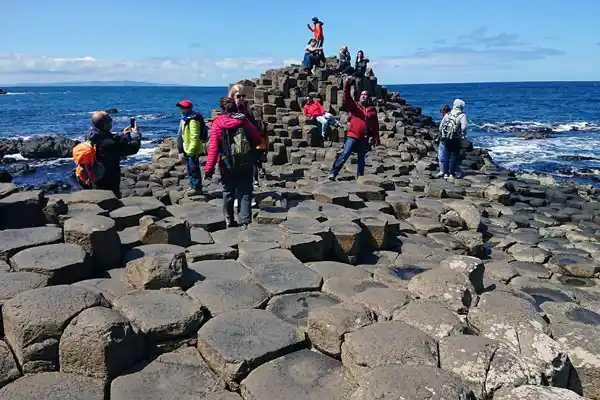
This is the day most visitors come to Northern Ireland for, and everything on it sits within a few miles. The Giant’s Causeway is the main stop, a World Heritage Site of around 40,000 basalt columns stepping down into the sea. Most people spend about two hours there, which leaves plenty of the day for the coast on either side.
What else to see near the Giant’s Causeway
To the east, the Carrick-a-Rede Rope Bridge is about seven miles away, with Ballintoy Harbour and White Park Bay close by. To the west, Dunluce Castle stands on its cliff between Bushmills and Portrush. The Old Bushmills Distillery is in the village, and the Dark Hedges are near Armoy, about eight miles inland from Ballintoy.
Booking and tickets on the Causeway Coast
Three places shape this day more than the others. Carrick-a-Rede must be booked in advance by everyone, National Trust members included, and the bridge closes in high wind, so always have a second plan. At the Giant’s Causeway, the National Trust strongly recommends booking the Visitor Experience. Dunluce Castle sells tickets at the gate only, with no online booking. The Dark Hedges road is closed to traffic, so you walk the avenue.
The best order for a Causeway Coast day
Get to the stones early, before the coaches arrive from Belfast and Dublin, and fit Carrick-a-Rede around your booked slot. The free stops, Ballintoy, White Park Bay and Dunseverick, slot in wherever the day has room. Finish with Dunluce in the late afternoon light, and either stay in Portrush or carry on west towards Derry. You can check current tickets on the National Trust’s Giant’s Causeway page before you travel.
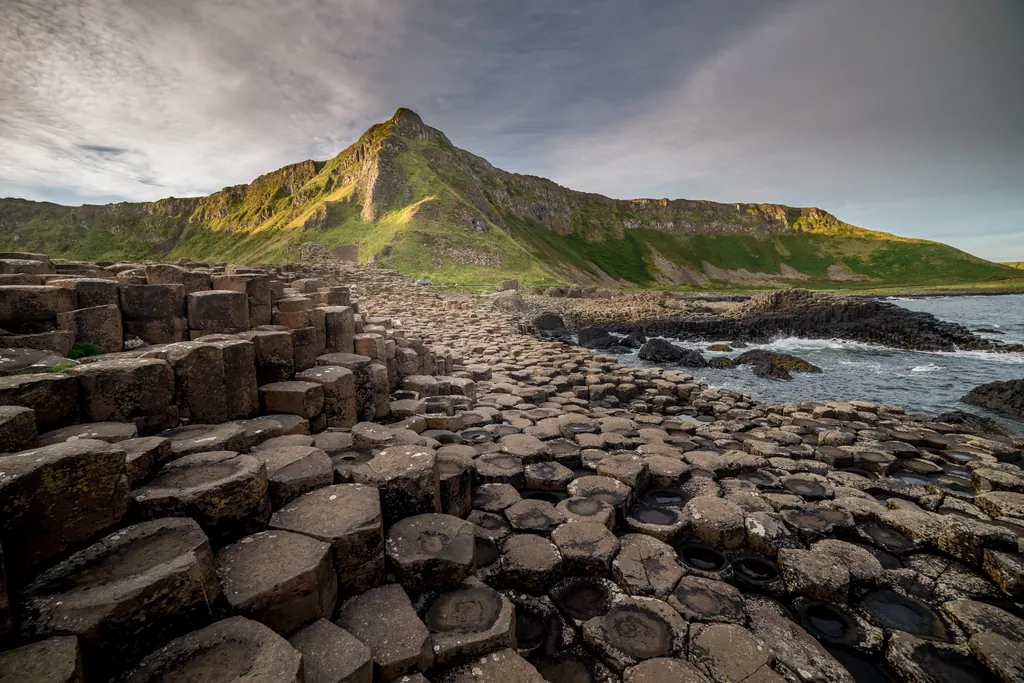
Visitor information
Opening times. Visitor centre 9am to 5pm in October, with seasonal hours through the year. The coastline is open dawn to dusk, and the car park 5am to 8pm.
Guide prices. Visitor Experience: adult £16, child £8, family £40, one adult family £24. Free for National Trust members. Walking to the stones by the public right of way is free, but does not include parking.
Booking. Pre-booking the Visitor Experience is strongly recommended, and the ticket includes parking in the main car park.
Facilities. Visitor centre with exhibition, café, shop, toilets and a Changing Places facility. Audio guides in 11 languages, guided tours, an accessible shuttle bus to the stones, and wheelchairs and mobility scooters to borrow.
Where it is. 44 Causeway Road, Bushmills, County Antrim, BT57 8SU. About 60 miles from Belfast, roughly an hour and a quarter by the M2 and A26 without stops. Trains run from Belfast to Coleraine and Portrush, and Translink’s journey planner shows the bus connection on the day.
What is nearby. Dunluce Castle, the Old Bushmills Distillery, Carrick-a-Rede Rope Bridge and Portrush.
Derry in One Day, the City Walls and the Bogside
Derry is the end of the line, and it is the city most often short changed. People reach it late on a long Causeway day, walk a short stretch of the walls and leave. It deserves a full day of its own, and it is a much easier city to see than most people expect, because nearly everything is within walking distance of the walls.
Derry’s city walls, the main sight in Derry
The city walls were built between 1613 and 1618, and they still run unbroken for almost a mile round the old city, up to about 26 feet high. Derry is the only city in Ireland with its walls still complete. The walk along the top is level and easy, and the views take in the Guildhall, the River Foyle and the murals of the Bogside below.
What else to see in Derry
The Bogside murals tell the story of the civil rights years and Bloody Sunday, and they are best seen with someone who can explain them. The Guildhall stands just outside the walls, and the Peace Bridge carries you over the Foyle to Ebrington Square. St Columb’s Cathedral is inside the walls. Our guide to things to do in Derry covers each of these.
Getting to Derry from the Causeway Coast or Belfast
From the Causeway Coast, Derry is about 40 miles further west. The road passes Mussenden Temple and Downhill Demesne on the cliffs above Castlerock, which makes the drive a sight in itself. The best shape is to arrive in the evening at the end of a Causeway day, sleep in the city and give it the next day in full. Coming from Belfast and returning the same day is possible, at about 70 miles each way, but it leaves you three hours of driving and less time on the walls.

Visitor information
Opening times. Open to the public. Access is occasionally restricted while maintenance work is carried out.
Guide prices. Free.
Booking. No booking needed to walk the walls. Guided walking tours are available through Visit Derry.
Facilities. There are no facilities on the walls themselves. Cafés, shops and toilets are in the city centre inside and around the walls.
Where it is. The walls circle Derry city centre, listed by the Department for Communities at 1-3 Waterloo Place, Derry, BT48 6BT. About 70 miles from Belfast, roughly an hour and a half by the M2, M22 and A6. Trains run from Belfast Grand Central to Derry.
What is nearby. The Guildhall, the Peace Bridge, the Bogside murals and St Columb’s Cathedral.
The Mourne Mountains and Strangford Lough in One Day
South of Belfast, County Down feels like a different country from the north coast. The Mourne Mountains rise straight up behind the seaside town of Newcastle, and Slieve Donard, at 2,795 feet, is the highest point in Northern Ireland. To the north east lies Strangford Lough, a long sea lough dotted with islands and lined with estates.
Tollymore Forest Park, the main stop in the Mournes
Tollymore Forest Park sits at the foot of the Mournes, about 33 miles from Belfast. The Shimna River runs through it, crossed by old stone bridges and stepping stones, and the park is dotted with follies, including a barn dressed up to look like a church. The trails range from a short arboretum path to a 5.5 mile mountain trail, and the walks give easy access to the high Mournes for anyone with the legs and the weather for it.
Newcastle, Castlewellan and Strangford Lough nearby
Newcastle is a few minutes away, with its long beach and promenade. Castlewellan Forest Park is close by, and on the way back towards Belfast you can take in Strangford Lough. Castle Ward, on the lough shore, and Mount Stewart, about 18 miles from Belfast on the Ards Peninsula, are both worth a visit if gardens and houses are your thing. A small ferry crosses the narrows between Strangford and Portaferry, which lets you make a loop of the lough rather than return the same way.
Why County Down needs its own day from Belfast
This is a day from Belfast, not from the north coast. From the Giant’s Causeway to Newcastle is about 93 miles, roughly two hours without stops, and doing both on the same day means a lot of motorway and very little of either. If you have four days or more, give County Down its own day from a Belfast base, either at the start or end of your trip. It also works well on a day when the forecast for the north coast is wild, because the forest gives you some shelter.

Visitor information
Opening times. Open every day of the year, 10am until sunset.
Guide prices. Car £5, minibus £13, motorcycle £2.50 (Forest Service charges for 2026/27), paid on entry.
Booking. No booking needed.
Facilities. Toilets, baby changing facilities, picnic areas and a charged car park. Four waymarked trails, from the half mile Arboretum Path to the 5.5 mile Mountain Trail.
Where it is. Bryansford Road, Newcastle, County Down, BT33 0PR. About 33 miles from Belfast, under an hour by the A24 to Clough and then the A2 towards Newcastle.
What is nearby. Newcastle, Slieve Donard, Castlewellan Forest Park and Castle Ward.
Fermanagh in One Day, Lough Erne and the Marble Arch Caves
Fermanagh is the quietest corner of Northern Ireland and the furthest from Belfast. It is lake country, built around Lough Erne and the island town of Enniskillen, and most first time visitors never get there. If you have the time, it rewards you with a slower pace and empty roads.
The Marble Arch Caves, the main stop in Fermanagh
The Marble Arch Caves are about 12.5 miles from Enniskillen. The guided tour lasts about 75 minutes and, when the underground water levels allow, begins with a short boat trip on a river inside the cave before you walk through the show cave. The caves sit inside a UNESCO Global Geopark that spreads across the border.
Florence Court, the Cuilcagh Boardwalk and Enniskillen
Florence Court, a National Trust house and estate, is a few minutes from the caves. The Cuilcagh Boardwalk Trail, which locals call the Stairway to Heaven, climbs onto the mountain above. Enniskillen itself has its castle and its lakeside streets, and boat trips run on Lough Erne in season.
Getting to Fermanagh and how long to stay
Enniskillen is about 80 miles from Belfast, roughly an hour and three quarters each way without stops. That is a lot of driving for a single day trip, and I would suggest staying a night in Fermanagh if you can rather than going there and back. From Derry, it is about 52 miles south, so it can also follow a Derry day if you are working round the country in a loop. What does not work is adding Fermanagh to any other day. It sits on its own, and it needs a day of its own.
If your trip is three days or less, Fermanagh is the part I would leave for a second visit. With five days or more, it is one of the most rewarding additions you can make.
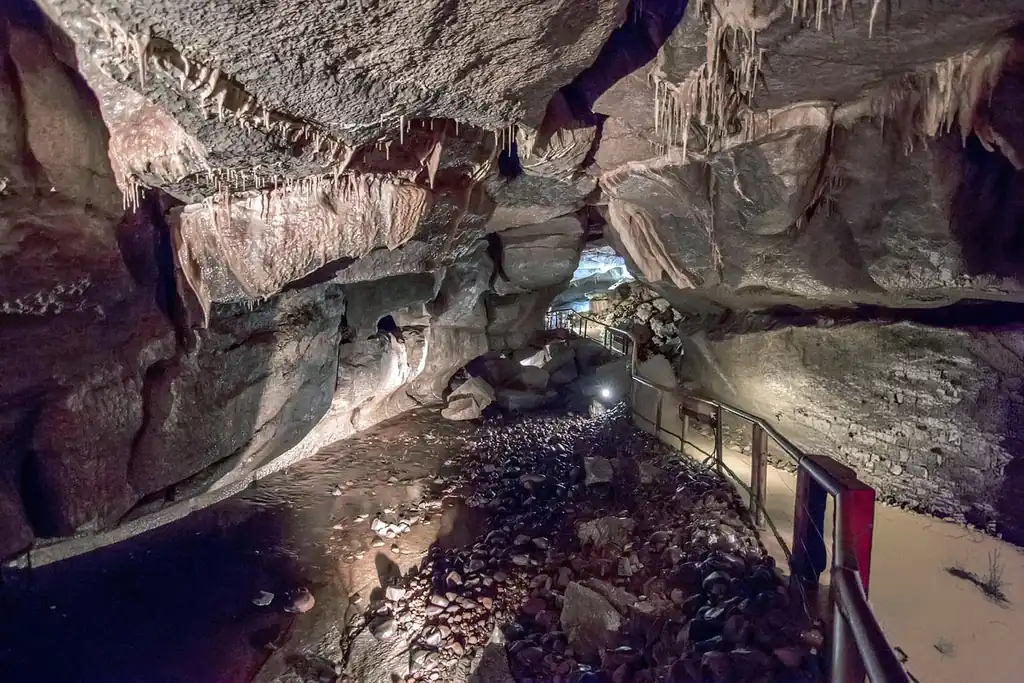
Visitor information
Opening times. In October, the visitor centre opens 9am to 5pm daily, with guided cave tours 10am to 4pm and the café 10am to 4pm. Winter hours from November had not been published when I last checked, so look at the caves’ website before you travel.
Guide prices. Guided cave tour, online prices: adult £16.50, child £8.50, family of two adults and two children £41.50. Children aged four and under go free but need a ticket.
Booking. Pre-booking online is recommended.
Facilities. Visitor centre with café, shop, exhibition, toilets and free parking, with two electric car charging points. The cave tour includes 154 steps and is not accessible for wheelchairs or pushchairs.
Where it is. 43 Marlbank Road, Florencecourt, County Fermanagh, BT92 1EW. About 12.5 miles from Enniskillen, and Enniskillen is about 80 miles from Belfast, roughly an hour and three quarters by the M1 and A4.
What is nearby. Florence Court, the Cuilcagh Boardwalk Trail, Killykeeghan Nature Reserve and Enniskillen.
Driving Times Around Northern Ireland, and Planning Mistakes to Avoid
These are the distances that shape a trip, all approximate and all without stops. Belfast to the Giant’s Causeway is about 60 miles, roughly an hour and a quarter by the inland roads. Belfast to Derry is about 70 miles, about an hour and a half. The Giant’s Causeway to Derry is about 40 miles, about an hour. Belfast to Newcastle is about 33 miles, under an hour, and Belfast to Enniskillen is about 80 miles, an hour and three quarters. The Causeway to Newcastle is about 93 miles, two hours. The coast road is a different matter, and the full run from Belfast to the Causeway by the Antrim Coast Road takes three to four hours without stopping.
Mistake one: staying in Belfast for the whole trip
This is the one I see most. You stay in Belfast for the whole trip, so you drive up the coast and back on the first day, then up the coast and back again on the second. That is the same road four times, and hours spent looking at ground you have already seen. Sleep where the day ends instead. Take the Antrim Coast Road on day one and stop in Ballycastle or Bushmills, then pick up the Causeway Coast the next morning and finish in Derry. Every mile is new.
Mistake two: putting two far apart areas into one day
The Causeway Coast and Belfast in the same day, the Causeway Coast and Derry in the same day, or the north coast and the Mournes in the same day are all done, and they are all done badly. Each pair adds a long drive to a day that is already full. Anything with Fermanagh tacked on is the same.
Mistake three: leaving Belfast too late in the morning
Most visitors leave Belfast around nine. Weekday traffic out of the city is at its heaviest then, and you reach the north coast at the same moment as the tour coaches. Leave between half seven and eight and you are clear of the city and standing at the stones while they are still quiet.
Mistake four: not planning around the booked attractions first
Put the booked and timed places in first, Carrick-a-Rede, Titanic Belfast and the Marble Arch Caves, then fit the free ones around them. The harbours and beaches are flexible. The time slots are not.

Northern Ireland Itinerary Ideas, From One Day to a Week
The official Causeway Coastal Route guidance suggests three to five days for the route alone, and that matches my own experience. Here is how I would shape a Northern Ireland itinerary for the time you have, using the six day groups above.
Northern Ireland sightseeing in one day
Choose one group and do it well. For most people that is the Causeway Coast, driving north by the inland road and coming back along part of the coast. If you would rather stay close, give the day to Belfast.
Northern Ireland sightseeing in two days
Belfast on one day and the Causeway Coast on the other is the simplest shape. If you are happy to move hotels, take the Antrim Coast Road on day one, sleep on the north coast and give the Causeway Coast the whole of day two before heading back.
What to see in Northern Ireland in 3 days
This is the shape I suggest more than any other. Day one is the Antrim Coast Road and the Glens, with a night in Ballycastle or Bushmills. Day two is the Causeway Coast, finishing in Derry for the night. Day three is Derry itself. If you would rather end where you started, swap Derry for a Belfast day and spend the second night on the coast before driving back.
Northern Ireland sightseeing in four to five days
Add County Down, with the Mournes and Strangford Lough, from a Belfast base at the start or end. With a fifth day, either add Fermanagh after Derry, staying a night in Enniskillen, or simply slow the coast down. A spare day is never wasted here, because the weather will want to move something.
Northern Ireland sightseeing in a week
A week lets you do all six groups at a relaxed pace. Our Northern Ireland road trip guide lays out a longer route in more detail, and our Northern Ireland top attractions guide is the place to decide which stops matter most to you.

Northern Ireland Sightseeing FAQ
How many days in Northern Ireland is enough?
Two to three days covers Belfast and the north coast at a comfortable pace. Four to five days lets you add Derry, the Mournes or Fermanagh, and a week lets you see all of them without rushing.
What should you see in Northern Ireland in 3 days?
Take the Antrim Coast Road on day one and sleep on the north coast, give day two to the Causeway Coast and finish in Derry, then spend day three in Derry. If you would rather end in Belfast, swap Derry for a Belfast day.
How far is the Giant’s Causeway from Belfast?
About 60 miles. By the inland roads it takes roughly an hour and a quarter without stops, and by the Antrim Coast Road it takes much longer.
How long does it take to drive the Causeway Coastal Route?
The official route runs about 120 miles from Belfast to Derry. Driving the coast road from Belfast to the Causeway straight through takes three to four hours, and a day with proper stops takes eight to ten.
Where does the Causeway Coastal Route start and finish?
It runs between Belfast and Derry, following the Antrim coast north and then the north coast west. You can drive it in either direction.
How long should you spend at the Giant’s Causeway?
Most people spend about two hours there. That gives time for the visitor centre, the walk down to the stones and some time on the columns themselves.
Can you visit the Giant’s Causeway for free?
Yes, you can walk to the stones for free by the public right of way. That does not include parking or the visitor centre, which come with a Visitor Experience ticket.
How far is Derry from Belfast?
About 70 miles, roughly an hour and a half by road without stops. Trains also run from Belfast Grand Central to Derry.
Is it worth visiting Derry?
Yes. It is the only city in Ireland with its walls still complete, and the walls, the Bogside murals and the Guildhall are all within walking distance of each other. It deserves a full day rather than an hour at the end of a Causeway day.
How far are the Mourne Mountains from Belfast?
Newcastle, at the foot of the Mournes, is about 33 miles from Belfast, under an hour by road. Tollymore Forest Park is a few minutes from the town.
How far is Fermanagh from Belfast?
Enniskillen is about 80 miles from Belfast, roughly an hour and three quarters each way without stops. It is worth staying a night rather than going there and back in a day.
Can you do the Giant’s Causeway and Belfast in one day?
You can, but you will not see either properly. The coast is a full day on its own, so give Belfast and the Causeway a day each if you possibly can.
Is the Antrim Coast Road worth driving?
Yes. It is one of my favourite drives anywhere, with harbours, beaches and the Glens of Antrim every few miles, but it is slow, so allow a full day rather than treating it as the way to somewhere else.
What is the best base for exploring Northern Ireland?
Belfast suits the city and County Down, the north coast towns of Ballycastle, Bushmills and Portrush suit the Causeway Coast, and Derry suits the west. Moving along the coast rather than staying in one place saves you driving the same road twice.
Follow Us for Tour Updates & Travel Inspiration
Follow us for travel inspiration, local insights, and real moments from our private tours across Northern Ireland. Stay updated with new experiences, seasonal highlights, and guest stories.
Private Tours in Belfast and Northern Ireland
Putting the right places in the right order is the part of a trip where a local guide earns their keep. On a private tour, your guide plans the day around the six groups in this post, keeps the booked slots in hand and fits in the quieter stops that a timetable would leave out.
We pick you up from your hotel in Belfast, from either Belfast airport or from the cruise terminal. If you are starting from Dublin, the transfer north is a chauffeur service and the guided sightseeing begins in Northern Ireland. Parties of up to 7 travel in a Mercedes-Benz V-Class, 8 in a Ford Tourneo Custom, and 9 or more in two V-Class vehicles together.
You can book a single day, such as our Giant’s Causeway tour or a Belfast city tour, or ask us to build a multi-day trip that moves along the coast and sleeps where each day ends. Tell us your dates, how many of you are travelling and the places on your list, and we will suggest an order that makes the most of your time.
Giants Causeway Tour
A full day at the Giant’s Causeway from Belfast, travelling the Causeway Coastal Route with your own local driver-guide and time for photos at every stop.

Game of Thrones Tour
Visit the real Game of Thrones filming locations across Northern Ireland, including the Dark Hedges and Ballintoy Harbour, on a fully private tour.

Titanic Museum and City Tour
Belfast city highlights combined with a visit to Titanic Belfast, exploring the museum at your own pace with a local guide.
Planning a private tour of Northern Ireland? ➔ Get in touch to discuss your ideas.
Connect with Us
Our social channels follow the seasons on the roads in this post, from spring on the Glens to winter storms at the Causeway, along with notes on closures, new openings and the best light at each stop.
If you are trying to put your own list in order and want a second opinion, send us a message on any of the channels below. It is the quickest way to reach us, and we are glad to help whether or not you book with us.
Facebook
Pinterest
LinkedIn
WhatsApp