

Northern Ireland Top Attractions – Must-See Places to Visit
Written by Murat Yilmaz
Last updated: Februarry
Northern Ireland is home to some of the most iconic sights in Ireland, offering a powerful mix of dramatic coastal scenery, historic landmarks, and vibrant cities.
From the world-famous Giant’s Causeway and the scenic Causeway Coastal Route to Titanic Belfast and the streets of historic Belfast, the region is packed with must-see highlights.
This guide to Northern Ireland top attractions showcases the places that define the country and create unforgettable travel experiences for first-time and returning visitors alike.
Top Attractions in Northern Ireland and Best to do in northern ireland
Table of Contents
Giant's Causeway – Northern Ireland’s Only UNESCO World Heritage Site
One of the most iconic natural landmarks in Europe, the Giants Causeway is famous for its interlocking basalt columns formed by ancient volcanic activity. Steeped in myth and legend, this dramatic coastal site is a must-see on any visit to top Northern Ireland tourist attractions
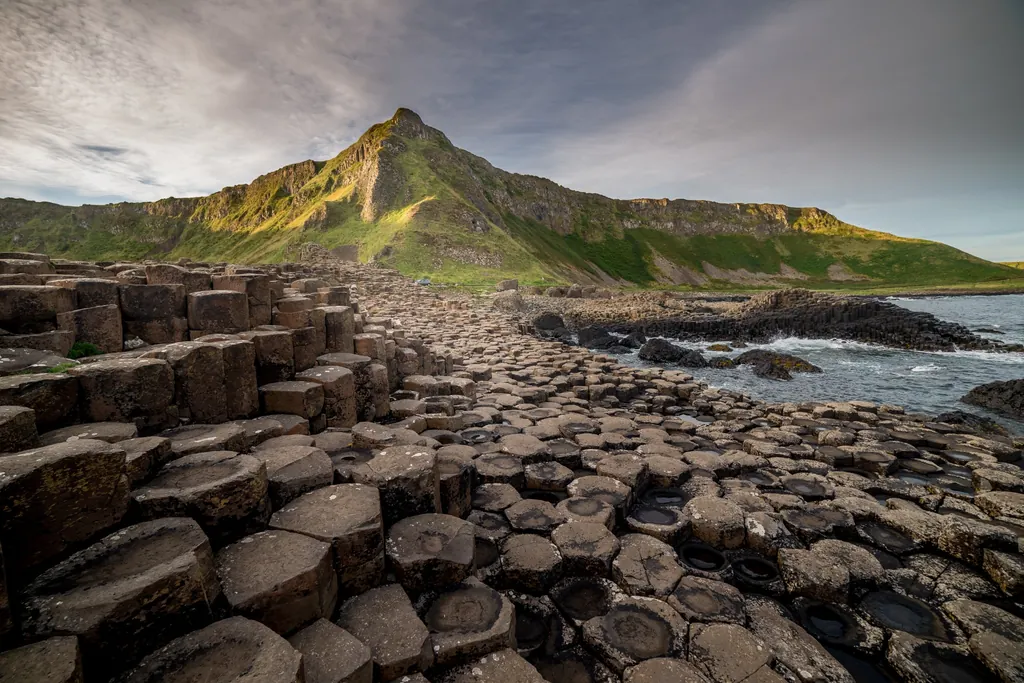
Address: 44 Causeway Road, Bushmills, County Antrim, BT57 8SU
What to expect: The Giant’s Causeway is Northern Ireland’s most iconic natural attraction and the only UNESCO World Heritage Site in the region. It is made up of around 40,000 interlocking basalt columns, formed by volcanic activity over 60 million years ago and shaped by the Atlantic Ocean.
Visitors can walk directly among the stones, follow coastal paths, and experience one of Europe’s most dramatic landscapes. The site is equally known for its mythology and legend, particularly the story of the giant Finn McCool, which adds depth and character to the visit.
Beyond the stones themselves, the surrounding coastline offers cliff walks, elevated viewpoints, and panoramic sea views that change constantly with the light and weather.
Opening information: The Causeway stones and coastal paths are accessible year-round during daylight hours.
The Giant’s Causeway Visitor Centre operates seasonally, with extended hours from spring through summer.
Visitor experience: The Visitor Centre includes interactive exhibitions, a café, gift shop, and a shuttle bus service down to the stones for those who prefer not to walk. Entry to the Visitor Centre and use of the official car park are ticketed.
Local recommendation: For visitors who want to slow down and enjoy the setting, the Causeway Hotel, located directly beside the site, is an excellent place to stop for lunch or a coffee. The lounge and dining areas offer sea views across the coastline, making it one of the best spots to relax after exploring the stones without needing to move the car.
Visitor tip: Walking access to the stones is free if you arrive on foot or by public transport. Parking at the official Visitor Centre is ticketed and includes access to facilities. Wear sturdy footwear, as the stones can be uneven and slippery, especially after rain.
Good to know: The Giant’s Causeway is busiest between late morning and early afternoon. Early morning or late afternoon visits are quieter and offer better light for photography. Weather conditions on the north coast can change quickly, so a light waterproof jacket is recommended year-round.
Follow Us for Tour Updates & Travel Inspiration
Follow us for travel inspiration, local insights, and real moments from our private tours across Northern Ireland. Stay updated with new experiences, seasonal highlights, and guest stories.
About Belfast Tours NI

Belfast Tours NI is a local tour company for travellers who want a personal, relaxed way to explore Northern Ireland, offering private tours, tailored itineraries, and local insight to help you plan a memorable visit.
Titanic Belfast – The Birthplace of the RMS Titanic
Located on the historic Harland & Wolff shipyard, Titanic Belfast tells the story of the city’s proud shipbuilding past. Through immersive galleries and interactive displays, visitors experience the full journey of the world’s most famous ship. must visit Northern Ireland Top Attractions.
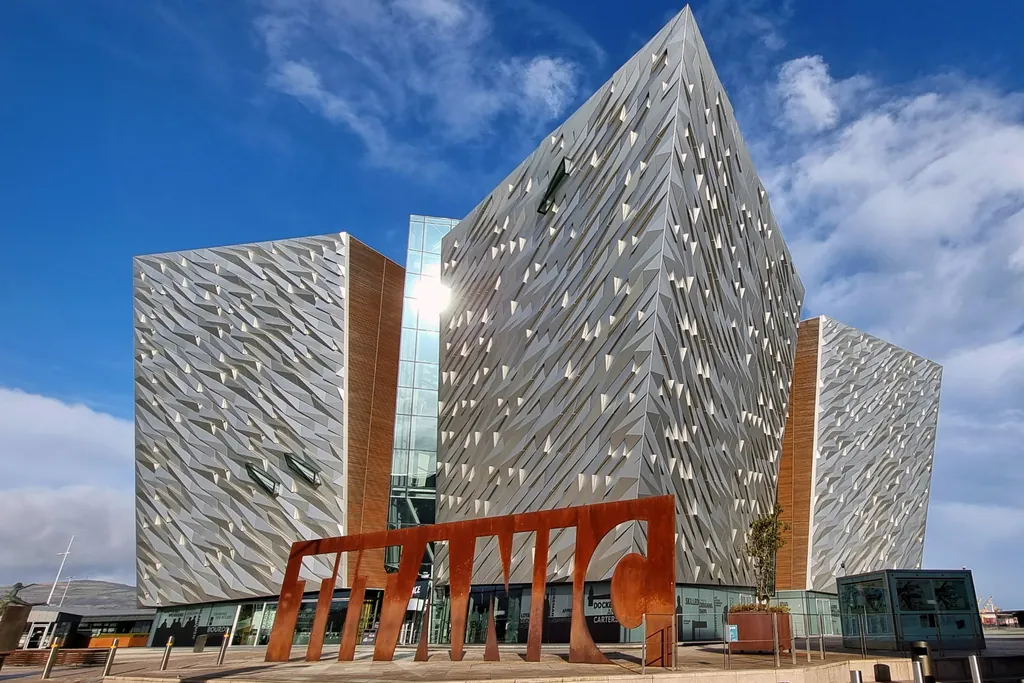
Address: 1 Olympic Way, Queen’s Road, Titanic Quarter, Belfast, BT3 9EP
What to expect: Titanic Belfast is one of Northern Ireland’s most important and most visited attractions, built on the exact site where the RMS Titanic was designed, built, and launched. For Belfast, this is not just a museum — it’s a central part of the city’s identity and industrial history.
The experience is spread across multiple immersive galleries that take visitors through Belfast’s shipbuilding era, the construction of the Titanic at the Harland & Wolff shipyard, life on board, the sinking, and the ship’s legacy. Interactive displays, full-scale reconstructions, and multimedia storytelling bring the story to life in a way that works equally well for first-time visitors and returning guests.
One of the highlights is the section dedicated to the shipyard itself, where visitors gain a real sense of the scale, skill, and workforce involved. As someone who lives in Belfast, this part stands out — the Titanic was not an abstract story here; it was built by local hands, in this very place.
Opening information: Titanic Belfast is open daily year-round. Opening times vary by season, with longer hours during spring and summer months and shorter hours in winter. Last admission is usually around 90 minutes before closing.
Visitor experience: Most visitors spend 1.5 to 2.5 hours inside the museum. The building also offers cafés, a gift shop, and waterfront views across the Titanic Quarter. Outside, visitors can walk the historic slipways where the Titanic and her sister ship, Olympic, were launched, clearly marked and free to access.
Local recommendation: After your visit, take time to walk around the Titanic Quarter, especially the slipways and dockside areas directly outside the building. This helps put the story into context and shows just how large the shipyard once was. If time allows, nearby landmarks such as the SS Nomadic and HMS Caroline add further depth to the Titanic story.
Visitor tip: Booking tickets in advance is strongly recommended, particularly during summer months, weekends, and school holidays. Early morning or late afternoon entry times tend to be quieter and more relaxed.
Good to know: Titanic Belfast is easily reached from Belfast city centre by car, taxi, or public transport. Parking is available nearby, and the site is fully accessible. Even visitors with only a short stay in Belfast should prioritise this attraction — it provides essential context for understanding the city itself.
Titanic Belfast Tours & Experiences
Causeway Coastal Route – One of the World’s Most Scenic Drives
Stretching along the Antrim Coast, the Causeway Coastal Route is one of the standout routes among Northern Ireland top attractions, offering breathtaking views of cliffs, castles, beaches, and the Atlantic Ocean. This iconic drive connects many of the region’s most famous landmarks and is a highlight in itself.
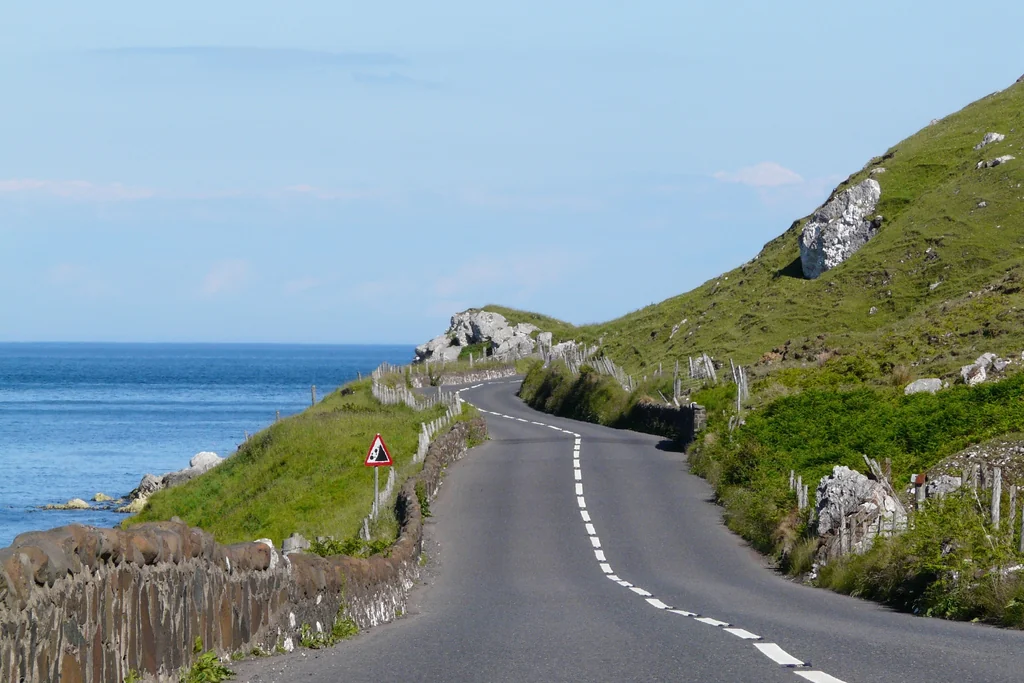
Location: Antrim Coast, Northern Ireland
General directions: The Causeway Coastal Route follows the A2 coastal road along the Antrim Coast. Most visitors start in Belfast, driving north via Carrickfergus and Larne, continuing through Ballycastle and Bushmills towards the Giant’s Causeway.
Driving time: Approximately 2–3 hours one way without stops. A full day is recommended to enjoy the route properly.
What to expect: The Causeway Coastal Route is one of the most scenic drives in the world, stretching along dramatic cliffs, beaches, and rugged coastline. It links many of Northern Ireland’s top attractions, including Dunluce Castle, Carrick-a-Rede Rope Bridge, and the Giant’s Causeway.
Opening information: The route is open year-round.
Good to know: This is not a drive to rush. Allow plenty of time for photo stops, short walks, viewpoints, and attractions along the way, as it is one of the best Northern Ireland Top Attractions.
Carrick-a-Rede Rope Bridge – A Thrilling Coastal Crossing
Suspended nearly 30 metres above the sea, the Carrick-a-Rede Rope Bridge is one of the most memorable Northern Ireland top attractions, linking the mainland to a small rocky island. The short but exhilarating crossing rewards visitors with dramatic coastal views and a truly unforgettable experience.
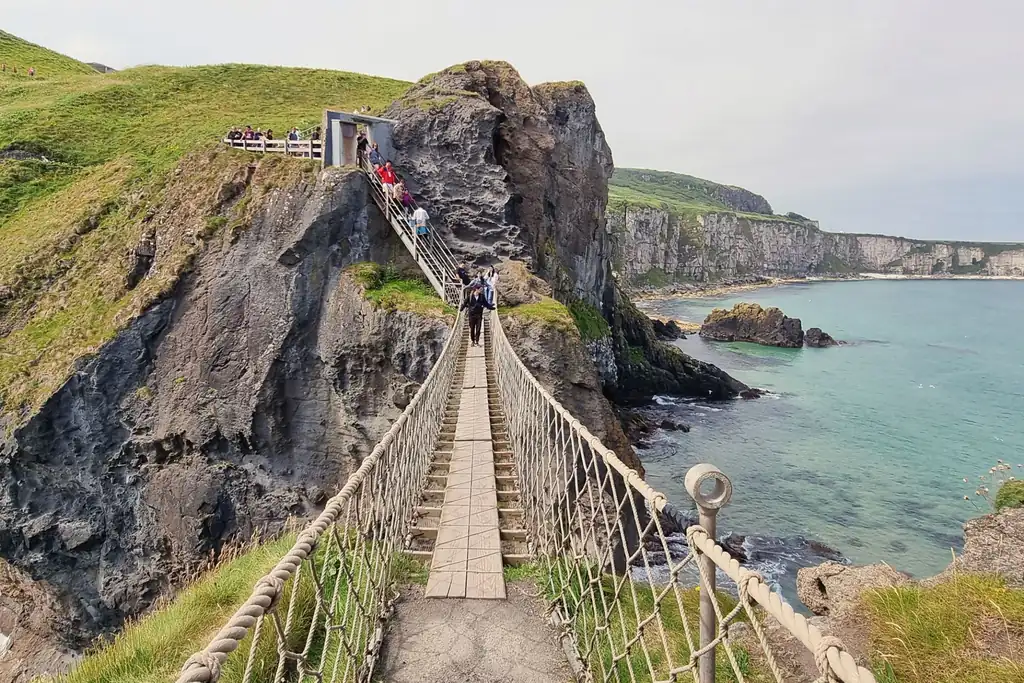
Address:
119a Whitepark Road, Ballintoy, County Antrim, BT54 6LS
What to expect:
A historic rope bridge suspended nearly 30 metres above the sea, offering spectacular coastal views.
Opening information:
Seasonal opening with timed entry slots. Opening and closing times depend on daylight and weather conditions.
Visitor tip:
Advance booking is strongly recommended. The coastal walk is worthwhile even if you choose not to cross the bridge.
Dunluce Castle – A Medieval Castle on the Edge of the Atlantic
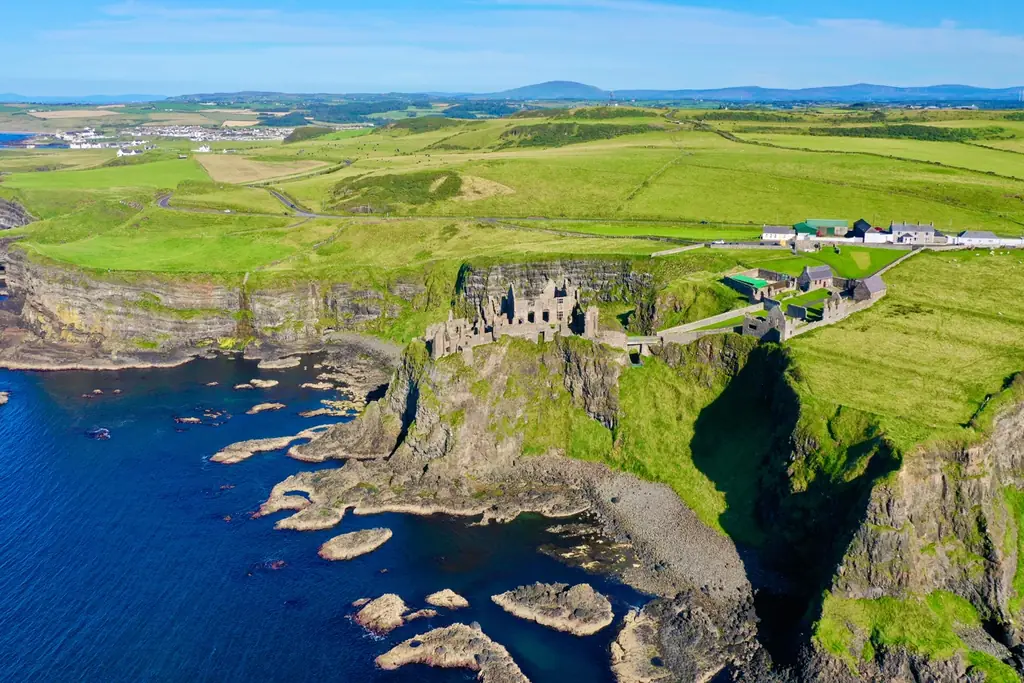
Dunluce Castle sits dramatically on a clifftop overlooking the Atlantic Ocean and is one of the most striking Northern Ireland top attractions. Once home to powerful medieval clans, the castle offers stunning coastal views and a glimpse into the region’s turbulent past.
In Game of Thrones, Dunluce Castle was used as the exterior filming location for House Greyjoy’s stronghold, Pyke, adding another layer of interest for fans of the series.
Address: 87 Dunluce Road, Bushmills, County Antrim, BT57 8UY
What to expect: Dunluce Castle is one of the most striking Northern Ireland top attractions, dramatically perched on a clifftop above the Atlantic Ocean. The ruins date back to the Middle Ages and were once home to powerful local clans. Today, visitors can explore the remains of towers, courtyards, and defensive walls while enjoying sweeping views along the Antrim Coast.
The castle’s exposed position makes it especially atmospheric, with waves crashing below and ever-changing coastal light creating excellent photography opportunities. Dunluce Castle is also closely linked to local legends and centuries of turbulent history, adding depth to the visit beyond the scenery alone.
Opening information: The castle is typically open daily, with opening hours varying by season. Shorter hours apply during the winter months.
Visitor experience: Entry allows access to the castle ruins and viewpoints within the grounds. Information panels provide historical context, and the site is easy to combine with nearby attractions along the Causeway Coastal Route.
The Dark Hedges – One of Northern Ireland’s Most Photographed Roads
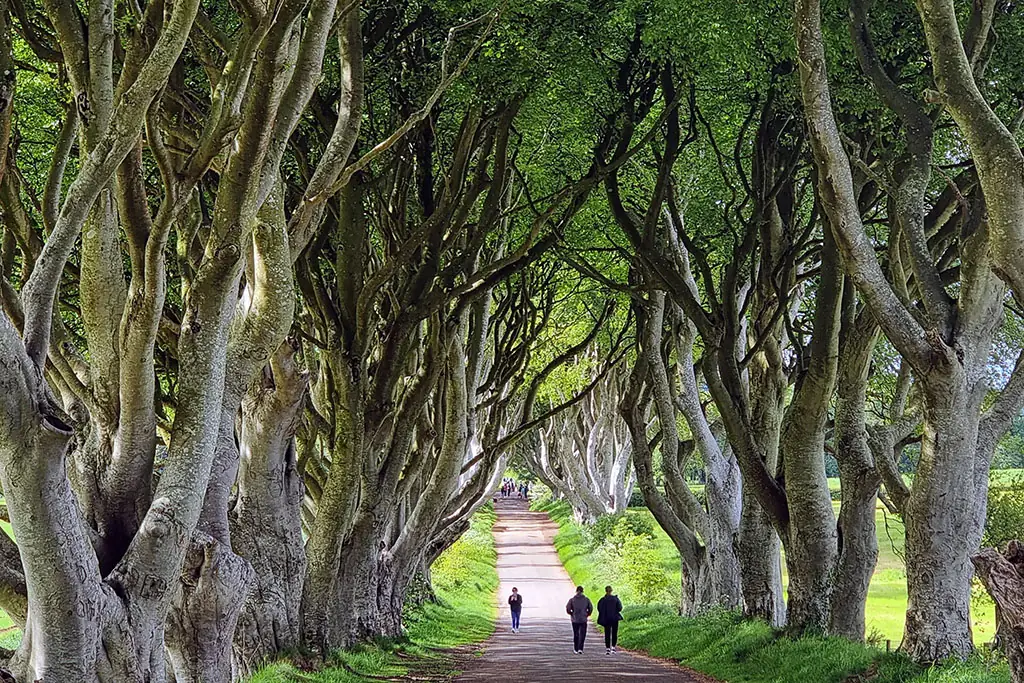
Planted in the 18th century, this atmospheric avenue of beech trees has become one of the most recognisable Northern Ireland top attractions.
The Dark Hedges gained international fame as a filming location for Game of Thrones, where it appeared as the Kingsroad, drawing fans from around the world. Its tunnel-like canopy creates a striking setting, making it one of the most photographed locations in Northern Ireland, particularly in the early morning or late evening light.
Address: Bregagh Road, near Armoy, County Antrim, BT53 8PX
What to expect: Planted in the 18th century, the Dark Hedges is a striking avenue of beech trees that has become one of the most recognisable Northern Ireland top attractions.
The site gained worldwide attention after appearing in Game of Thrones as the Kingsroad, making it a popular stop for fans of the series as well as photographers. The arching branches create a dramatic, tunnel-like effect that changes with the light and seasons.
Opening information: The Dark Hedges is accessible year-round during daylight hours.
Visitor tip: Early morning or late evening visits offer the best experience, with softer light and fewer crowds. Traffic restrictions are sometimes in place, so parking in designated areas and walking to the site is recommended.
Belfast Political Murals – Insight into Belfast’s Modern History
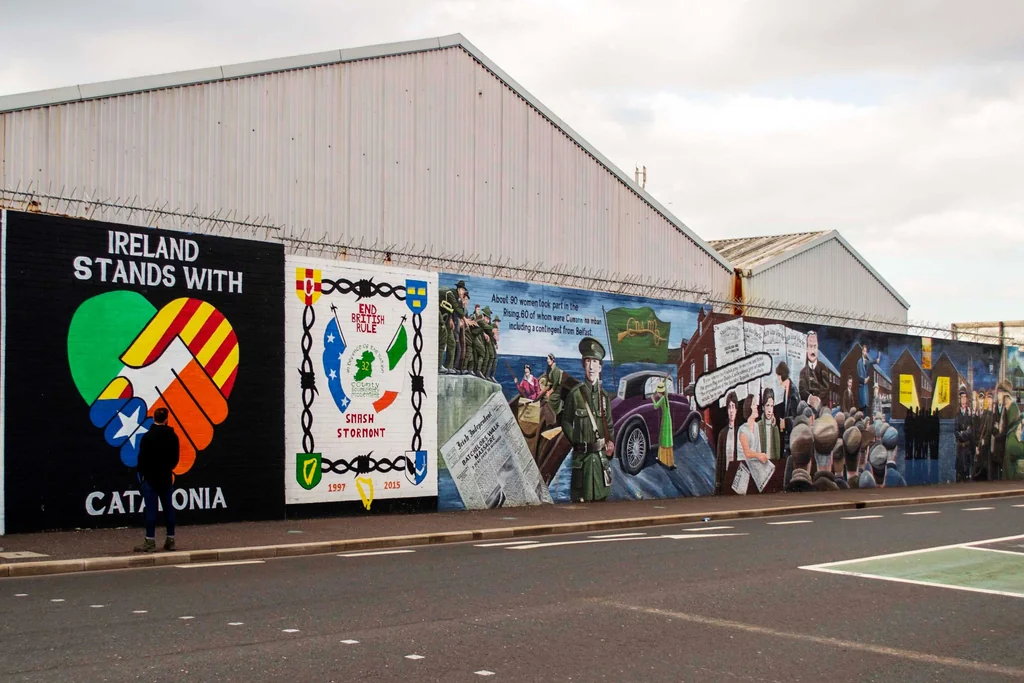
The murals of Belfast reflect the city’s recent history and cultural identity. Visiting these areas with a knowledgeable guide provides valuable local insight and context.
Location: West Belfast (Falls Road and Shankill Road areas)
General directions: The main mural areas are located in West Belfast, primarily along the Falls Road and Shankill Road. From Belfast city centre, it’s around a 10–15 minute drive or a short taxi journey. Regular public buses also run from the city centre to both areas.
What to expect: The murals reflect Belfast’s complex modern history and community identity, offering insight into the city beyond its traditional landmarks.
Opening information: Located on public streets and accessible at all times.
Good to know: For first-time visitors, guided tours are recommended as they provide a balanced local context and help navigate the areas comfortably.
Bushmills Distillery – Home of World-Famous Irish Whiskey
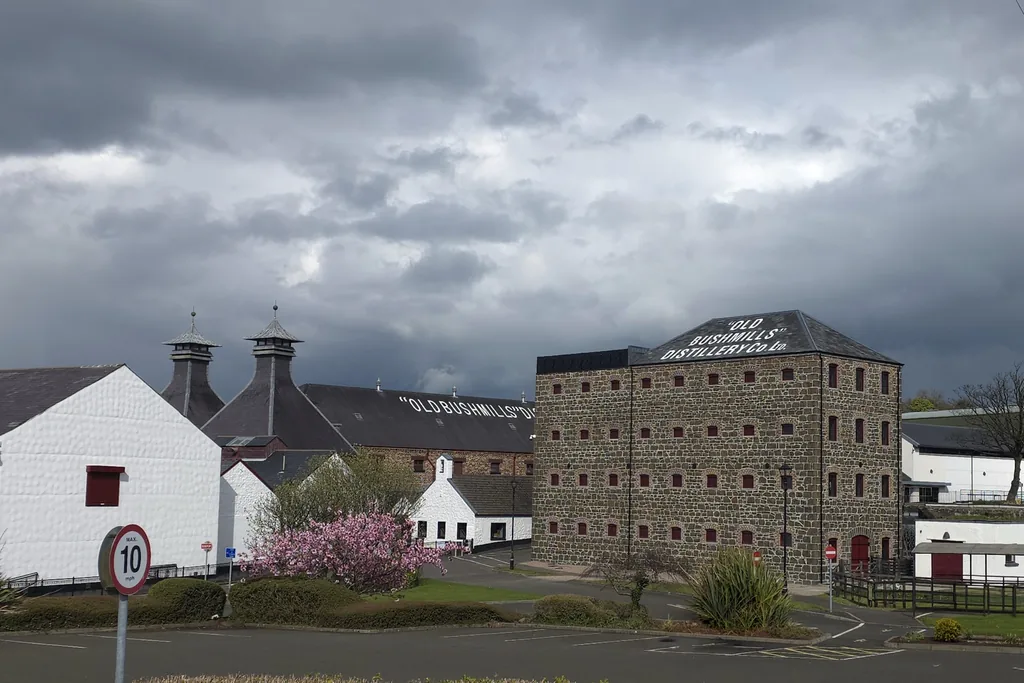
Established in 1608, Bushmills Distillery is the world’s oldest licensed whiskey distillery. Located near the north coast, it remains a popular stop for visitors interested in Irish whiskey and heritage. This place is a favourite for many visitors and showcases the best attractions in Northern Ireland.
Address: 2 Distillery Road, Bushmills, County Antrim, BT57 8XH
What to expect: Bushmills Distillery is the world’s oldest licensed whiskey distillery, producing Irish whiskey since 1608. Visitors can learn about the traditional whiskey-making process, explore the distillery buildings, and gain insight into the history of Irish whiskey in the region.
The experience typically includes guided storytelling, behind-the-scenes access, and the opportunity to sample selected whiskeys, depending on the tour chosen.
Opening information: The distillery is open year-round, with scheduled guided tours operating daily. Opening times and tour availability vary by season, with extended hours during spring and summer.
Visitor tip: Tour spaces are limited, especially in peak season. Booking in advance is strongly recommended to secure your preferred time. Visitors not joining a tour can still explore the surrounding village of Bushmills and nearby north coast attractions.
Glens of Antrim – Natural Beauty and Peaceful Landscapes
The nine Glens of Antrim offer a quieter side to Northern Ireland. They boast waterfalls, forest trails, rolling hills and traditional villages, making them perfect for those who love scenic landscapes and nature. Places to visit in Northern Ireland.

Location: County Antrim
General directions: The Glens of Antrim are located along the Antrim Coast, with access from the A2 and A44 roads. From Belfast, the glens can be reached by driving north via Larne or Ballymena, depending on which glen you plan to visit.
Driving time: Approximately 1–1.5 hours from Belfast, depending on location.
What to expect: The Glens of Antrim are a collection of nine scenic valleys known for waterfalls, forest walks, rolling hills, and traditional villages. They offer a quieter and more peaceful side of Northern Ireland.
Opening information: Accessible year-round.
Good to know: Each glen has separate access points. Some forest parks and visitor centres within the glens operate seasonal opening hours.
St George’s Market, Belfast – Local Food and Culture
One of Belfast’s oldest attractions, St George’s Market is known for its local produce, crafts, and live music. It’s a great place to experience the city’s character and friendly atmosphere.

Address: 12–20 East Bridge Street, Belfast, BT1 3NQ
What to expect: St George’s Market is one of Belfast’s oldest attractions and a popular stop for visitors looking to experience local life. Housed in a Victorian-era building, the market features a wide range of stalls selling local food, artisan produce, handmade crafts, and gifts. Live music is often performed throughout the market, adding to the lively and welcoming atmosphere.
Opening information: The market operates on Friday, Saturday, and Sunday, with different themes each day. Opening times vary slightly depending on the market day and special events.
Visitor tip: Saturday mornings offer the best overall experience, with the widest choice of food stalls and a busy, energetic atmosphere. Arriving early helps avoid crowds and ensures the best selection.
Connect with Us
Belfast Tours NI offers a range of resources to help visitors plan a trip to Belfast, Northern Ireland. Our blog post highlights the best things to do in the area and provides insider tips to ensure visitors have an unforgettable experience.
We encourage you to explore our social media channels as well, where you can find additional information and travel inspiration. Trust our team of experts to guide you through the planning process and provide you with the tools you need to fully immerse yourself in the culture and attractions of Ireland.
Facebook
Pinterest
LinkedIn
WhatsApp