

Carrickfergus Castle, 750 Years of Soldiers on One Rock
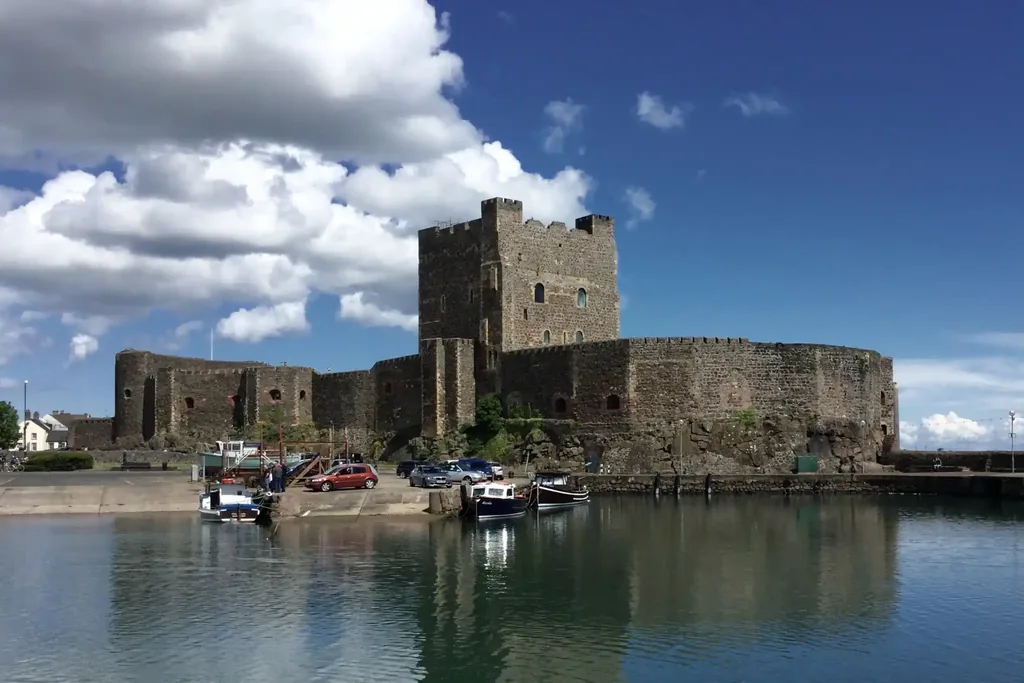
Come into Carrickfergus along the shore of Belfast Lough, and the castle is right in front of you, standing on its rock at the edge of the water. Carrickfergus Castle was begun by John de Courcy soon after he invaded Ulster in 1177, and the army was still using it in 1928, a run of about 750 years. The Department for Communities calls it one of the most complete examples of Norman architecture in Britain or Ireland. It is about 11 miles from Belfast city centre, which makes it one of the easiest castles near Belfast to reach.
It was built to command Belfast Lough, and that made it worth fighting for. Over the centuries it was besieged in turn by the Scots, the Irish, the English and the French. King John came for it in person, Edward Bruce laid siege to it, the Williamites took it and a French force captured it. Each of those chapters left its mark on the walls you walk through today.
The catch is small but worth knowing. The castle is closed on Mondays in the main season, apart from bank holidays, and the hours change between summer and winter. Dogs are not allowed inside, other than assistance dogs. In extreme weather the castle can close, so on a stormy day it is worth phoning before you set out.
I drive past this castle most weeks of the year on the way up the coast, and it is one of the places where Northern Ireland’s long story is easiest to read. Below I cover what you see inside, the Carrickfergus Castle history and its sieges, and the new oak roof on the Great Tower. Then I cover the rest of the town, from the town walls and North Gate to St Nicholas’ Church, Andrew Jackson Cottage and Carrickfergus Museum. I finish with how to get here from Belfast.
Table of Contents
ToggleCarrickfergus Castle, What You See Inside the Walls
You enter through the gatehouse, and from there you are free to explore at your own pace. The heart of the castle is the Great Tower, the keep, founded by John de Courcy in the late 12th century. Inside you can see the banquet hall, the vaults and the constable’s quarters, many of them set out with life-like figures and props and often decorated for the season. Climb to the top of the keep and walk the walls, and you look out between the battlements across Belfast Lough.
The castle holds historical displays and a collection of cannon from the 17th to the 19th centuries. Free guided tours run every day at no extra charge, and I would suggest joining one if the timing works, because the guides explain how the castle grew from a single tower. Tickets can be booked online through the council’s official Carrickfergus Castle page.
Things to do with children at Carrickfergus Castle
Children can dress up in medieval and period costumes in the costume room and act out scenes from the castle’s past. There is a game of giant chess in the keep, a knight in a suit of armour and a model of the whole castle. A sensory room offers a calm, low light space, and there is a quiet time every Sunday from 9.30am to 11am. Children under 16 must be with a responsible adult.
How long to spend at Carrickfergus Castle
The official advice is to allow a couple of hours, and that is about right if you climb the keep and walk the walls. The Carrickfergus Visitor Information Centre is inside the castle, with free maps, bus and rail timetables and books on local history. It is a good place to pick up a map of the Causeway Coastal Route before you head north, because Carrickfergus is where that route begins.
Dogs are not permitted, other than assistance dogs, because the castle is a roofed and enclosed site. Carers go free, and the Department for Communities has published signed video tours of the castle in BSL and ISL. Accessible toilets and baby changing are on site, and all major cards are accepted.
Visitor information
Opening times. Easter to September: Tuesday to Sunday, 9.30am to 5pm, last admission 4.30pm, closed Mondays except bank holidays. October to Easter: 9am to 4pm, last entry 3.30pm. If you plan a winter Monday, phone ahead first. In extreme weather, phone 028 9335 1273 before travelling.
Guide prices. Adult (18 and over) £6, child (5 to 17) £4, under 5s and carers free, concession (65 and over, students with a card, disabled and unemployed visitors) £4.50, family (up to five people, including up to three adults) £18. Groups of 15 or more £4.50 each. Annual tickets from £8.
Booking. Tickets can be booked online through the Mid and East Antrim tourism website. Free guided tours run daily. Coach parties and groups are accepted.
Facilities. Free car park beside the castle, toilets with disabled access and baby changing, a gift shop, a café, a picnic area, the Visitor Information Centre, a sensory room and a costume room. All major cards accepted. No dogs other than assistance dogs.
Where it is. Carrickfergus Castle, Marine Highway, Carrickfergus, County Antrim, BT38 7BG. Carrickfergus is about 11 miles from Belfast city centre on the A2 along the shore of Belfast Lough, around 20 minutes by car. Carrickfergus railway station, on the Larne line from Belfast, is under half a mile from the castle.
What is nearby. Carrickfergus town walls and the North Gate, St Nicholas’ Church, Carrickfergus Museum and Andrew Jackson Cottage.
Carrickfergus Castle History, From de Courcy to the Last Soldiers
Carrickfergus Castle history starts with an invasion. In 1177 the Anglo-Norman knight John de Courcy marched into Ulster, and soon afterwards he began building a castle on the rock at Carrickfergus. His Great Tower is the oldest part of what you see, and it was placed to command Belfast Lough on the northern shore. De Courcy also founded St Nicholas’ Church in the town around the same time, so the castle and the church grew up together.
From then on the castle was a working fortress. The Department for Communities sums up the next centuries simply: it was besieged in turn by the Scots, the Irish, the English and the French, and it played an important military role until 1928. That is roughly 750 years of soldiers on one rock. The sieges are the best way into the story, and I cover them in the next section.
Carrickfergus Castle in the 20th century
In 1928 the army left, and the castle came into State Care, where it remains, managed by the Historic Environment Division of the Department for Communities. Even then it had one more wartime job. During the Second World War, from 1939 to 1945, it housed air raid shelters for the town.
In the 1930s a flat roof was put on the Great Tower. It leaked for decades, letting rainwater into the upper floor of the 12th century tower, until the new oak roof replaced it in 2020. The castle is a scheduled monument, number ANT 052:059, and the Department describes it as one of the best preserved medieval structures in Ireland.
Why Carrickfergus Castle matters
Many castles of this age in Ireland are roofless ruins. Carrickfergus stands out because it never stopped being used, and each century of soldiers left something behind. The cannon on display, dating from the 17th to the 19th centuries, show how long the garrison stayed. If you are working through the top attractions in Northern Ireland, this is one of the best places to understand how the country was fought over.

The Sieges of Carrickfergus Castle, 1210 to 1760
The Department for Communities picks out four moments in the castle’s long military life. Between them they cover five and a half centuries, and they show how many different armies thought this rock was worth taking. Each one changed who held the castle, at least for a while.
1210, the siege by King John
In 1210 King John of England came to Ireland in person and besieged the castle. By then it was held by Hugh de Lacy, who had replaced de Courcy as the power in Ulster. After the siege the castle passed to the Crown, and Carrickfergus became a royal castle.
1315, the siege by Edward Bruce
In 1315 Edward Bruce, brother of King Robert the Bruce of Scotland, landed in Ulster with a Scottish army and laid siege to Carrickfergus. The garrison held out for about a year before it surrendered in 1316. The siege was part of a wider Scottish campaign in Ireland that ended with Edward Bruce’s death in battle in 1318.
1689, Schomberg takes the castle for William III
In 1689 the Duke of Schomberg captured the castle for William III. The following year William himself landed at Carrickfergus on his way south to the Battle of the Boyne, and a statue of him now stands at the harbour near the castle gate. Both belong to the Williamite War, fought between William and James II for the crowns of England, Scotland and Ireland.
1760, the French capture the castle under Thurot
The last siege was the most unexpected. In 1760 a French force under François Thurot landed and captured the castle during the Seven Years’ War. They held it only briefly before sailing away, and Thurot was killed when his ships were caught at sea soon afterwards. The castle stayed in military hands for another 168 years, but it was never taken again.
The Great Tower Roof, Built Without a Single Nail
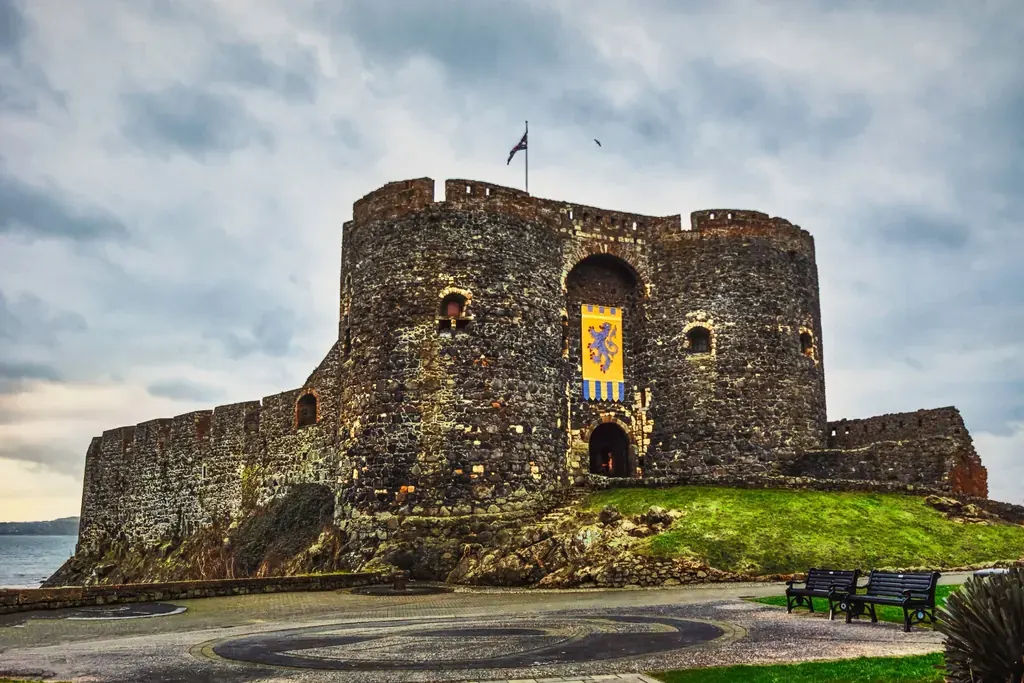
One of the newest things at Carrickfergus is also one of the oldest in spirit. In February 2020 the Department for Communities completed a new roof on the Great Tower, replacing the flat roof added in the 1930s. Over time water had settled on that flat roof and seeped into the walls, causing leaks and mould. The new roof was a £1 million conservation project, and the minister reopened the Great Tower once it was finished.
Irish oak from Storm Ophelia
The timber frame is Irish oak from trees that fell in County Wicklow during Storm Ophelia in 2017. The roof is covered in Cumbrian stone slate and lead, traditional materials chosen to last. The carpenters, masons and oak wrights used many of the same techniques as medieval builders, and the whole wooden frame was built without a single nail. The joints are fixed with tapered timber pegs, which are flexible and let the roof move as the green oak dries.
The numbers are worth a moment. The roof uses about 3,280 feet of oak timbers, about 6,800 feet of battens and 13 tonnes of stone slates, covering roughly 2,260 square feet. The council picks out the new roof as one of the highlights of a visit to the Great Hall.
What the builders found in the Great Tower
The work also turned up new evidence about the tower itself. A stone marked with what looks like an X may be a mason’s mark, which would make it the first found here from the earliest building work. Square holes in the walls are thought to have held beams for timber hoardings, a covered walkway, which suggests the tower reached nearly its present wall-walk height as early as the 13th century.
The most intriguing find was a possible passage inside the south wall, entered from the south-east spiral staircase. Three steps lead into the wall and were blocked up soon after they were built, and nobody yet knows where they went. It is a good reminder that even a castle studied for centuries still has secrets.
Carrickfergus Town Walls and the North Gate, Free to Explore
Walk a few streets back from the castle, and you find the Carrickfergus town walls, a separate monument in State Care and free to see. The story behind them starts in 1565, when it was recognised that the town was under threat as a symbol of the Crown. Queen Elizabeth was unwilling to pay for walls, so a hundred men were put on the job, and work was slow. It was still unfinished on 2 June 1573, when Sir Brian Phelim O’Neill burned the town.
Work struggled on until Lord Deputy Sir Arthur Chichester took charge in 1599. By 1610 he had built his fine mansion, Joymount, in the east corner of the walled town. The wall ran from the castle north-west to the Irish Gate, north to the North Gate, east to the rear of Joymount and south back towards the water.
What you can see of the town walls today
At least half of the town walls are still visible, often to the full height of about 13 feet to the wall-walk. The best-preserved stretch, with the north-east corner bastion, can be seen from Shaftesbury Park, next to the bowling green. Another good stretch, with a blocked 17th century gate, runs along the east side of the library on the old Joymount site.
The North Gate, dated 1608, stands at the end of North Street. It was restored twice in the 20th century, but some 17th century stones are still visible in the arch. At the end of West Street you can see the footings of the Irish Gate and the wall beside it, excavated from 1977 to 1979 by the late T.G. Delaney, after whom the park, Delaney Green, is named.
Visiting the Carrickfergus town walls
The walls are open to the public, and there is no charge. Public access is sometimes restricted for works, so the Department suggests checking before a special trip. A loop from the castle past the North Gate, Shaftesbury Park and St Nicholas’ Church makes an easy town walk.
Visitor information
Opening times. Open access, with the walls visible from the street at any time. Access is sometimes restricted for works.
Guide prices. Free.
Booking. No booking needed. Questions to the Department for Communities on 028 9082 3207.
Facilities. None at the walls themselves. Cafés and shops are in the town centre, and the castle has toilets for its visitors.
Where it is. Carrickfergus Town Walls, North Street, Carrickfergus, County Antrim, BT38 7AE. The North Gate is at the end of North Street, and the best stretch is seen from Shaftesbury Park. Carrickfergus is about 11 miles from Belfast city centre on the A2 along the shore of Belfast Lough, around 20 minutes by car. Carrickfergus railway station, on the Larne line from Belfast, is under half a mile from the castle.
What is nearby. Carrickfergus Castle, St Nicholas’ Church, Carrickfergus Museum and the marina.
St Nicholas’ Church, John de Courcy’s Other Building
The same man who began the castle also founded the parish church. St Nicholas’ Church was established by John de Courcy, and the council gives 1182 as the date, while the listed building record puts it at around 1180. The original church had a nave, a south transept and a north aisle, and the ground around it was about eight feet lower than it is now. A chancel was added by Robert le Mercer in 1306.
Fire and rebuilding at St Nicholas’ Church
The church was burned by rebels in 1606 and remodelled around 1614 for Sir Arthur Chichester, the same man who finished the town walls. His builders shortened the nave, took down the aisles, blocked the arcades and rebuilt the north transept over a crypt. Those repairs held until 12 January 1712, when the chancel roof collapsed. The bell tower came much later, put up by parishioners in memory of the men of Carrickfergus who died in the First World War.
What to look for inside St Nicholas’ Church
Look along the church, and you will notice the aisle is not straight. This skew, the council explains, was made on purpose to represent the head of Christ falling to the right on the Cross. There are fine stained glass windows, among them a 16th century Flemish window of John the Baptist, hand painted and known for its unusual style and colouring.
The Chichester aisle is dominated by a memorial made in 1625 in alabaster and marble by Italian craftsmen, which the council calls the finest Jacobean memorial monument in Ireland. It shows Sir Arthur Chichester, his wife Lady Lettice Perrot and the casket of their baby son. In the chancel is a small window known as the leper window, where, it is said, those with the disease could sit outside and hear the service. St Nicholas’ is still a living parish church, so please respect services if you call in.
Visitor information
Opening times. Opening hours vary. Contact the church office on 028 9336 0061 before you visit.
Guide prices. No admission charge. A donation towards maintenance is appreciated.
Booking. No booking needed to visit when the church is open. Guided tours can be arranged through the church office.
Facilities. Toilets. Parking charges may apply in the town centre car parks.
Where it is. St Nicholas’ Church, Market Place, Carrickfergus, County Antrim, BT38 7AW, in the town centre within walking distance of the castle. Carrickfergus is about 11 miles from Belfast city centre on the A2 along the shore of Belfast Lough, around 20 minutes by car. Carrickfergus railway station, on the Larne line from Belfast, is under half a mile from the castle.
What is nearby. Carrickfergus Castle, the town walls and North Gate, and Carrickfergus Museum.
Andrew Jackson Cottage and the US Rangers Museum, America in Carrickfergus
Just under a mile from the town centre, off the Larne Road at Boneybefore, is a small thatched cottage with a big American story. Andrew Jackson’s parents emigrated from here to America in 1765, and he was born nearly two years later. He went on to become the seventh President of the United States. Their own house was demolished in 1860 to make way for the railway, and a blue plaque about 165 feet west of the cottage marks where it stood.
Inside Andrew Jackson Cottage
The cottage you visit was built in the 1750s by the Donaldson family, according to the council, and it is one of the few left of the farmhouses built when lowland Scots settlers came to south-east Antrim. The family lived in it until 1979, when it was sold to the old Carrickfergus Borough Council and restored to its 18th century state. Inside there is an open fireplace with a daub and wattle canopy and a hanging crane, a dresser with spongeware crockery and iron pots. A parlour holds an exhibition on Jackson’s life and the family link between Boneybefore and the White House.
The US Rangers Museum
The site also houses the US Rangers Museum. The 1st Ranger Battalion of the US Army, known as Darby’s Rangers, was first activated in Carrickfergus in 1942, and the men trained here alongside British Commandos before campaigns including the invasion of North Africa. The museum has documents, uniforms, photographs and other objects from their training and their war. The council notes that former and serving Rangers still visit.
For visitors from the United States, this is one of the most personal stops in the area. Admission is free, and the guided tours last about 45 minutes on average. Our guide to things to do in Northern Ireland has more places with American links across the country.
Visitor information
Opening times. Wednesday to Sunday, 11am to 3pm. Tours outside these hours can be booked through Carrickfergus Castle Visitor Information Centre or the cottage.
Guide prices. Free.
Booking. No booking needed in opening hours. Guided tours are available on site and take about 45 minutes. Groups must take a guided tour.
Facilities. Free parking next to the cottage, coach parking, disabled parking, toilets for disabled visitors and a picnic area. Guide dogs permitted, other dogs by arrangement.
Where it is. Andrew Jackson Cottage and US Rangers Museum, 2 Boneybefore, Carrickfergus, County Antrim, BT38 7EQ. Just under a mile from Carrickfergus town centre, off the Larne Road (A2). Carrickfergus is about 11 miles from Belfast, around 20 minutes by car.
What is nearby. Carrickfergus Castle, Carrickfergus town walls and St Nicholas’ Church.
Carrickfergus Museum, the Town’s Story Under One Roof
If the weather turns, Carrickfergus Museum is the place to go next, and it is free. It sits in the Museum and Civic Centre on Antrim Street, a short walk from the castle, and it tells the long history of the town and the area around it. The council says Carrickfergus is one of the most archaeologically explored towns in Northern Ireland, and the museum is where you see what those digs found. The displays include objects excavated in the town, material from the council’s own civic collection and Carrickfergus items lent by private owners and national collections. There are multimedia and audio-visual presentations, and several hands-on displays that make it as much fun as it is informative.
Carrickfergus Museum for families and researchers
A play zone is set aside for children under five, so it is an easy stop with young families. The separate community archive covers the recent social history of the borough, and visitors are invited to add their own stories, photographs and documents to it. If you have family roots in Carrickfergus, it is worth asking the staff what the archive holds.
Access and tours at Carrickfergus Museum
The museum has disabled access and a sound induction loop in the gallery. Tours are by appointment only, and education programmes linked to the school curriculum can be booked in advance. It holds a four star Quality Assurance grading.
I would suggest seeing the castle first and the museum after, because the objects make far more sense once you have walked the walls. Put the two together with the town walls and St Nicholas’ Church, and you have a full morning in Carrickfergus without moving the car. Remember that the museum is closed on Sundays and the castle is closed on Mondays in the main season, so a Saturday or a midweek day suits both.
Visitor information
Opening times. Monday to Saturday, 10am to 4pm.
Guide prices. Free.
Booking. No booking needed for a visit. Tours by appointment on 028 9335 8241.
Facilities. Toilets, disabled access, a sound induction loop in the gallery and a play zone for under fives. Coach parties accepted. Dogs by arrangement.
Where it is. Carrickfergus Museum, Museum and Civic Centre, 11 Antrim Street, Carrickfergus, County Antrim, BT38 7DG. Carrickfergus is about 11 miles from Belfast city centre on the A2 along the shore of Belfast Lough, around 20 minutes by car. Carrickfergus railway station, on the Larne line from Belfast, is under half a mile from the castle.
What is nearby. Carrickfergus Castle, the town walls and North Gate, and St Nicholas’ Church.
Getting to Carrickfergus Castle from Belfast
Carrickfergus is the easiest of the castles near Belfast to reach. By car, follow the A2 north-east out of the city along the shore of Belfast Lough. It is about 11 miles from Belfast city centre, and the council puts the town just 20 minutes from Belfast. There is a free car park right beside the castle on Marine Highway.
Getting to Carrickfergus Castle by train
Carrickfergus railway station is on the Larne line from Belfast, and it is under half a mile from the castle, an easy walk down through the town to the shore. Check the current Translink timetable for the times on the day you travel. Coming by train also lets you walk the town walls and visit the museum without worrying about where you left the car.
Fitting Carrickfergus Castle into your day
Carrickfergus works well in two ways. It can be a half day on its own from Belfast, paired with the city sights in our things to do in Belfast guide, or the afternoon after a morning at Titanic Belfast. It is also the natural first stop when you head up the coast, since this is where the Causeway Coastal Route begins.
North of the town the road continues to Whitehead and Larne, then along the Antrim Coast Road to Carnlough Harbour and the glens. Our Northern Ireland road trip guide shows how Carrickfergus fits into a longer drive. If you are not driving, a private tour is the easiest way to combine the castle with the rest of the coast in one day.
Carrickfergus Castle FAQ
Is Carrickfergus Castle free?
No, there is an admission charge. An adult ticket is £6, children aged 5 to 17 pay £4, and under 5s and carers go free, with a family ticket at £18.
Can you go inside Carrickfergus Castle?
Yes. You can explore the Great Tower, the banquet hall, the vaults and the constable’s quarters, climb the keep and walk the walls. Free guided tours run daily.
What are the Carrickfergus Castle opening times?
From Easter to September it opens Tuesday to Sunday, 9.30am to 5pm, with last admission at 4.30pm, and it is closed on Mondays except bank holidays. From October to Easter it opens 9am to 4pm, with last entry at 3.30pm.
Is Carrickfergus Castle open on Sundays?
Yes. Sunday is a normal opening day, and there is a quiet time every Sunday from 9.30am to 11am for visitors who prefer a calmer visit.
How long do you need at Carrickfergus Castle?
The official advice is a couple of hours. That gives you time to climb the keep, walk the walls and see the displays, or join a free guided tour.
Is Carrickfergus Castle dog friendly?
No. Dogs are not allowed, other than assistance dogs, because the castle is a roofed and enclosed site under the Department for Communities’ dog policy.
Is there parking at Carrickfergus Castle?
Yes, there is a free car park right beside the castle on Marine Highway. Coach parties are also accepted.
Is Carrickfergus Castle National Trust?
No. It is in State Care, managed by the Historic Environment Division of the Department for Communities, and it has been since 1928.
Who built Carrickfergus Castle?
John de Courcy, the Anglo-Norman knight who invaded Ulster in 1177. He began the castle soon afterwards, starting with the Great Tower.
How old is Carrickfergus Castle?
More than 800 years old. It was begun soon after 1177, which makes the Great Tower a late 12th century building.
What was Carrickfergus Castle used for?
It was a military fortress guarding Belfast Lough, and the army used it until 1928. During the Second World War it housed air raid shelters for the town.
How far is Carrickfergus Castle from Belfast?
About 11 miles from Belfast city centre, around 20 minutes by car along the A2. Carrickfergus railway station, on the Larne line, is under half a mile from the castle.
How do you get to Carrickfergus Castle from Belfast?
Drive north-east on the A2 along Belfast Lough and park in the free car park beside the castle. Or take the Larne line train to Carrickfergus station and walk down to the shore.
Does Carrickfergus Castle have a cafe?
Yes, the council lists a café and catering at the castle, along with a gift shop and a picnic area. The town centre also has plenty of cafés a short walk away.
Is Carrickfergus Castle worth visiting?
Yes. It is one of the most complete Norman castles in Britain or Ireland, with 750 years of military history, and it is only about 20 minutes from Belfast.

Belfast Tours NI is a local tour company for travellers who want a personal, relaxed way to explore Northern Ireland, offering private tours, tailored itineraries, and local insight to help you plan a memorable visit.
Written by Murat Yilmaz · Last updated:
Keep Exploring the Antrim Coast
Ballygally, Where the Coast Road Opens Up
Drive the Causeway Coastal Route
Private Tours in Belfast and Northern Ireland
Carrickfergus is the first stop on the coast north of Belfast, so it fits easily into a private tour with a local guide. On a Giant’s Causeway tour it can be a photo stop at the harbour or a full visit inside the walls, and on a Belfast city tour it makes a good afternoon away from the centre. If you arrive by sea, it also works well on shore excursions from Belfast Cruise Terminal.
We collect you from your Belfast hotel, from Belfast International or George Best Belfast City Airport, or from the cruise terminal. If you are staying in Dublin, the drive north is a chauffeur service transfer, and the guided part of the day starts once you are in Northern Ireland.
Up to 7 passengers travel in a Mercedes-Benz V-Class, 8 in a Ford Tourneo Custom, and 9 or more in two V-Class vehicles travelling together. Every vehicle is licensed as a taxi and insured to carry passengers, and every driver holds a taxi licence.
Let us know when you are coming, how many of you there are and how much castle you want in your day. Send us your plans, and we will put together a route that suits you.
Game of Thrones Tour
Visit the real Game of Thrones filming locations across Northern Ireland, including the Dark Hedges and Ballintoy Harbour, on a fully private tour.
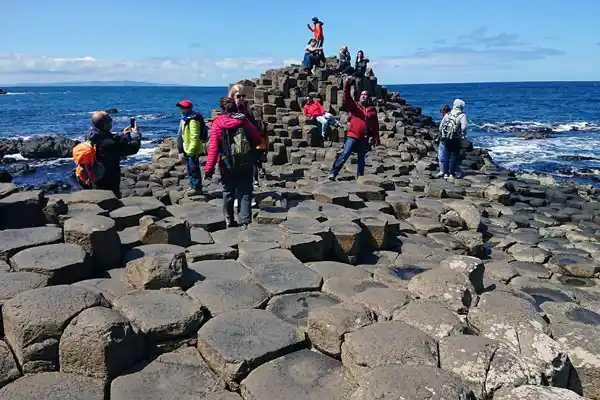
Giants Causeway Tour
A full day at the Giant’s Causeway from Belfast, travelling the Causeway Coastal Route with your own local driver-guide and time for photos at every stop.
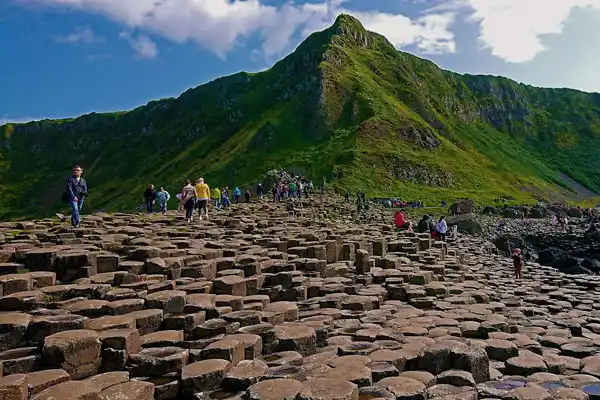
Giant’s Causeway Half Day Tour
Short on time? A private half-day run to the Giant’s Causeway and the Antrim Coast, ideal if your day in Belfast is already busy.
Planning a private tour of Northern Ireland? ➔ Get in touch to discuss your ideas.
Connect with Us
Our social channels follow the coast from Belfast Lough northwards, with photographs of the castles, harbours and glens along the way, and short updates when opening times or access change at the places we know well.
A message on any of the channels below is the quickest way to ask us something, whether it is about Carrickfergus, the coast road or the rest of Northern Ireland. You do not need to book a tour to ask, and we are always glad to help.