

Glenarm Castle, a Walled Garden and Four Centuries of MacDonnells
Drive north from Larne on the Antrim Coast Road, turn into Glenarm, and at the old bridge you find a battlemented gatehouse looking across the river. Behind it is Glenarm Castle, home of the MacDonnell family, the Earls of Antrim, since the 17th century. Inside the estate is a four-acre Walled Garden that won the Historic Houses Garden of the Year award in 2023. The village is about 33 miles from Belfast, and the castle sits right at its edge.
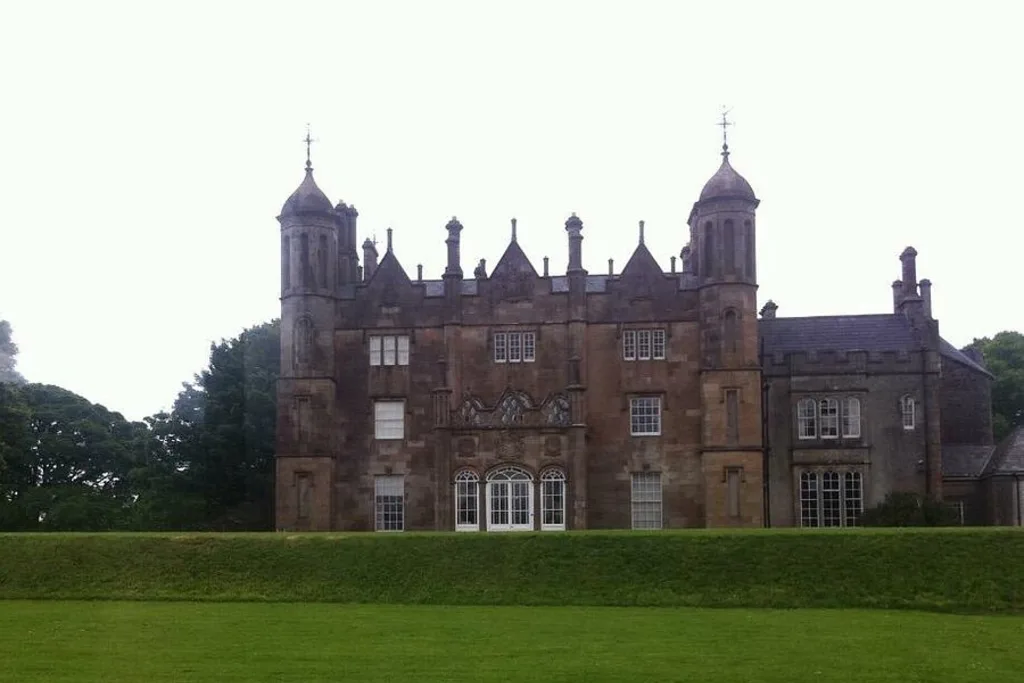
The family came to these glens long before the castle. In the late 14th century John Mor MacDonnell crossed from Scotland and married Marjory Bisset, heiress to the Glens of Antrim. Randal MacDonnell, the first Earl of Antrim, built the castle on its present site in 1636, and it has stayed in the family ever since. It has been burned, rebuilt, Gothicised and burned again, and each of those chapters left something you can still see.
The catch is that the castle is still a private family home. The rooms inside open only on selected dates for guided tours, and the estate has no public castle tours scheduled for the rest of 2026. What you can see on most days of the season is the Walled Garden, the Woodland Walk and the heritage centre, along with the tea room, the shops and the grounds. The garden has a season too, so a winter visit is a different kind of day.
I am on this coast most weeks of the year, and Glenarm is one of the places I would never drive straight through. Below I cover the Walled Garden, the castle’s history, how the castle tours work, the Barbican Gate, the tea room and shops, what there is for dogs and children, the village and Glenarm Forest, and how to get here on the Antrim Coast Road. Each place has its own visitor panel with the current times and prices, so you can plan around them. If you are building a longer trip, our guide to things to do in Northern Ireland shows where Glenarm fits.
Table of Contents
ToggleGlenarm Castle Walled Garden, the Award Winner Behind the Walls
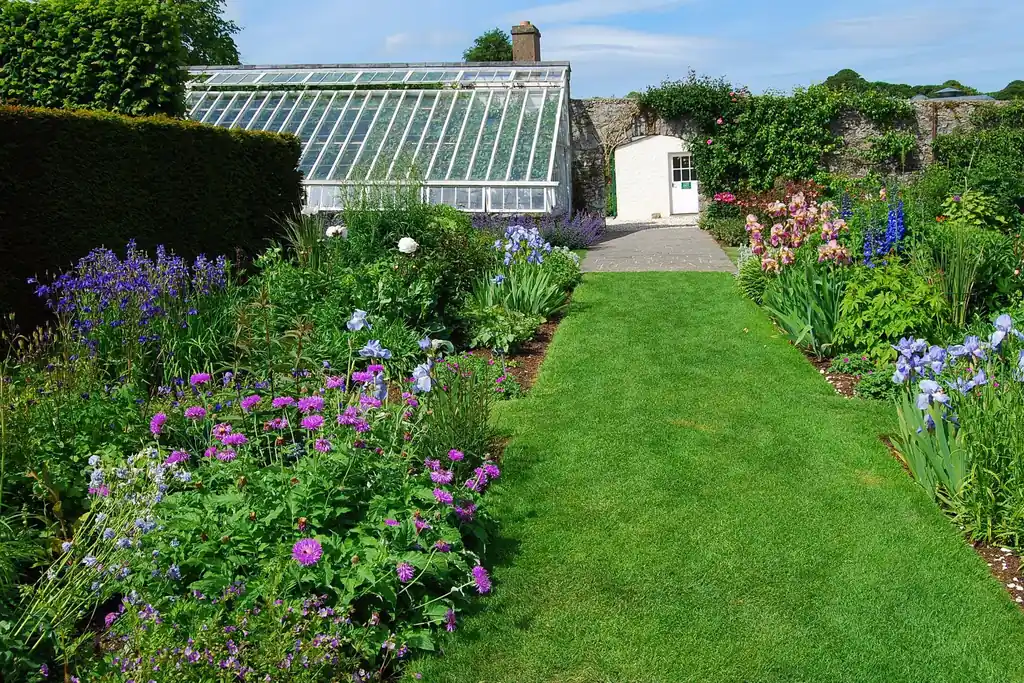
The Glenarm Castle walled garden is the heart of a visit here, and it earns its place. It was created in the 1820s to supply the castle with fruit, vegetables and cut flowers. When Randal and Aurora, the present Earl and Countess, began restoring it more than 20 years ago, they say there was little more than crumbling walls and a few grazing sheep. Only the old stone walls and a circular yew hedge survive from the original layout.
Today it covers four acres. In 2023 it won the Historic Houses Garden of the Year award in a public vote, and it was the first garden in Northern Ireland to take the title in the 40 years the award had been running. The family still call it very much a work in progress, so it changes from one year to the next.
What you see in the Walled Garden today
The garden is laid out in rooms, each with its own planting, so there is something new around every corner. There is a crab apple garden underplanted with wildflowers, an ornamental pear garden, deep herbaceous borders and a potager style vegetable garden that nods to the garden’s working past. Tulips and other bulbs come first in spring, June brings hostas, peonies and roses, and by July the herbaceous borders are at their fullest. The estate plants it to give colour from early spring until the end of October.
Look out for the Mount, a raised viewpoint from which you can see across the North Channel to Scotland on a clear day. The glasshouse is one of the largest Victorian glasshouses still in use in Ireland, according to the estate, and there are water features and sculptures by Irish artists throughout. Audio guides narrated by Sean Rafferty of BBC Radio 3 can be hired at the Welcome Centre for a small fee, subject to availability.
The Woodland Walk at Glenarm Castle
A path from the top of the garden leads onto the Woodland Walk, which is included in the same ticket. It is a quieter walk with a view down over the garden and the estate, and the woodland is a haven for red squirrels, robins and rabbits. In spring there are camellias, rhododendrons and carpets of wild garlic flowers, and in autumn the acer maples turn red and gold. There is also a children’s trail along it, which keeps younger visitors busy.
I would not rush the garden. Most paths are step free or gently sloped, but some are gravel or grass and can be soft after rain, so wear shoes you do not mind getting wet. Benches are placed around the garden if you want to sit and take it in.
Visitor information
Opening times. Daily during the season, from 17 March to 1 November, 10am to 5pm. Last entry to the Walled Garden is 4.15pm. Garden access depends on ground and weather conditions.
Guide prices. Adult £10, concession (60 and over, and students) £8.50, junior (12 to 17) £5, children under 12 free. Carers pay half the adult price with proof of eligibility. The ticket includes the Woodland Walk and the Antrim McDonnell Heritage Centre.
Booking. Tickets are sold online through the estate’s website. Garden clubs and groups can book through the Welcome Centre on 028 2884 1203, option 1.
Facilities. Accessible toilets in the Walled Garden, the Tea Room and the Welcome Centre, benches throughout, audio guides for hire, and a wheelchair and mobility scooter to borrow if arranged in advance. Dogs are welcome on a short lead.
Where it is. Glenarm Castle, 2 Castle Lane, Glenarm, Ballymena, County Antrim, BT44 0BQ. From Belfast take the M2 north and the A8 to Larne, then the A2 coast road north to Glenarm, about 33 miles and around 45 minutes’ drive. Ulsterbus service 162 from Larne stops at Glenarm car park.
What is nearby. The Barbican Gate, Glenarm village and harbour, Glenarm Forest, and Carnlough Harbour a short drive north.
Glenarm Castle History, the MacDonnells and the Earls of Antrim
The story begins across the river. When John Mor MacDonnell came over from Scotland in the late 14th century and married Marjory Bisset, the family’s castle stood where Glenarm village is today. In the 16th century the warrior chief Sorley Boy MacDonnell won the family lands and power right along the north Antrim coast. His son Randal, the first Earl of Antrim, built Glenarm Castle on its present site in 1636.
It did not last long. In 1642 a Scots Covenanter army, attacking the royalist MacDonnells, burned the house, and it stood as a roofless ruin for more than a hundred years. In that time the family lived first at Dunluce Castle and later at a house called Ballymagarry, keeping a wing on the Glenarm ruin for visits to the southern end of their land. At its peak the estate covered roughly 330,000 acres of County Antrim.
How Glenarm Castle was rebuilt and Gothicised
Ballymagarry burned down in 1750, so in 1756 the fifth Earl brought in Christopher Myers, an engineer from Cumbria, to rebuild the ruin. Myers turned it into a Palladian country house with curving colonnades, and the lime trees that still arch over the drive were planted at this time. The sixth Earl died in 1791 with no sons, and his eldest daughter, Anne Catherine, became Countess of Antrim in her own right.
Her first husband, Sir Harry Vane-Tempest, took down the colonnades and put in Gothic windows. After she remarried, her second husband Edmund Phelps brought in the Dublin architect William Morrison. Morrison gave the house a Tudor Gothic look, castellated the river wall and built the Barbican Gate.
The 1929 fire, Angela Antrim and the family today
In 1929 fire gutted the main block. The estate’s own history says it probably started with the housekeeper’s bedroom fire, kept burning to warm the 11th Earl’s featherless parrot. The rebuilding in the 1930s lost the Gothic windows, but in 1934 the 13th Earl married Angela Sykes, a professional sculptor. She carved the nine planets as caryatids in the hall and painted walls and cornices with scenes from family history and classical mythology.
Another fire in 1967 destroyed most of Morrison’s wing. The old kitchen survived, and the estate says it is the only room in continuous use since the early 18th century. Today the castle is home to Randal and Aurora McDonnell, the 15th Earl and Countess of Antrim, and their children. The Antrim McDonnell Heritage Centre on the estate tells the whole story, and it is included in the garden ticket.
Glenarm Castle Tours, Inside a Home That Is Still Lived In
Because Glenarm Castle is a private home, you cannot simply walk in. On selected dates through the year the family opens the main rooms for Glenarm Castle tours, led by the family butler and the house staff. The tour takes in the Drawing Room, the Dining Room, the Blue Room and the Great Hall, where Angela Antrim’s carved planets stand.
Places are limited and advance booking is essential. The dates are few, and the estate publishes them on its castle tours page. For 2026 the estate states that there are no scheduled public castle tours from September to December. If a tour matters to you, check the dates first and plan the rest of your trip around them.
Afternoon tea at Glenarm Castle
There is also an afternoon tea experience for groups. It begins with entry through the Barbican Gate and a glass of fizz with the butler, followed by a guided tour that includes rooms not normally open to the public. Among the objects you may see is an Armada chest from the Girona, the Spanish ship wrecked on the rocks at Dunluce in 1588. Tea is then served in the castle dining room, and the booking includes the Walled Garden.
The afternoon tea needs a party of at least six and no more than 18, booked in advance. At the time of writing the estate lists tickets as unavailable, so ask the Welcome Centre about future dates. The experience ends with time to stroll around the Walled Garden.
Access and tickets for Glenarm Castle tours
There are four steps at the main castle entrance and exit. A portable ramp is available, but the estate asks you to tell them in advance so that it is ready for your visit. A castle tour ticket includes the Walled Garden, the Woodland Walk and the Heritage Centre, so a tour day can easily become a full day on the estate. Outside the garden season, the estate says discounted rates apply because the garden is not part of the visit.
Visitor information
Opening times. Selected dates only, published on the estate’s castle tours page. The estate states there are no scheduled public castle tours from September to December 2026.
Guide prices. Castle tour and Afternoon Tea at the Castle prices are shown on the estate’s booking pages when dates are released.
Booking. Advance booking is essential and places are limited. Afternoon tea is for parties of 6 to 18, booked in advance through the Welcome Centre on 028 2884 1203.
Facilities. Four steps at the castle entrance, with a portable ramp if you ask in advance. The tour ticket includes the Walled Garden, the Woodland Walk and the Heritage Centre, and the Tea Room is on the estate.
Where it is. Glenarm Castle, 2 Castle Lane, Glenarm, Ballymena, County Antrim, BT44 0BQ. From Belfast take the M2 north and the A8 to Larne, then the A2 coast road north to Glenarm, about 33 miles and around 45 minutes’ drive. Ulsterbus service 162 from Larne stops at Glenarm car park.
What is nearby. The Walled Garden, the Antrim McDonnell Heritage Centre, the Barbican Gate and Glenarm Forest.
The Barbican Gate, Glenarm’s Fairy Tale Entrance
Walk down to the old bridge in the village and look across the river. The battlemented gatehouse in front of you is the Barbican, the old entrance to the castle. William Morrison designed it in 1824, and it was built the following year, as part of his plan to turn the house into a romantic castle. Morrison and the family chose the name to play up the medieval fantasy, since a real barbican was the strongest part of a castle’s outer defences.
Before Morrison, the gate was a simple single storey Palladian building, with a plain wall running along the river on either side. He turned it into a fortification with towers at regular intervals and walkways behind the battlements, built in dark local basalt with red sandstone for the finer detail. Over the gate, facing the bridge, he set an old sandstone coat of arms that had first hung on the front of the castle built by the first Earl in 1636. Most of Morrison’s wing of the castle has since gone, but the Barbican and its battlements survive intact.
Staying in the Barbican Gate
The gatehouse is leased to the Irish Landmark Trust, which restored it as holiday accommodation for two adults. It has a wood burning stove and a rooftop terrace with views over the castle, the village and the coast. There is a winding stone staircase, and the trust says the building is not suitable for young children. Events on the estate can affect a stay, so the estate suggests checking its events page before you book.
Seeing the Barbican Gate from the bridge
For most visitors the Barbican is something to admire from the bridge rather than go inside, and that costs nothing. From there you also see the castellated river wall that Morrison built alongside it. I would suggest a few minutes here before or after the garden, because it puts the whole estate in context.
Visitor information
Opening times. The outside can be seen from the old bridge in Glenarm village at any time. The inside is open only to people staying with the Irish Landmark Trust, apart from occasional open days.
Guide prices. Free to see from the bridge. Holiday stays are priced and sold by the Irish Landmark Trust.
Booking. No booking needed to see it. Overnight stays are booked through the Irish Landmark Trust.
Facilities. None at the gate itself. Toilets, food and shops are on the castle estate.
Where it is. At the old bridge over the Glenarm River in Glenarm village, County Antrim. Glenarm is on the A2 Antrim Coast Road, about 33 miles north of Belfast by the M2, the A8 to Larne and the A2. Ulsterbus service 162 from Larne stops at Glenarm car park.
What is nearby. Glenarm Castle Walled Garden, Glenarm village and harbour, and Glenarm Forest.
Glenarm Castle Tea Room, Shops and Food on the Estate
You do not need a ticket for the Glenarm Castle tea room, the shops or the other places to eat on the estate. That makes it an easy stop even on a day when you have no time for the garden. The Tea Room is in the estate’s old mushroom house, a building once kept cool and dark for growing mushrooms. The kitchen is led by local chef Sean Moran, and the menu uses produce from the estate and the area around it, including Glenarm Shorthorn beef and Glenarm Organic Salmon.
The cakes and sweet treats are homemade and baked fresh, and there is barista coffee as well as a pot of tea. There is outdoor seating for brighter days and a dog friendly area outside, though dogs are not allowed in the main room. The tables and chairs are not fixed, so staff can make space for a wheelchair or a mobility scooter.
Other places to eat at Glenarm Castle
The Potting Shed sits in a woodland glade and serves coffee, pies, traybakes and sweet and savoury treats, with a free dog shower outside for muddy walkers. The Milk Parlour makes small batch ice cream with fresh milk from a local family dairy, and it has dairy free sorbets and vegan choices too. The Pizza Pavilion cooks wood fired sourdough pizzas, with gluten free bases and vegan cheese on request. Their days and hours differ from the Tea Room’s, so check the estate’s opening times page if you are planning a meal around one of them.
Shopping at Glenarm Castle
The Welcome Centre has the Castle Shop, and the courtyard around it holds a group of independent sellers, among them Shearer Ceramics, Causeway Aromatics, Past and Present and The Byre. Each keeps its own hours, and some close on certain weekdays. Browsing here is a pleasant way to spend some time if a shower comes in off the sea. If you are only stopping briefly, the Tea Room and the shops make a good break on the coast road, and you can see the Barbican from the bridge on your way back to the car.
Visitor information
Opening times. Tea Room daily, 10am to 5pm. The Potting Shed, the Milk Parlour, the Pizza Pavilion and the independent shops keep their own hours, listed on the estate’s opening times page.
Guide prices. No ticket needed for the Tea Room, the shops or the other eateries.
Booking. No booking needed. Tea Room enquiries on 028 2884 1203, option 2.
Facilities. Accessible toilets and baby changing in the Tea Room, outdoor seating, a dog friendly area outside, and a small car park beside the Tea Room with disabled spaces.
Where it is. Glenarm Castle, 2 Castle Lane, Glenarm, Ballymena, County Antrim, BT44 0BQ. From Belfast take the M2 north and the A8 to Larne, then the A2 coast road north to Glenarm, about 33 miles and around 45 minutes’ drive. Ulsterbus service 162 from Larne stops at Glenarm car park.
What is nearby. The Walled Garden, the Woodland Adventure Play Area, the Dog Park and Glenarm village.
Dogs, Children and Events at Glenarm Castle
Glenarm welcomes dogs in the Walled Garden, on the Woodland Walk and in the other outdoor areas of the estate, on a short lead at all times. Extendable leads are not allowed, because the garden is home to wildlife including rescue hedgehogs. Dogs are not allowed inside the shops and indoor venues, or on the Mini Land Rover course. Guide dogs are welcome everywhere.
The Dog Park at Glenarm Castle
If your dog needs a proper run, the Dog Park is a secure, enclosed space for off lead exercise. It is booked in 30 minute sessions, seven days a week, and advance booking is required. Guide dogs can use it free between 9am and 10am daily, if booked with the Welcome Centre. In hot weather the estate asks owners to bring plenty of water and to avoid the hottest part of the day.
Things to do with children at Glenarm Castle
The Woodland Adventure Play Area needs no ticket and is open from 10am to 5pm. On selected Saturdays and Sundays the Mini Land Rover Experience gives children a go in mini Land Rovers, and pre booking is recommended. Children under 12 now go free to the Walled Garden, the Woodland Walk and the Heritage Centre. With the children’s trail on the Woodland Walk and ice cream from the Milk Parlour, it is an easy place to spend a family afternoon.
Events at Glenarm Castle through the year
The estate runs events across the year, and the biggest of the winter is Christmas at Glenarm Castle, which runs from 2 to 20 December in 2026. Large events can change routes around the estate, including accessible routes, and parts of the site may be in use. If you are coming for a quiet walk in the garden, check the events calendar on the estate’s website first. The estate also has Ocean View Pods for overnight stays, with one dog friendly pod.
Visitor information
Opening times. Dog Park daily, 10am to 5pm, in 30 minute sessions, last booking slot 4.30pm. Woodland Adventure Play Area daily, 10am to 5pm. Mini Land Rover Experience on selected Saturdays and Sundays.
Guide prices. Play area free. Dog Park session and Mini Land Rover Experience prices are shown when you book.
Booking. Dog Park sessions must be booked in advance. Pre booking is recommended for the Mini Land Rover Experience. Christmas at Glenarm Castle tickets are sold through the estate’s website.
Facilities. Free dog shower at the Potting Shed, dog bins across the estate, a dog friendly area outside the Tea Room, and baby changing in the Welcome Centre, the Tea Room and the courtyard.
Where it is. Glenarm Castle, 2 Castle Lane, Glenarm, Ballymena, County Antrim, BT44 0BQ. From Belfast take the M2 north and the A8 to Larne, then the A2 coast road north to Glenarm, about 33 miles and around 45 minutes’ drive. Ulsterbus service 162 from Larne stops at Glenarm car park.
What is nearby. The Walled Garden, the Tea Room, Glenarm Forest and Glenarm village.
Glenarm Village and Glenarm Forest, Walks Beyond the Castle Gates
Glenarm is one of the nine Glens of Antrim, and the village at its mouth deserves a walk of its own. The Irish Landmark Trust calls it one of Ulster’s oldest villages. What you can see for yourself are the stone terraces, the small harbour and the river running down from the glen to meet the sea in the middle of the village.
Walking trails in Glenarm Forest
Glenarm Forest is reached from the village by following Toberwine Street up to the forest car park. The path runs past picnic benches towards the Glenarm River, with views across the water to the castle. The river holds brown trout, sea trout, salmon and eels, and along the banks you may see mallard, herons, dippers, kingfishers and, now and then, an otter.
Three waymarked trails start here. The Yellow Trail is a half mile riverside walk, the Blue Trail is one mile, and the Red Trail is two miles, with a sloped descent and a stepped climb. The forest is small, but it holds oak, ash, beech, sycamore, Japanese larch and Sitka spruce, with wild garlic, bluebells and primroses on the forest floor in season. Look up for the oldest tree, a tall Scots pine.
Red squirrels and the Lead in Glenarm Forest
The council describes Glenarm Forest as one of the best places on the Causeway Coastal Route to see red squirrels. Volunteers from the Glenarm Wildlife Group and the Glens Red Squirrel Group keep feeding boxes stocked along the gravel path, so walk quietly and keep watching the trees. It is a working forest, and trails can be diverted or closed during forestry work, so read the signs at the entrance. Look out too for the Lead, a water channel built early in the 19th century to carry water from the top of the glen to a whitening mill beside the harbour. It is now part of the village’s industrial history, running quietly through the trees.
Visitor information
Opening times. Open to the public on foot. No opening hours are published, and parts of the forest can close during forestry work.
Guide prices. Free. Parking charges may apply, according to the council’s listing.
Booking. No booking needed.
Facilities. Car park and picnic benches at the start of the trails. There are no other visitor facilities in the forest, and the nearest toilets and cafés are in the village and on the castle estate.
Where it is. Glenarm Forest, Toberwine Street, Glenarm, County Antrim. Follow Toberwine Street up from the village centre to the forest car park. Glenarm is on the A2, about 33 miles north of Belfast, and Ulsterbus service 162 from Larne stops at Glenarm car park.
What is nearby. Glenarm Castle and the Barbican Gate, Straidkilly Nature Reserve, and Carnlough Beach, about 1.3 miles from the forest.
Getting to Glenarm Castle on the Antrim Coast Road
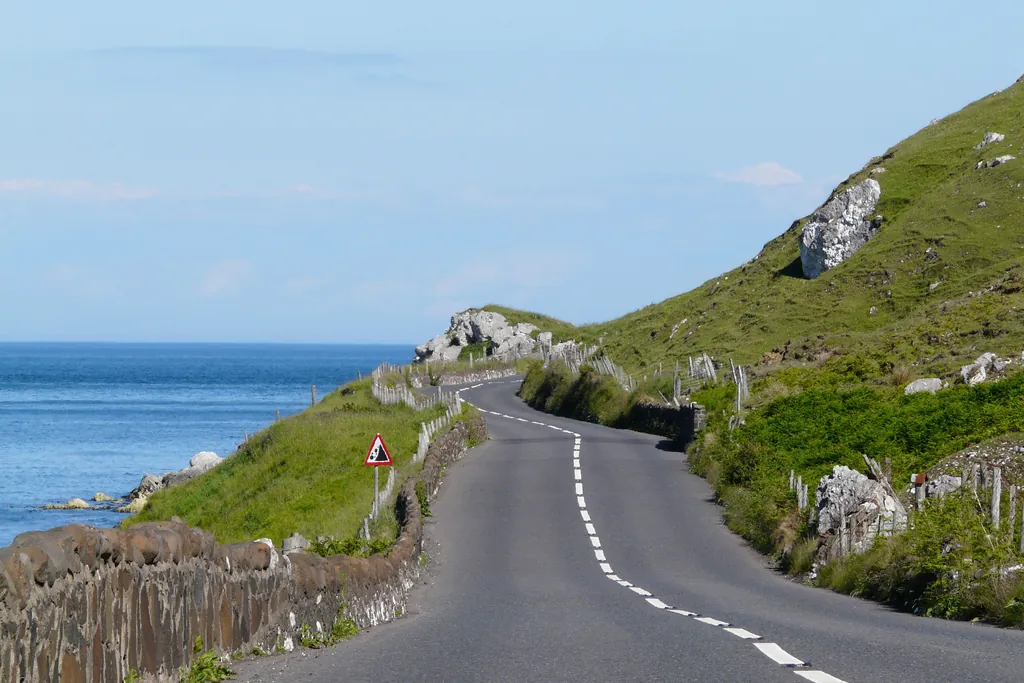
The estate’s own directions from Belfast are the simplest. Take the M2 north, follow the A8 to Larne, then pick up the A2 coast road north to Glenarm. It is about 33 miles from Belfast city centre, and north of Larne the road runs along the shore beneath the cliffs. Once you are in the village, follow the signs for Glenarm Castle. From Ballymena, take the A42 east towards Broughshane and follow the signs over the hills to Glenarm.
Parking at Glenarm Castle
The main car park and a smaller one beside the Tea Room both have disabled spaces. From 17 March to 31 October a small hourly charge applies, from £0.50 for up to an hour to £3 for the whole day. Parking is free if you buy a ticket for the Walled Garden, a castle tour or the Mini Land Rover Experience, as long as you redeem it at the Welcome Centre on arrival. It is also free on Friday and Saturday evenings from 5pm to 10pm for the Pizza Pavilion.
Getting to Glenarm by public transport
There is no railway station in Glenarm. Trains from Belfast run to Larne, and from Larne the Ulsterbus 162 runs up the coast and stops at Glenarm car park. Check the current Translink timetable before you travel, and plan your return before you set off.
When to visit Glenarm Castle and what is nearby
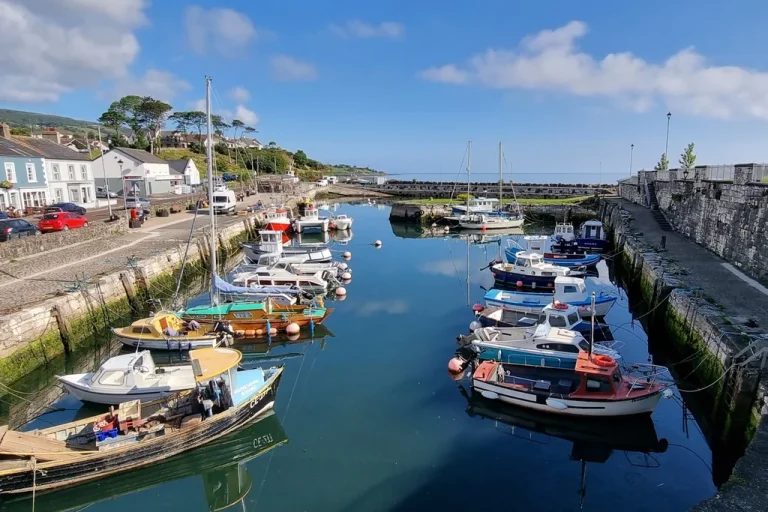
The garden is at its best from spring to early autumn, with tulips in spring, roses and peonies in June and the herbaceous borders at their fullest in July. The Walled Garden season ends at the start of November and returns in mid March, so a winter visit is about the village, the forest and the estate rather than the garden. North of Glenarm the road reaches Carnlough Harbour within a few miles, and further on is Glenariff Forest Park with its waterfalls. Our Northern Ireland road trip guide shows how the whole coast fits together. If you are not driving, a private tour is the easiest way to see Glenarm and the rest of the coast in one day.
Glenarm Castle FAQ
Can you go inside Glenarm Castle?
Only on selected dates, on a guided castle tour that must be booked in advance. The castle is a private family home, and the estate states there are no public castle tours scheduled from September to December 2026.
Is Glenarm Castle open to the public?
The estate is, but the house itself opens only on tour dates. The Walled Garden, Woodland Walk and Heritage Centre open daily in season from 10am to 5pm, and the Tea Room, shops and play area are open daily too.
Is Glenarm Castle free to visit?
The grounds, the Tea Room, the shops and the play area need no ticket. The Walled Garden, Woodland Walk and Heritage Centre cost £10 for an adult, and children under 12 go free.
Is Glenarm Castle dog friendly?
Yes. Dogs are welcome in the Walled Garden, on the Woodland Walk and in the other outdoor areas on a short lead, and there is a Dog Park that can be booked in 30 minute sessions. Dogs are not allowed in the shops or indoor venues.
Is Glenarm Castle National Trust?
No. Glenarm Castle is privately owned by the McDonnell family, the Earls of Antrim, and run by the family’s estate company. Historic Houses and RHS members get free entry to the Walled Garden.
Who owns Glenarm Castle?
Randal and Aurora McDonnell, the 15th Earl and Countess of Antrim. The castle has been in the MacDonnell family since it was built in 1636.
Does anyone live in Glenarm Castle?
Yes. Glenarm Castle is the family home of the Earl and Countess of Antrim and their children, which is why the house opens only on selected tour dates.
When was Glenarm Castle built?
Randal MacDonnell, the first Earl of Antrim, built it on its present site in 1636. It was burned in 1642, rebuilt from 1756, remodelled in the 1820s and restored again after a fire in 1929.
How far is Glenarm Castle from Belfast?
About 33 miles, around 45 minutes by car. The route is the M2 and A8 to Larne, then the A2 Antrim Coast Road north to Glenarm.
What time does Glenarm Castle close?
The Walled Garden, Welcome Centre, Tea Room and Heritage Centre close at 5pm. Last entry to the Walled Garden is 4.15pm.
Is there parking at Glenarm Castle?
Yes, there is a main car park and a smaller one beside the Tea Room, both with disabled spaces. From 17 March to 31 October an hourly charge applies, but parking is free with a Walled Garden or castle tour ticket redeemed at the Welcome Centre.
Does Glenarm Castle have a tea room?
Yes. The Tea Room is in the estate’s old mushroom house and is open daily from 10am to 5pm, with no ticket needed. There are also the Potting Shed café, the Milk Parlour ice cream shop and the Pizza Pavilion, each with its own hours.
Is Glenarm Castle worth visiting?
Yes, especially from spring to early autumn when the Walled Garden is open. It was voted Historic Houses Garden of the Year in 2023, and the village, the Barbican Gate and Glenarm Forest are all close by.
When is Christmas at Glenarm Castle?
Christmas at Glenarm Castle runs from 2 to 20 December in 2026. Tickets are sold through the estate’s website.

Belfast Tours NI is a local tour company for travellers who want a personal, relaxed way to explore Northern Ireland, offering private tours, tailored itineraries, and local insight to help you plan a memorable visit.
Written by Murat Yilmaz · Last updated:
Keep Exploring the Antrim Coast
Carnlough Harbour and the Arya Stark Steps
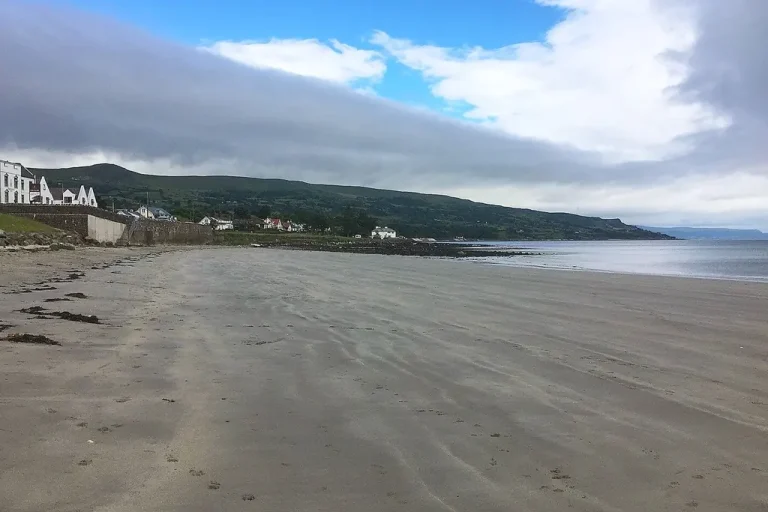
Ballygally, Where the Coast Road Opens Up
Private Tours in Belfast and Northern Ireland
Glenarm sits on the Antrim Coast Road, the route north towards the Giant’s Causeway, so it fits naturally into a private tour with a local guide. On a Giant’s Causeway tour or a Game of Thrones tour it can be a short stop at the Barbican and the village, or a longer one for the Walled Garden and lunch in the Tea Room. You decide how the day is shared out.
We collect you from your hotel in Belfast, from Belfast International or George Best Belfast City Airport, or from Belfast Cruise Terminal. If you are staying in Dublin, the journey north is a chauffeur service transfer, and the guided part of the day begins once you are in Northern Ireland.
Up to 7 passengers travel in a Mercedes-Benz V-Class, 8 in a Ford Tourneo Custom, and 9 or more in two V-Class vehicles travelling together. Every vehicle is licensed as a taxi and carries an operator licence, and every driver holds a taxi licence.
Tell us your dates, who is travelling and whether a garden, a castle or a coffee by the sea matters most to you. Get in touch, and we will shape a day on the coast around you.

Game of Thrones Tour
Visit the real Game of Thrones filming locations across Northern Ireland, including the Dark Hedges and Ballintoy Harbour, on a fully private tour.
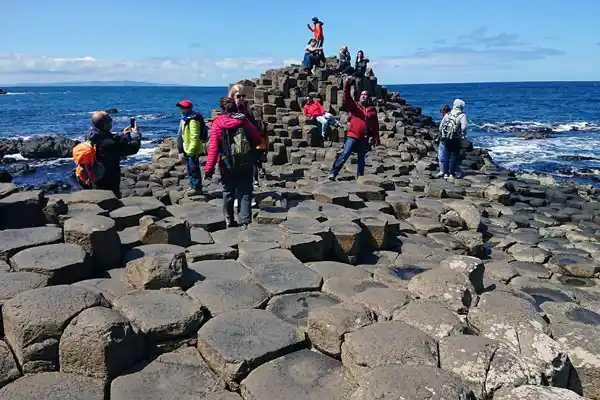
Giants Causeway Tour
A full day at the Giant’s Causeway from Belfast, travelling the Causeway Coastal Route with your own local driver-guide and time for photos at every stop.
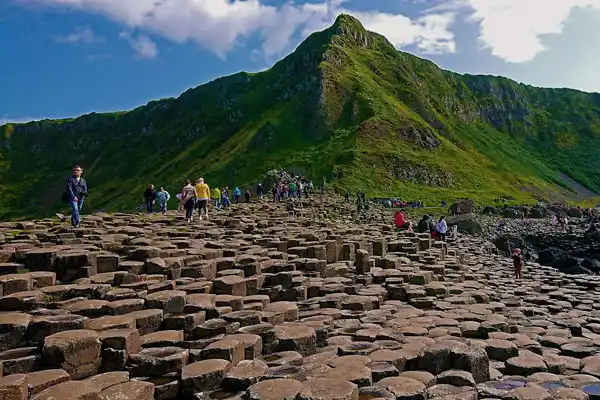
Giant’s Causeway Half Day Tour
Short on time? A private half-day run to the Giant’s Causeway and the Antrim Coast, ideal if your day in Belfast is already busy.
Planning a private tour of Northern Ireland? ➔ Get in touch to discuss your ideas.
Connect with Us
On our social channels we share the Antrim coast through the seasons, from spring flowers in the glens to winter light over the harbours, with short notes on what is open and what has changed along the coast road.
If you have a question about Glenarm, the Antrim Coast Road or anywhere else in Northern Ireland, a message on any of the channels below is the quickest way to reach us. Ask whether or not you book with us, and we will be glad to help.