

Mussenden Temple & Downhill Demesne: A Visitor's Guide
Discover one of Northern Ireland’s most breathtaking clifftop landscapes. Wander the romantic ruins of the eccentric Earl Bishop’s 18th-century mansion, then walk out to Mussenden Temple, standing right on the cliff edge above the wild North Atlantic.
Written by Murat Yilmaz
Last updated: June
Table of Contents
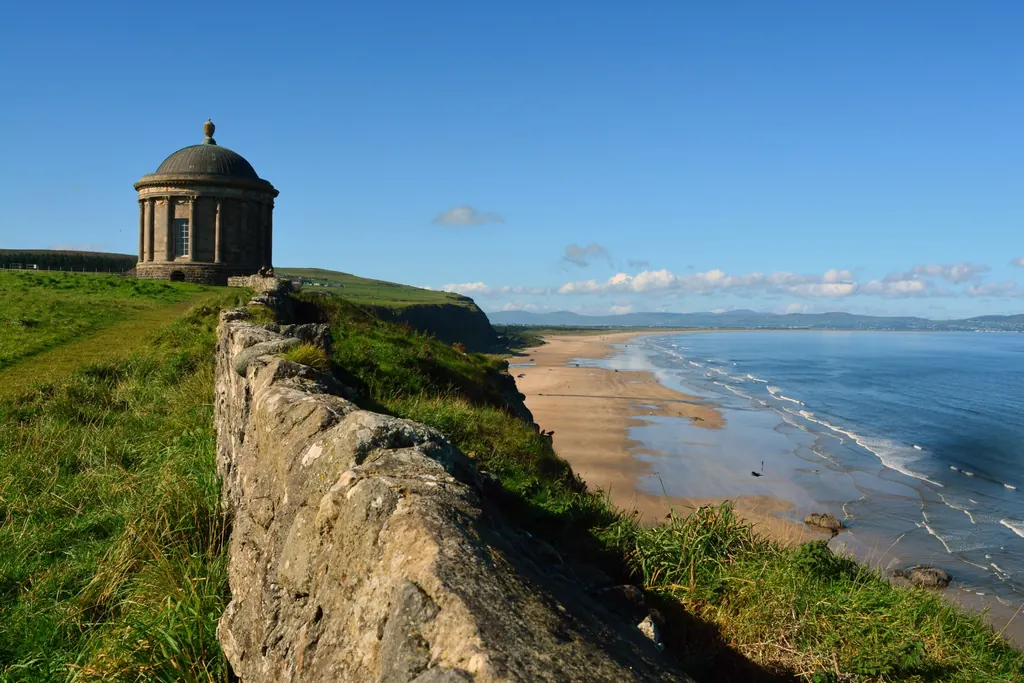
Perched right on the cliff edge above the wild Atlantic, Mussenden Temple is one of the most photographed landmarks on Northern Ireland’s Causeway Coast, and one of the most rewarding stops on a day exploring this stretch of coastline.
Set within the Earl Bishop’s old estate at Downhill Demesne near Castlerock, it brings together dramatic clifftop views, centuries of history and beautiful gardens in one unforgettable place. This guide covers the full story behind the temple and the demesne, everything there is to see, how to get there, and all the practical details you need to plan your visit.
Follow Us for Tour Updates & Travel Inspiration
Follow us for travel inspiration, local insights, and real moments from our private tours across Northern Ireland. Stay updated with new experiences, seasonal highlights, and guest stories.
Popular Tours
The History of Mussenden Temple
Mussenden Temple was built around 1783 by the Earl Bishop, Frederick Hervey, the 4th Earl of Bristol and Church of Ireland Bishop of Derry and designed by his architect Michael Shanahan, modelled on the Temple of Vesta in Italy. Today it is an iconic landmark perched on the cliff edge at Downhill Demesne, and one of the most photographed places in all of Ireland.
The temple was originally built as a library. Its walls were lined with white lime, the bookshelves sat in the alcoves, and eight alcoves higher up in the dome displayed marble busts the bishop had collected on his travels.
The temple’s name carries a touch of scandal. The Earl Bishop built it in honour of his cousin’s daughter, Frideswide Mussenden, of whom he was said to be extremely fond, intending it as a peaceful retreat she could enjoy when she visited. At the time, rumours circulated that the pair were too close the Freeman’s Journal hinted, without naming them, that the relationship was not entirely proper, a suggestion later denied in print.
The temple was finished in 1785, but it is said the distress of the gossip affected Frideswide’s already delicate health. She died in 1785, and the temple meant to be her refuge became her memorial instead.
Downhill Demesne and the Earl Bishop's Estate
Downhill House stands in ruins today, but in its prime it was a magnificent mansion and the family home of the Earl Bishop. It was built around 1780 to designs by Michael Shanahan. The grand, three-storey, south-facing front still survives, and behind it two long wings once stretched towards the sea, ending in immense curving bastions of basalt. The Earl Bishop chose this remote clifftop because the land lay within his diocese as Bishop of Derry.
The house was home to Frederick Hervey (1730–1803), known as the Earl Bishop. Widely travelled and well read, he was also famously eccentric, legend has it he once made his clergy run a leapfrog race along Downhill beach to decide who would win the best parishes, and when he died in Italy in 1803 he is said to have asked that his body be shipped home in a casket of sherry. The house was devastated by fire in May 1851, requisitioned by the RAF during the Second World War, and finally lost its roof in 1950.
Today the demesne rewards a proper wander. Highlights include:
- The Walled Garden, once the source of fruit, vegetables and flowers for the house, now grazed by sheep and dotted with apple trees, leading to the old dovecote and sheltered picnic lawns.
- The Bog Garden, created by Lady Bruce in 1910 and alive with irises through the warmer months.
- The Ice House, a round building where ice cut from a nearby pond in winter kept the Earl Bishop’s food fresh.
- The Black Glen, a sheltered arboretum of rare and non-native trees; look out for the fishpond and the famously headless statue of the bishop’s brother.
- Lady Erne’s Seat, a quiet clifftop vantage point with lovely sea views.
- The Mausoleum, a cenotaph for the Earl Bishop’s brother, George Hervey, whose statue was blown from its roof in the storm known as the Big Wind.
- Lion’s Gate, one of the estate’s grand entrances, crowned by recently restored carved stone snow leopards.
Mussenden Temple Game of Thrones
Fans of Game of Thrones will recognise the beach below the temple. Downhill Strand stood in for Dragonstone in the series, and it was here that the priestess Melisandre burned the statues of the Seven Gods in one of the show’s most memorable early scenes. It makes an atmospheric addition to any Game of Thrones tour of the North Coast.

Visitor Information
Mussenden Temple and Downhill Demesne sit on the Causeway Coast in County Londonderry. The address is Downhill Demesne, Mussenden Road, Castlerock, BT51 4RP, about one mile west of Castlerock and five miles west of Coleraine, on the A2 coast road.
Opening times: The grounds are open all year, from dawn to dusk. On-site toilets are seasonal and usually closed from October to March. The temple interior opens only for occasional events. Times can change seasonally, so check the National Trust website before you travel.
Prices: Admission to the grounds is free. Car parking is £10 per vehicle for the day, pay-by-phone, and free for National Trust members, who scan their membership card at the machine on arrival, and for Blue Badge holders.
Facilities: A car park at the Lion’s Gate entrance, seasonal toilets, a coffee bar for hot drinks, and walking trails through the demesne. The grounds are dog-friendly on leads.
Accessibility: The site sits on an exposed cliff top with some uneven, unpaved paths and a walk from the car park to the temple. The National Trust publishes a full accessibility guide. On our private tours we set the pace to suit you and get you as close as access allows.
Getting here: By car from Belfast it is about an hour and a half; by train, Castlerock station is around half a mile away; the Coleraine–Limavady bus also stops nearby.
Contact: For the site itself, the National Trust team at Downhill Demesne can be reached on 028 7084 8728 or at mussendentemple@nationaltrust.org.uk.
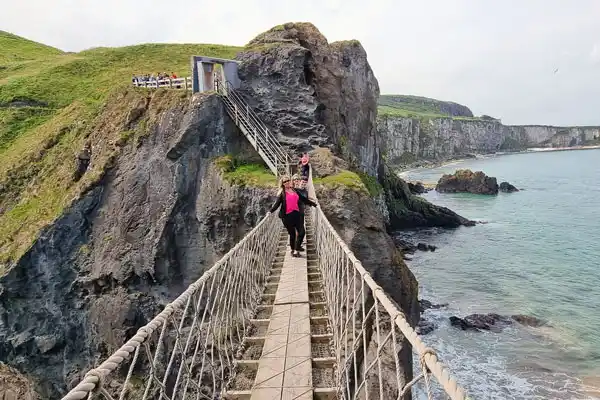
Discover the Thrill of Carrick-a-Rede Rope Bridge with Belfast Tours NI.
See Mussenden Temple on a Private Tour
Explore Mussenden Temple and the Causeway Coast in comfort, with your own expert local guide in a luxury Mercedes-Benz V-Class.
Quick Facts
- Location: Castlerock, Co. Londonderry
- Admission: Grounds free (parking £10)
- Open: Daily, dawn to dusk
- Time needed: 1–2 hours, or a full coast day
- Nearest highlight: Giant’s Causeway (30 mins)
- Game of Thrones: Dragonstone (Downhill Strand)
What Else to See Nearby
Mussenden Temple pairs beautifully with the great sights of the Causeway Coast, most of them within a short drive. The world-famous Giant’s Causeway, the clifftop ruins of Dunluce Castle and the enchanting Dark Hedges are all close by, as is the famous Carrick-a-Rede Rope Bridge.
The seaside resorts of Castlerock, Portstewart and Portrush are also right on the doorstep. Together, they make up one of the most beautiful day trips in Ireland, all along the Causeway Coastal Route.
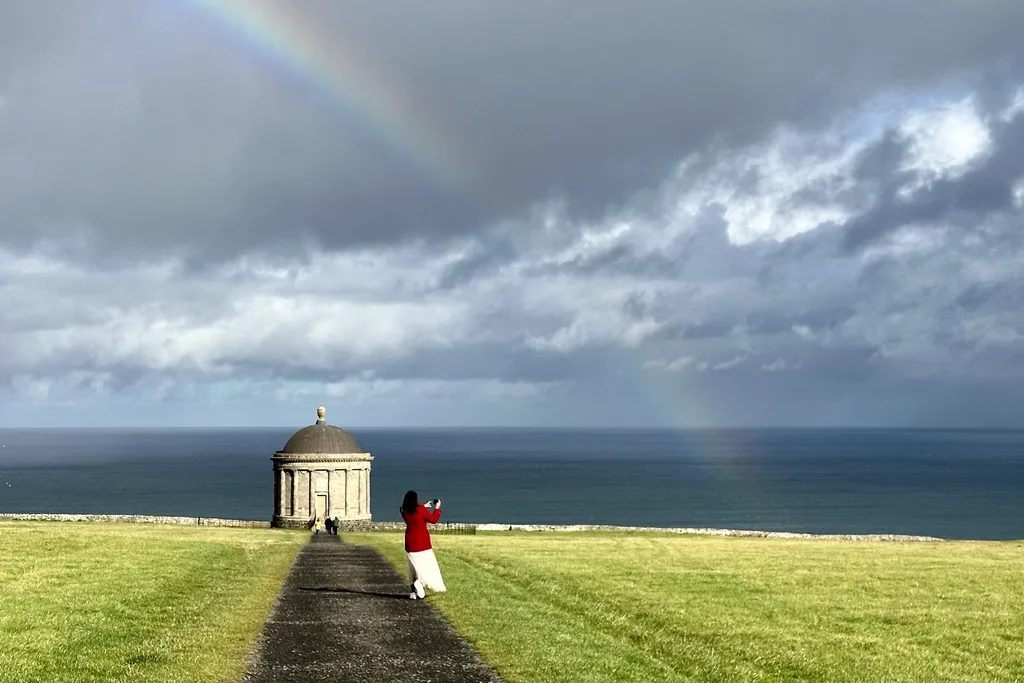
See Mussenden Temple on a Private Tour with Belfast Tours NI
The easiest way to enjoy Mussenden Temple is as part of a private, guided day along the Causeway Coast, no driving, no parking to worry about and the freedom to linger wherever you like. On our Giant’s Causeway tour from Belfast, we can include Mussenden Temple and Downhill Demesne alongside the coast’s other great sights, all in the comfort of a luxury Mercedes-Benz V-Class with your own expert local guide.
If you are arriving by cruise ship, we can also build it into a private shore excursion from Belfast, tailored to your time ashore. Tell us what you would most like to see, and we will craft the perfect day around you.
Frequently Asked Questions
Is Mussenden Temple free to visit? Yes, the grounds and the temple’s clifftop setting are free to access. Car parking is paid, and the temple interior opens only for occasional events.
Can you go inside Mussenden Temple? Only during specific events held by the National Trust; the rest of the time you can enjoy the building and the views from outside.
How far is Mussenden Temple from the Giant’s Causeway? A short drive of around 30 minutes along the coast, which is why the two are so easily combined in one day.
Why was Mussenden Temple built? It was built around 1783 by the Earl Bishop as a library, and named in honour of his cousin Frideswide Mussenden, becoming her memorial after her death in 1785.
Is Mussenden Temple worth visiting? Absolutely, for its history, its dramatic clifftop position and one of the finest sea views in Northern Ireland.
Follow Us for Tour Updates & Travel Inspiration
Follow us for travel inspiration, local insights, and real moments from our private tours across Northern Ireland. Stay updated with new experiences, seasonal highlights, and guest stories.
About Belfast Tours NI

Belfast Tours NI is a local tour company for travellers who want a personal, relaxed way to explore Northern Ireland, offering private tours, tailored itineraries, and local insight to help you plan a memorable visit.
Connect with Us
Belfast Tours NI offers a range of resources to help visitors plan a trip to Belfast, Northern Ireland. Our blog post highlights the best things to do in the area and provides insider tips to ensure visitors have an unforgettable experience.
We encourage you to explore our social media channels as well, where you can find additional information and travel inspiration. Trust our team of experts to guide you through the planning process and provide you with the tools you need to fully immerse yourself in the culture and attractions of Ireland.
Facebook
Pinterest
LinkedIn
WhatsApp