Best Things to Do in Northern Ireland

Written by Murat Yilmaz

Last updated: May

A trip to Northern Ireland is both memorable and rewarding. Despite its small size, the region offers a remarkable variety of experiences, from vibrant cities to dramatic rural landscapes.

There are countless things to do in Northern Ireland, whether you are exploring Belfast’s historic streets, driving along the Causeway Coastal Route, or discovering ancient castles and natural landmarks. In Belfast, visitors can see the famous Falls Road murals, the Peace Wall that still separates communities, and the city’s most iconic attraction, Titanic Belfast.

Belfast is also perfectly positioned for day trips to the Giant’s Causeway, Game of Thrones filming locations, and scenic road journeys along the Antrim Coast.

Table of Contents

Discover Northern Ireland – Must-See Attractions in Belfast

If you’re planning a short break or longer holiday, this guide highlights some of the best places to visit across Belfast and beyond. You’ll find ideas suitable for families, couples, and small groups looking to explore the region.

To make the most of Northern Ireland’s world-famous seascapes and historic cities, good planning is essential. There is so much to see within short driving distances.

A road trip along the Antrim Coast Road and Causeway Coastal Route is one of the highlights of any visit. Here you’ll find the UNESCO-listed Giant’s Causeway, dramatic cliffs, hidden beaches, waterfalls, glens, and medieval castles.

Game of Thrones fans will recognise many filming locations across Northern Ireland. Sites such as Castle Ward (used as Winterfell) and several coastal landscapes played major roles in the series.

From ancient castles and natural wonders to sweeping Atlantic views, the attractions listed below represent some of the very best things to do in Northern Ireland. These sites can be explored independently by car or as part of a guided tour from Belfast.

What should I not miss in Northern Ireland?

When people search for things to do in Belfast or the wider region, they’re often surprised by how much variety Northern Ireland offers in a small area. From city culture to dramatic coastline, it’s easy to combine several highlights into one well-planned trip.

In Belfast, top experiences include Titanic Belfast, a political mural tour, and exploring the Cathedral Quarter. These are consistently listed among Northern Ireland best things to see for first-time visitors.

Once you leave the city, the Causeway Coastal Route becomes the real showstopper. This scenic drive includes the Giant’s Causeway, one of the most famous natural landmarks in Ireland, along with Dunluce Castle and Carrick-a-Rede Rope Bridge. 

Many visitors specifically look for what to do in Belfast Causeway Coastal Route tours, and this stretch of coastline never disappoints.

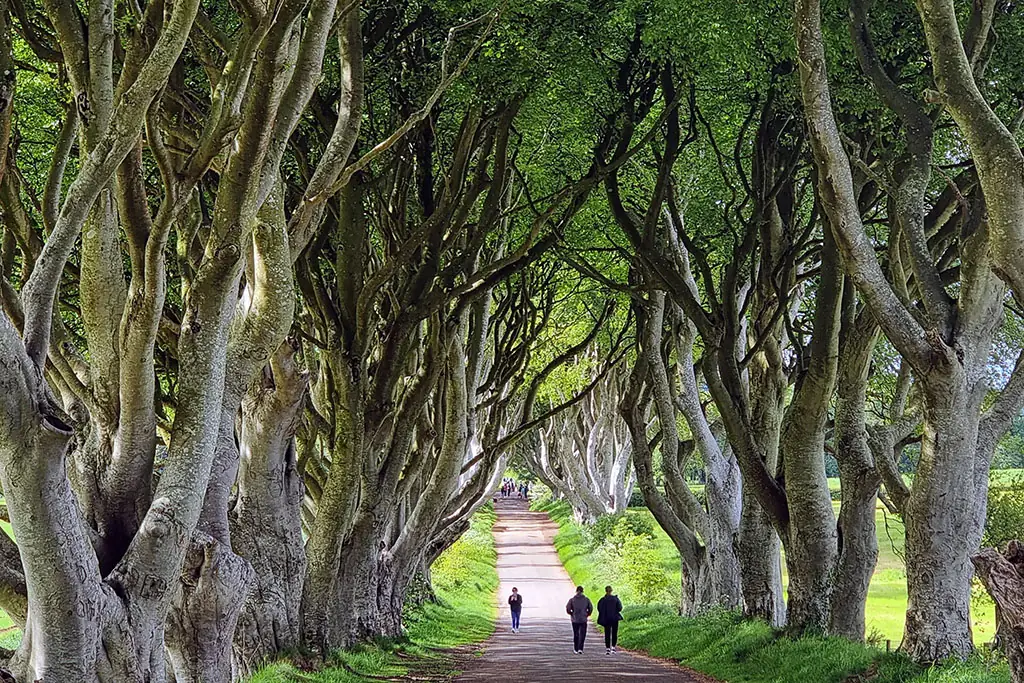
Fans of Game of Thrones will also recognise several filming locations across Northern Ireland, including the Dark Hedges and Ballintoy Harbour. These spots add another layer of interest, even for those who simply appreciate dramatic scenery.

If you’re looking for activities in Northern Ireland for adults, options range from whiskey tastings at Bushmills Distillery to coastal walks, golf at world-class courses, and guided historical tours.

Even during quieter periods, such as when people searched for things to do in Northern Ireland during lockdown, the landscape itself remained the biggest attraction — wide open beaches, cliff walks, and scenic drives that allow space and fresh air.

The key is not to rush. Northern Ireland is best experienced at a steady pace, combining iconic landmarks with lesser-known stops to create a balanced and memorable trip.

Things to Do in Northern Ireland Travel Inspiration

Follow us for travel inspiration, local insights, and real moments from our private tours across Northern Ireland. Stay updated with new experiences, seasonal highlights, and guest stories.

About Belfast Tours NI
Belfast Tours NI showcasing Titanic Belfast, Harland and Wolff cranes and Giant’s Causeway

Belfast Tours NI is a local tour company for travellers who want a personal, relaxed way to explore Northern Ireland, offering private tours, tailored itineraries, and local insight to help you plan a memorable visit.

Best Places to Visit in Northern Ireland

Northern Ireland offers an incredible mix of natural beauty, historic landmarks, and vibrant cities. From the Giant’s Causeway and the Causeway Coastal Route to Belfast’s Titanic Quarter and historic castles, there is something for every type of traveller. Below, you’ll find some of the best things to do in Northern Ireland for families to help you plan your visit and make the most of your time here.

Belfast Peace Wall
Peace walls are a series of separation barriers in Northern Ireland that separate predominantly Republican and Nationalist Catholic neighbourhoods from predominantly Loyalist and Unionist Protestant neighborhoods. The first peace lines were built in 1969, following the outbreak of the 1969 Northern Ireland riots and the Troubles.
Belfast City Hall
Belfast City Hall is the center point of the city and visitors can enjoy a free tour of this iconic building The Official Guided Tour allows you an extraordinary glimpse into areas not usually accessible to the general public within the beautiful Baroque Revival building. Ascending the Grand Staircase, and a series of rooms including the Irish-oak paneled Council Chamber.
Crown Liquor Saloon
The Crown Bar is one of the most famous pubs in Belfast. Known as the Crown Liquor Saloon, This beautiful pub in Great Victoria Street is one of the best known in Northern Ireland. It was renovated and renamed in 1885. Originally established in 1826 as a stop-in along the new railway from Belfast to Lisburn, the bar was first known as the Railway Tavern. This pub was once regarded as one of the mightiest Victorian gin palaces in the British Isles. This is one of the must visit place in Belfast.
Belfast Castle
Situated in the north of the city on the slopes of the Cavehill Country Park the castle sits 400 feet above sea level offering beautiful views of the city. The Belfast castle now serves as a restaurant, wedding reception site, and events venue. A visitor centre in the basement chronicles the history of the castle and the surrounding Cave Hill Country Park with which it shares the hillside, while the ornamental gardens promise stellar views over Belfast City Centre and Belfast Lough.
Belfast international wall
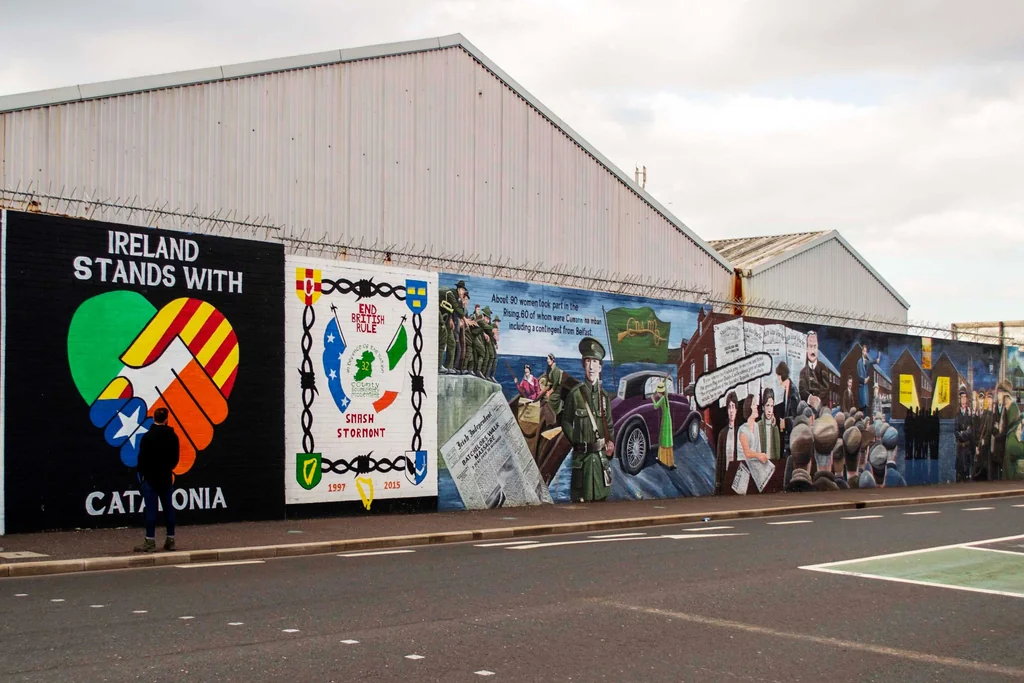
West Belfast’s Falls Road was one of the key flashpoints during the Northern Ireland conflict. Predominantly Catholic and nationalist, it borders the largely Protestant and unionist Shankill Road. During the height of the Troubles, this area saw some of the most intense unrest in the city. Today, parts of the two communities are still separated by the Peace Wall, which remains standing as a reminder of that period. The walls are now covered in colourful political murals, telling stories of identity, loss, resistance, and hope.
Crumlin Road Gaol
Built in 1850 to accommodate prisoners tried at the courthouse across the street, Crumlin Road Gaol (Crumlin Road Jail) housed some of Northern Ireland’s most notorious criminals as well as leading political figures during its 150 years in operation. The jail was also the setting for executions, riots, and hunger strikes.
SS Nomadic
Now permanently berthed at Belfast’s Hamilton dry dock, the SSNomadic is the last surviving vessel from the White Star Line, the once-prominent shipping line behind the ill-fated RMSTitanic. Built-in the Harland and Wolff shipyards, the SSNomadic was the tender to the titanic, ferrying passengers to the luxury cruise liner.
Botanic Garden
Botanic Gardens, a vital part of Belfast’s Victorian heritage, serves as a popular gathering spot for residents, students and tourists alike. Established in 1828 by the Belfast Botanic and Horticultural Society, it was created in response to growing public interest in horticulture and botany. Initially named the Belfast Botanic Garden, the site boasted exotic trees.
Queen’s University
Founded in 1849 as a non-denominational alternative to Dublin’s Trinity College, Queen’s University Belfast is known for for its magnificent medieval-style campus. Visitors are drawn to the university’s eclectic mix of architectural styles and peaceful green space. Harry Potter fans will want to visit the red brick Lanyon Building that looks like a real-life version of Hogwarts.
Carrickfergus Castle
Situated in the town of Carrickfergus in County Antrim, on the northern shore of Belfast Lough. Besieged in turn by the Scots, Irish, English, and French, the castle played an important military role until 1928 and remains one of the best-preserved medieval structures in Ireland. For more than 800 years, Carrickfergus Castle has been an imposing monument on the Northern Ireland landscape whether approached by land, sea or air. 
Ulster Museum
You could spend hours browsing this state-of-the-art museum, but if you're pressed for time don't miss the Armada Room, with artifacts retrieved from the 1588 wreck of the Spanish galleon Girona; the Egyptian Room, with Takabuti, a 2500-year-old Egyptian mummy unwrapped in Belfast in 1835; and the Early Peoples Gallery, with the bronze Bann Disc, a superb example of Celtic design from the Iron Age.

Planning a private tour of Northern Ireland? ➔ Get in touch to discuss your ideas.

Top Attractions in Northern Ireland

St. Anne's Cathedral
Though work on St. Anne’s Cathedral (also known as Belfast Cathedral) began in 1899, many changes and extensions were made during the following decades, culminating in the addition of the Spire of Hope in 2007. The neo-Romanesque structure contains a wealth of decorative features and artworks, including a 150,000-piece glass mosaic.
HMS Caroline
Explore an iconic naval vessel and gain insight into maritime history onboard the HMS Caroline in Belfast’s Titanic Quarter. The only survivor of the Battle of Jutland, the decommissioned barge has a restored bridge, captain’s quarters, engine rooms, and decks. Here, visitors can learn more about life at sea and Northern Ireland’s vital role in World War I and II.
Stormont Parliament Building
The Stormont Estate is home to Northern Ireland’s main government buildings. In addition to parkland and woodland, the 407-acre (165-hectare) estate contains the Parliament Buildings, the seat of the Northern Ireland Assembly; Stormont Castle, the seat of the Northern Irish Executive; and Stormont House, home to the Northern Ireland Office.
Belfast Zoo
Belfast Zoological Gardens is located in North Belfast on the slopes of Cave Hill. The majority of the animals in Belfast Zoo are in danger in their natural habitat. The zoo carries out important conservation work and takes part in over 90 European and international breeding programmes which help to ensure the survival of many species under threat. The zoo is 55-acre and home to more than 130 species.
Cave Hill Country Park
Rugged hillside park with trails leading past several caves, an ancient fort. The view from the summit of Cave Hill (368m) takes in the whole sprawl of the city, the docks, Belfast Lough, and the Mourne Mountains on a clear day you can see Scotland. Cave Hill Country Park spreads across the hill's eastern slopes, with several waymarked walks and an adventure playground.
Ulster Folk Museum
The Ulster Folk Museum and the Ulster Transport Museum are situated in Cultra, Northern Ireland, about 11 kilometers (6.8 mi) east of the Belfast city. The Folk Museum endeavours to illustrate the way of life and traditions of the people in Northern Ireland, past and present, while the Transport Museum explores and exhibits methods of transport by land, sea, and air, past and present. 

Planning a private tour of Northern Ireland? ➔ Get in touch to discuss your ideas.

Travel Tips and info - Weather in Ireland – What to Expect

Ireland has a mild, temperate climate with no extreme heat or cold, making it a great destination year-round. The weather is famously changeable, so you may experience sunshine, showers, and even mist all in one day.

  • Spring (March–May): Mild and fresh, 8°C–12°C.

  • Summer (June–August): Warmest months, 15°C–20°C, with long daylight hours.

  • Autumn (September–November): Cooler, 10°C–14°C, with colourful scenery.

  • Winter (December–February): 4°C–8°C, with rain and occasional frost.

Rain showers are frequent, especially on the west coast, but they rarely last long. Pack layers, a waterproof jacket, and comfortable shoes.

Tip for visitors: Ireland’s ever-changing skies create rainbows, dramatic coastlines, and unforgettable scenery. The best way to enjoy it all is on a stress-free private tour. At BelfastToursNI.com, we offer custom day trips to the Giant’s Causeway, Carrick-a-Rede Rope Bridge, the Dark Hedges, and more—so you can experience the beauty of Ireland, whatever the weather.

Get the latest weather forecasts in Ireland. View all locations in Ireland. weather map.

The weather never has extremes and is always temperate. The most attractive time scenically is the spring (late March to early June) and the fall (September to October). They are usually warm and dry with blossoms in the spring and colors in the fall. The summer (late June to the end of August) is a busy period.

Most US, UK and Australian debit and credit cards should be usable in Ireland. Visa, Mastercard (Cirrus and Maestro) and American Express are all widely accepted. However, you may have a little more trouble using a Diner’s Club card, and Discover isn’t often accepted in Ireland.

Ireland’s main currency is the Euro. Because most places you visit will be able to take your credit or debit cards, you don’t need to take much cash. In fact, there is really no reason to get Euros before you leave the US.

Yes, depending on where you go. When measured as more than 1mm of rainfall a day, the average rainfall in the South and East of the Country is about 150 days of rain a year, while the West Coast gets about 225 days a year. This is rarely torrential and is usually mild.

Belfast is a very safe city – especially in the central area of the city, which is home to great shopping destinations, hotels, bars and restaurants. The atmosphere will feel like a small village in a metropolis, and the people are traditionally friendly and helpful. While it may be quieter than some major cities in the UK, it’s generally a safe place to walk at night, even in small groups. You should be cautious when travelling to any city destination, but Belfast is no cause for concern!

Belfast is the capital and largest city in Northern Ireland, United Kingdom. Belfast is situated on Northern Ireland’s eastern coast, It’s lies between latitudes 54.58 and longitude -5.93.

Belfast Map

St George’s Market: St George’s Market is the last surviving Victorian covered market in Belfast, Northern Ireland. It is located on May Street, close to the River Lagan and the Waterfront Hall. Belfast Corporation commissioned the building of St George’s Market, which was built in three phases between 1890 and 1896.

Belfast City Hall:  One of Belfast’s most iconic buildings, Belfast City Hall first opened its doors in August 1906 and is Belfast’s civic building. This was designed by architect Sir Alfred Brumwell and was opened in 1906.

Falls Road International Wall Murals:  Murals in Northern Ireland have become symbols of Northern Ireland, depicting the region’s past and present political and religious divisions. Northern Ireland has become famous for the murals painted in almost every area of the country.

Bobby Sands Mural: The 1981 Irish hunger strike started with Sands refusing food on 1 March 1981.

Clonard Monastery: Clonard Monastery is a Catholic church and monastery, located off the Falls Road in Belfast, Northern Ireland, home to a community of the Redemptorists religious order.

Bombay Street:  In 1969, a sectarian mob burned 1,500 residents from their homes on Bombay Street, Belfast Around 1,500 Catholic families were left homeless. 

Peace Wall:  The first peace lines were built in 1969, following the outbreak of the 1969 Northern Ireland riots and the Troubles They were built as temporary structures meant to last only six months.

Shankill Road and Murals:  The Shankill Road (from Irish, Seanchill, meaning “old church” is one of the main roads leading through west Belfast.

Crumlin Road Gaol / Jail:  Crumlin Road features two imposing structures of Belfast’s criminal justice system. Crumlin Road Gaol first opened its gates to prisoners in 1846 and for 150 years was a fully operational prison. On March 31, 1996, the Governor of Belfast’s Crumlin Road Gaol walked out of the fortified prison and the heavy air-lock gates slammed shut for the final time Please note tickets for touring the Jail are not included but are optional.

Belfast Castle:  Situated in the north of the city on the slopes of the Cavehill Country Park the castle sits 400 feet above sea level offering beautiful views of the city. You can take a short break at the Belfast castle if you like and enjoy a nice cup of tea and freshly baked scones.

The Crown Liquor Saloon: This pub in Great Victoria Street is one of the best known in Northern Ireland.  Dating back to the 1880s, The Crown is a gem of the Victorian era. Formerly known as The Liquor Saloon in Great Victoria Street, Belfast, our ageless and priceless pub was one of the mightiest Victorian Gin Palaces in the city, and still boasts many of its original features, including gaslighting.

Ulster Museum: As Northern Ireland’s treasure house of the past and the present, the Ulster Museum is home to a rich collection of art, history, and natural sciences and is free to all visitors. Delve into the history of the people of the north of Ireland from earliest times to the present day, get face to face with dinosaurs and up close to the famous ancient Egyptian mummy, Takabuti, and learn about how she came to arrive in Belfast in 1834.

Botanic Gardens: Botanic Gardens was established in 1828 by the Belfast Botanic and Horticultural Society, in response to the public interest in horticulture and botany. Originally known as the Belfast Botanic Garden, the site contained exotic tree species and impressive plant collections from the southern hemisphere, many of which can still be seen in the park.

Queen’s University: Queen’s University is a highly respected, world-renowned academic institution. It’s the main building, the Lanyon Building, which was designed by the English architect, Sir Charles Lanyon, and the university is spread across what has come to be known as the Queen’s Quarter and beyond.

Lunch Stop: We can stop for lunch in a nice Irish pub to sample our good food and maybe a cheeky pint of Guinness. Or you can sample some locally caught fish in one of the best fish and chips shops and of course not forgetting the mushy peas.

Kelly’s cellars: When socializing in the 1700’s lower classes would meet up at taverns & public houses. Oftentimes there’d be musicians working their trade, or a local person who could sing or play, and that sometimes led to dancing. 

Not much has changed at Kelly’s since then. Built-in 1720 much of the original features have been retained. So, if you’re looking for a laid-back venue rich in history, local produce and craic choose Kelly’s Cellars.

St Anne’s Cathedral and Cathedral Quarter:  Belfast Cathedral, also known as the Cathedral Church of St. Anne, has stood for over 100 years as a place of Christian worship in the heart of Belfast. The foundation stone of the Cathedral was laid in 1899 and the building itself, Romanesque in style, continued to grow over the years. Located in the Cathedral Area of Belfast now a very trendy area with numerous restaurants and bars.

Titanic Museum and Titanic Quarter: Titanic Belfast, named the World’s Leading Tourist Attraction at the prestigious World Travel Awards in 2016, is located beside the Titanic Slipways, the Harland and Wolff Drawing Offices, and Hamilton Graving Dock, the very place where Titanic was designed, built and launched in 1912.

The self-guided Titanic Experience extends over nine interpretive and interactive galleries, which explore the sights, sounds, smells, and stories of RMS Titanic, as well as the city and people who made her. Please note tickets for touring the museum are not included but optional.

SS Nomadic: SS Nomadic is most famous for the part she played in the Titanic story when she ferried first and second-class passengers to Titanic from Cherbourg, but this was only the beginning of her extraordinary journey that stretches over 100 years. 

Top Attractions and unique things to do Northern Ireland

Discover fun activities you can do in Belfast and on the Causeway Coast of Northern Ireland. This list of things to do in Northern Ireland is especially handy if you’re looking for a great little place to visit nearby but don’t want to venture far away from your hometown. It even covers more exotic attractions, like a whiskey distillery tour or an activity for kids.

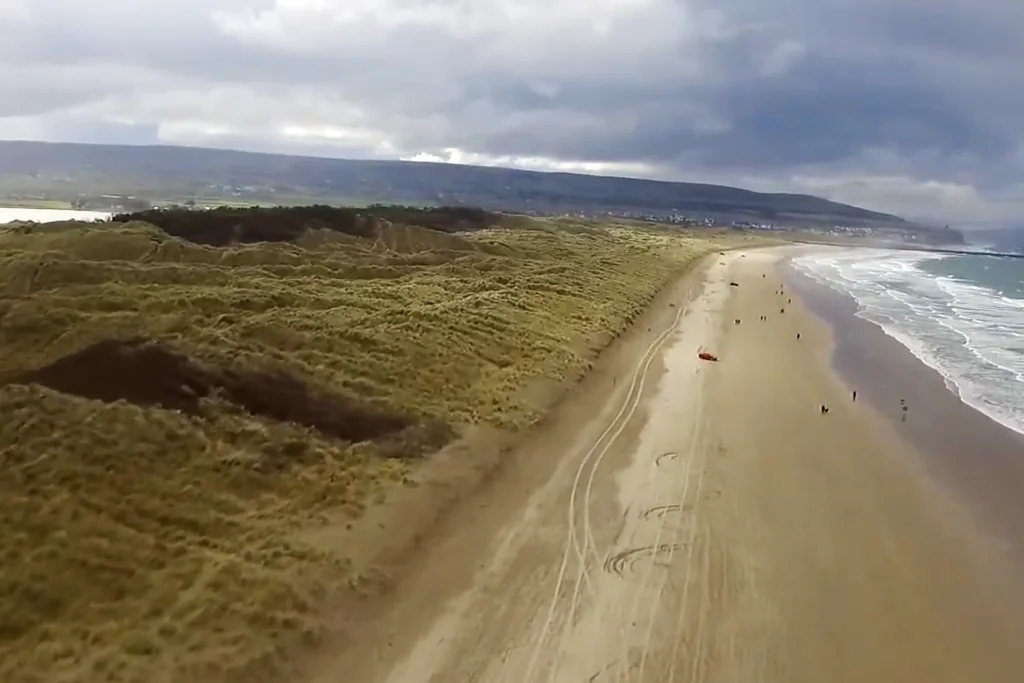
The Antrim Coast Road and Causeway Coastal Route is a drive that takes your breath away, no matter how often you see it! The road hugs the coastline, passing unspoiled beaches, sheltering under rugged cliffs, passing islands and ports, taking in the old railway line and many points of interest, including Giants causeway on its way to the capital city of Belfast.

The top attractions and most unique things to do in Northern Ireland. This is a shame, as there’s much more to this corner of Northern Ireland. In the guide below, we’ll be showing you the best places to visit in Northern Ireland, from off-the-beaten-track hidden gems to well-known tourist attractions. All those places are also top things to do in Northern Ireland during COVID.

Those attractions we listed below are great things to do in Northern Ireland for couples and families.

Carrick a Rede Rope Bridge

Considered one of the world’s scariest bridges, the Carrick-a-Rede Rope Bridge is not for the faint of heart. Spanning a chasm that is almost 100 feet deep and nearly 70 feet wide, this Northern Ireland bridge connects Carrick-a-Rede Island to the mainland and attracts a quarter of a million visitors every year. The original structure was built by fishermen more than 300 years ago, and as recently as the 1970s, the bridge had only one handrail and large gaps between the slats.
Dunluce Castle
This amazing castle Surrounded by 100-foot cliffs on all sides, Dunluce Castle commands a dramatic location on the North Antrim Coast. This is one of the most picturesque castles in Northern Ireland, it may date as far back as the 14th century, although records only confirm its existence back to 1513, when it belonged to the MacQuillen clan. Later the headquarters of the MacDonnell clan, the castle was surrounded by a village until a fire wiped it out in 1641.

Old Bushmills Distillery

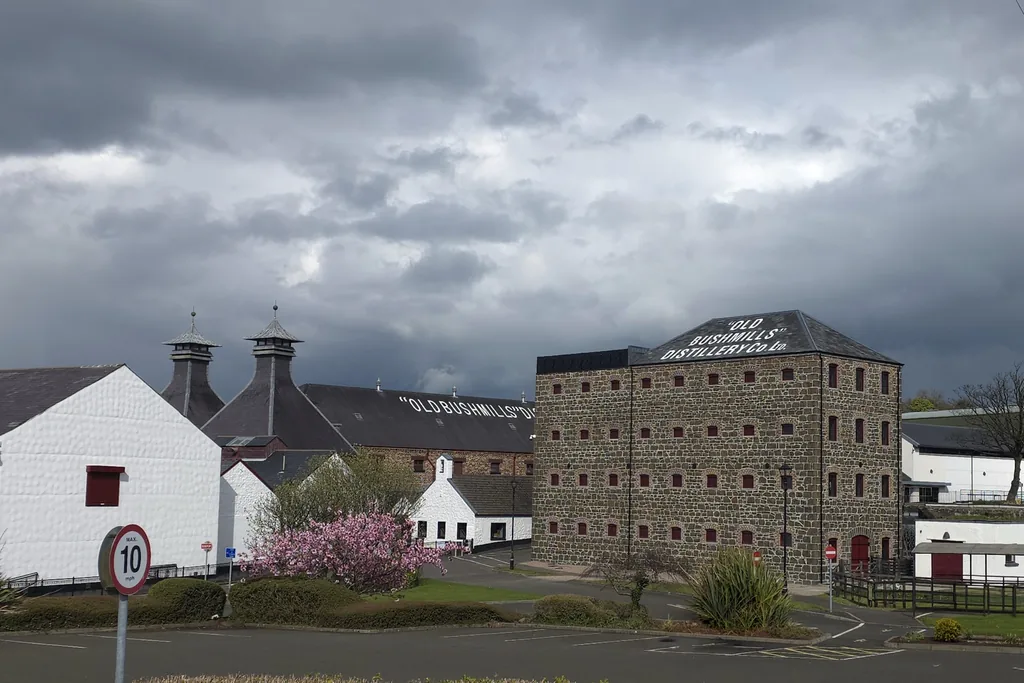
The world’s oldest legal distillery, Bushmills was first granted its whiskey-producing license back in 1608, though historical records suggest production began even earlier. Distillers used malted Irish barley, grains, and water from St. Columb’s Rill to produce their oak-aged Bushmills Original and their Black Bush blend.
Marble Arch Caves
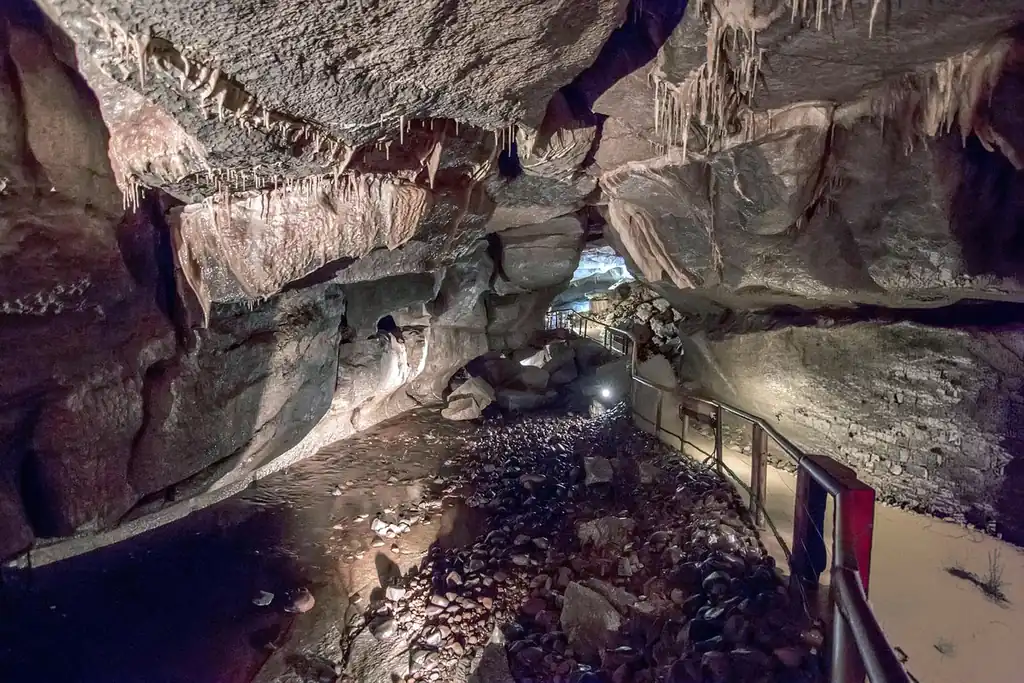
To the south of Lower Lough Erne lies a limestone plateau, where Fermanagh's abundant rainwater has carved out a network of subterranean caverns. The largest of these are the star attraction of the Marble Arch Caves Global Geopark. Popular 1¼-hour tours feature spectacular chambers and underwater rivers.
Cushendun Caves
Formed over 400 million years ago as a result of the extreme weather conditions in Northern Ireland. These caves are where Ser Devos took Melisandre ashore, as directed by King Stannis, and where Melisandre birthed the shadow assassin. The caves are easy enough to reach from the charming town of Cushendun.

Causeway Coastal Route

You can travel along the Causeway Coastal route between Ballycastle and Dunluce to experience one of the most dramatic drives in the world, now rated as one of the world’s top 5  great road journeys. We transport you by windswept cliffs, spectacular scenery, and fabulous unspoiled beaches.

Ballintoy Harbour

Located along the scenic Antrim coast, the harbor of the traditional fishing village of Ballintoy offers striking Atlantic views and insight into a rural way of a life. The village has remained virtually unchanged over the last few centuries, and as such was chosen as a filming location for Pyke’s harbor in Game of Thrones.

Tollymore Forest

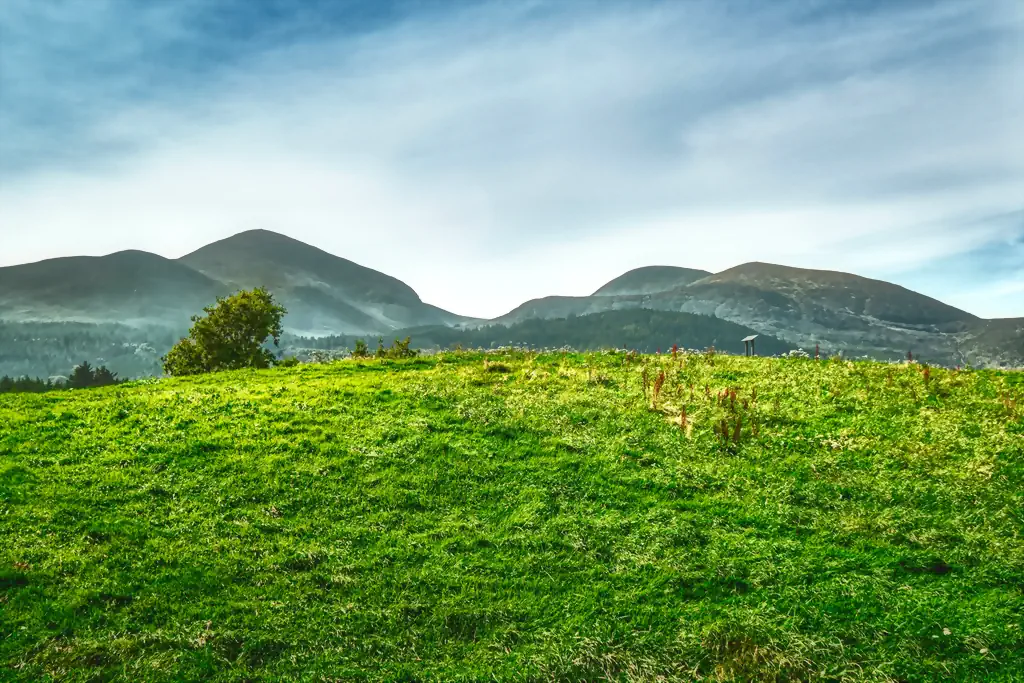
Covering an area of almost 630 hectares at the foot of the Mourne Mountains, Tollymore Forest Park has panoramic views of the surrounding mountains and the sea at Newcastle. Tollymore Forest Park was the first state forest park in Northern Ireland, established on 2 June 1955. It is located at Bryansford, near the town of Newcastle in the Mourne and Slieve Croob Area of Outstanding Natural Beauty.

Glenariff waterfalls

Glenariff Waterfall Nature Reserve lies within the breathtaking Glenariff. It is the largest and most spectacular of the Glens of Antrim, located approximately 3 miles from the coastal village of Waterfoot. The deep wooded gorge contains a mixture of semi-natural upland oak and plantation wood with pools, rapids, and waterfalls. The forest is vibrant with the sound of resident and migrant birds.

Castle Ward

Castle Ward 18th-century eccentric house with two distinctly different styles, classical and Gothic, will entice you to explore further. This truly beautiful 332-hectare (820-acre) walled demesne, with walking trails, exotic garden, and picturesque farmyard, will unlock your imagination through family history, leisure pursuits, events, and industrial heritage. 

The Gobbins

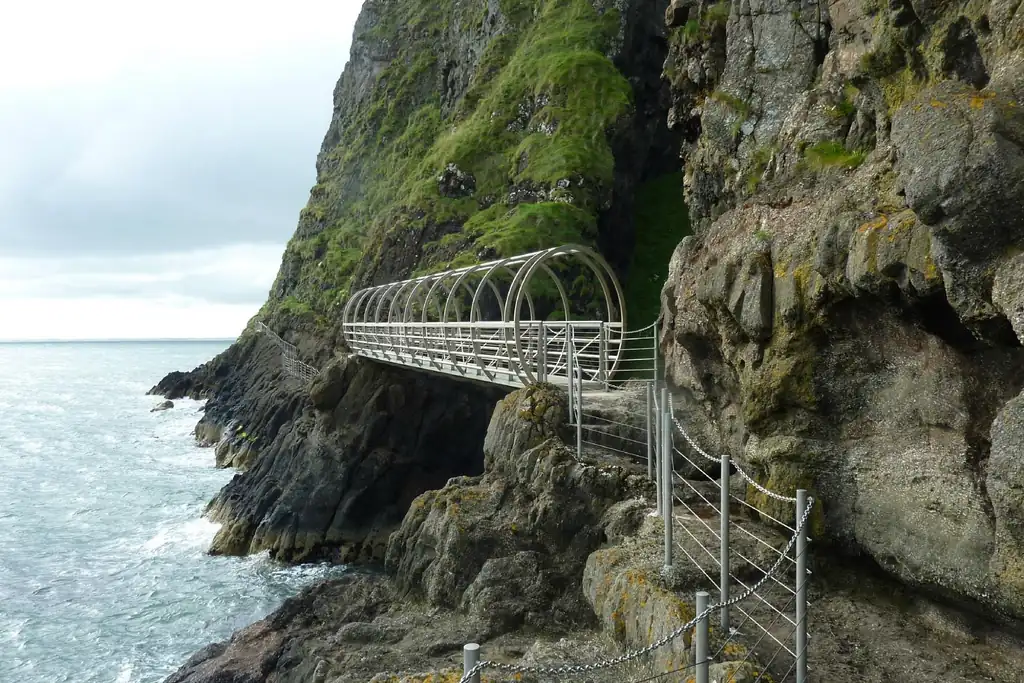
The Gobbins is a cliff-face path at Islandmagee, County Antrim, Northern Ireland, on the Causeway Coastal Route. It runs across bridges, past caves, and through a tunnel, along The Gobbins cliffs. The cliffs are recognized for their rich birdlife, important geology, and notable. The Gobbins Walk is a long hard slog and moderate fitness and good mobility levels are needed. 

Carnlough Village

Carnlough is a village in County Antrim, Northern Ireland. It is situated in Mid and East Antrim district, as well the historic barony of Glenarm Lower, and the civil parishes of Ardclinis and Tickmacrevan. The harbor although built in the nineteenth century during the famine years still retains an old-world charm, which meant that it didn’t seem out of place when it first appeared in Game of Thrones.

Mussenden Temple

The Mussenden Temple and Downhill Demesne is a National Trust property. Mussenden temple. One of the most iconic locations, Downhill Beach is an 11km stretch of sand and surf located on the Causeway Coast. This magnificent location is home to Mussenden – a tiny temple perched dramatically on a 120ft cliff top, high above the Atlantic Ocean.

Planning a private tour of Northern Ireland? ➔ Get in touch to discuss your ideas.

Connect with Us

Belfast Tours NI offers a range of resources to help visitors plan a trip to Belfast, Northern Ireland. Our blog post highlights the best things to do in the area and provides insider tips to ensure visitors have an unforgettable experience.

We encourage you to explore our social media channels as well, where you can find additional information and travel inspiration. Trust our team of experts to guide you through the planning process and provide you with the tools you need to fully immerse yourself in the culture and attractions of Ireland.

Facebook
Pinterest
LinkedIn
WhatsApp