

Carnfunnock Country Park and Knockagh Monument, What Is Open Now
Written by Murat Yilmaz · Last updated:
Drive up Monument Road above Greenisland on a clear morning, step out of the car, and the whole of Belfast Lough opens out below you. Carrickfergus Castle sits on its rock to the east, the cranes of the harbour stand at the far end of the lough, and the North Down shore lies across the water. The 110 foot basalt obelisk beside you is Knockagh Monument, the County Antrim War Memorial, and the largest war memorial in Northern Ireland. Further up the coast, past Larne, lies Carnfunnock Country Park, 191 acres of woodland, gardens and coast on the Causeway Coastal Route.
The two places have very different stories. Knockagh was raised for the men of County Antrim who died in the First World War, and it took fourteen years to build, from the foundation stone in 1922 to completion in 1936. Carnfunnock opened as a country park in 1990 and became a favourite family day out from Larne, with its maze, walled garden and caravan park.
Here is the catch. Carnfunnock Country Park is closed for a major redevelopment, and in October 2026 the council still lists every facility as shut, from the car park to the visitor centre. Knockagh, on the other hand, is open every day of the year and costs nothing, but it has no shelter of any kind, and on a misty day you will see very little from the top.
I am on this side of Belfast Lough most weeks of the year, and I would always rather tell you what is open than have you arrive at a locked gate. In this guide you will find the history of Knockagh, what you can pick out from the top, the Knockagh Monument walk and parking, the true position at Carnfunnock and what the new park will have, and the places close by that make a good half day, from Carrickfergus Castle to Whitehead and the Antrim Coast Road.
What Is in This Guide
- 1Knockagh Monument, the County Antrim War Memorial
- 2The View from Knockagh over Belfast Lough
- 3Knockagh Monument Walk, Parking and Getting Up the Hill
- 4Is Carnfunnock Country Park Open? The Latest on the Closure
- 5The New Carnfunnock, What the Redevelopment Will Bring
- 6Carrickfergus Castle, the Norman Fortress Below Knockagh
Knockagh Monument, the County Antrim War Memorial
Knockagh Monument stands on the top of Knockagh Hill, above the village of Greenisland and between Belfast and Carrickfergus. It was first raised in remembrance of the men of County Antrim who died in the First World War, from 1914 to 1918. After the Second World War it was dedicated as well to those from the county who died between 1939 and 1945. Today it is known officially as the County Antrim War Memorial, and it is the largest war memorial in Northern Ireland.
The history of Knockagh Monument
The foundation stone was laid in 1922, but the monument was not completed until 1936. Those fourteen years tell their own story about money and hardship in the years between the wars. The finished memorial is an obelisk of local basalt, 110 feet high, and it is a replica of the Wellington Monument in the Phoenix Park in Dublin, built at exactly half the height. The ground it stands on is now looked after by Mid and East Antrim Borough Council, which organises the services held here on behalf of the councils of County Antrim.
What you see at Knockagh Monument today
There is no way into the obelisk and nothing to climb. Walk round the base and you will find the inscription, adapted from the hymn O Valiant Hearts by John S. Arkwright. It reads: Nobly you fought, your knightly virtue proved, your memory hallowed in the land you loved. Stand and read it with the lough spread out below you, and it carries more weight than any plaque in a town square.
The monument is still a working memorial. On Sunday 28 June 2026 the council held its annual service and parade here for the 110th anniversary of the Battle of the Somme, with veterans, the armed forces and civic leaders from across the county. If you arrive while a service is on, it is worth keeping a respectful distance and saving the photographs for later.
Facilities at Knockagh Monument
Knockagh is open access all year round and there is no charge. The official listing shows on site parking and nothing else, so there are no toilets, no café and no shelter at the top. I would suggest using the facilities in Carrickfergus or Belfast before you drive up.
Visitor information
Opening times. Open access all year round, with no gate and no published closing time.
Guide prices. Free. The official listing notes that parking charges may apply.
Booking. No booking needed.
Facilities. On site parking at the top of Monument Road. There are no toilets, no café and no shelter.
Where it is. Monument Road, Greenisland, County Antrim, BT38 8QG. By car it is about 12 miles from Belfast city centre, taking the M2 and M5 towards Carrickfergus and turning up through Greenisland to Monument Road. Greenisland station on the Larne line is in the village below, but the monument is a long uphill walk from there.
What is nearby. Carrickfergus Castle, under three miles away as the crow flies, Carrickfergus town and harbour, and Whitehead further along the coast.
The View from Knockagh over Belfast Lough
Most people come to Knockagh for the view, and on a clear day it is one of the best on this side of Belfast. The official tourism listing describes panoramic views of Carrickfergus, Belfast and across Belfast Lough to North Down, and that is exactly how it feels at the top. You are looking down on the whole shape of the lough at once, which you never get from the road along the shore.
Landmarks you can see from Knockagh
Start with Carrickfergus, where the castle sits on its rock at the water’s edge and the harbour wall curls out beside it. Follow the shore west and you come to the city itself, with the harbour cranes and the Titanic Quarter at the head of the lough. On the far side of the water lies the County Down coast, from Holywood out towards Bangor. Turn round and you are looking inland over the hills of south Antrim.
It is the best place I know to understand Belfast before you explore it. From up here you can see why the shipyards grew where they did, why the Normans built their castle on the rock at Carrickfergus, and how close the city sits to open country. If you are planning a day in the city afterwards, our guide to things to do in Belfast picks up where the view leaves off.
The best weather and time of day for the view
Everything here depends on the weather. A low cloud day can hide the monument from the car park, never mind the lough. Clear, cold days in autumn and winter can give very sharp views. Whatever the season, it is exposed and windy on the summit, and it can feel much colder than the shore below, so bring a proper jacket even in summer.
The light changes through the day. In the morning the sun sits behind Carrickfergus and the lough shines silver, while in the late afternoon it falls across the city and the County Down hills. I would not plan a trip around one or the other. Go on the clearest day you have, and you will not be disappointed.
Knockagh Monument Walk, Parking and Getting Up the Hill
Most visitors drive to the top. Monument Road climbs from Greenisland to the car park beside the obelisk, and from there it is a few steps to the monument and the viewpoint. The roads on the hill are narrow country lanes with tight bends, so take them slowly.
The Knockagh Monument walk
People do walk up from Greenisland, and that climb is what most people mean by the Knockagh Monument walk. There is no official waymarked route from the village published by the council, so I would not give you a time or a distance for it. What I can tell you is that it is uphill all the way from the village to the monument. If you want the view without the climb, drive up and walk around the summit instead.
The hill also sits beside Woodburn Forest and its reservoirs, and longer walks in that area are for people with proper boots, a map and time to spare. For a first visit, the short stroll around the monument and along the edge of the hill gives you everything most people come for.
Respect at the memorial
You will find a great deal of drone footage of Knockagh online. The usual flying rules apply here as anywhere, but this is a war memorial first and a viewpoint second. If there is a service on, or someone is standing quietly at the base, it is worth keeping the drone in the bag.
How long to spend at Knockagh Monument
Twenty minutes is enough to walk round the monument, read the inscription and take in the view. On a fine day you may well stay longer, picking out landmarks across the water. Knockagh pairs naturally with Carrickfergus, which sits below it on the shore, and the two together make an easy half day from Belfast.
Is Carnfunnock Country Park Open? The Latest on the Closure
No, not as a full park. Carnfunnock Country Park closed to facilitate a major redevelopment, and the works began on Monday 7 July 2025. Mid and East Antrim Borough Council states that all facilities, including the car park, visitor centre, play park and caravan park, are closed. That is still the council’s position in October 2026, and no reopening date has been published.
What you can still do at Carnfunnock during the works
The park is not sealed off completely. The council says walking trails are available, and the official tourism listing confirms that pedestrian access and the dog exercise area are kept open throughout the works. You cannot drive into the park, so you park outside it. The council points visitors to Drains Bay, on the Coast Road towards Larne, which has parking and public toilets, and to the car park at Carnfunnock Bay.
Dogs have always had rules here. Under the council’s dog control orders, dogs are not allowed in the maze and walled garden, the family fun zone, the activity centre area or the golf course, and they must be on a lead on the main entrance road from the Coast Road up to the car parks.
Progress on the Carnfunnock redevelopment
Local reporting in September 2026 described the construction of the new visitor centre and amenity block as being at an advanced stage, and the council approved new signage for the park. The tourism listing had given the project a length of about 15 months from July 2025. Even so, the council itself has not named a date, and I would not plan a visit around a guess.
One separate business is worth mentioning. The Carnfunnock Family Fun Zone, with its miniature railway and mini golf, is privately run. Its own website says it is closed for 2026 and expects to reopen in spring 2027. Before you go, check the council’s Carnfunnock redevelopment page, which is the place any change will appear first.
Visitor information
Opening times. Closed for redevelopment since July 2025, with no reopening date published. Pedestrian access to the walking trails and the dog exercise area remains.
Guide prices. Free pedestrian access.
Booking. No booking needed for the walking trails.
Facilities. The park’s car park, visitor centre, play park and caravan park are all closed. Parking and public toilets are at Drains Bay, where the toilets open 9am to 9pm from April to September and 9am to 4.30pm from October to March. There is also parking at Carnfunnock Bay.
Where it is. Coast Road, Ballygally, Larne, County Antrim, BT40 2QG. By car take the A2 Coast Road north from Larne, about a mile south of Ballygally beach. Drains Bay toilets are at 158 Coast Road. The nearest railway station is Larne on the Larne line.
What is nearby. Ballygally beach and Ballygally Castle, Larne Promenade, and the Antrim Coast Road north to Glenarm and Carnlough.
The New Carnfunnock, What the Redevelopment Will Bring
The redevelopment is a large investment for a park of this size. The council has secured £6.1 million from the UK Government to revitalise the 191 acre site, and local reporting puts the full cost at around £7 million, with the council paying the rest. Planning permission was approved in October 2024 for a replacement visitor centre, amenity block and play park, along with a new bike park and a viewing platform over the maze.
What the new Carnfunnock Country Park will have
The council lists the main features of the new park. There will be a new visitor centre with a reception, shop and café with coastal views, and indoor and outdoor seating. A fully inclusive adventure play park is planned, with play areas for children of all abilities. Older children and adults get a bike park with a pump track and a jump trail.
The maze, one of the best known parts of the old park, will get an elevated viewing platform with seating so you can look down on it. A modern amenity block will bring new toilets, changing facilities for the caravan park and a coffee dock. Around all of that, the council plans improved paths, new wayfinding signs, accessible routes, traffic calming and better drop off and car parking.
Stopping at Carnfunnock on the Antrim Coast Road
Carnfunnock sits on the Coast Road between Larne and Ballygally, at the very start of the most scenic stretch of the Causeway Coastal Route. Once it reopens, it will be a natural first stop on a day up the coast, with a café, toilets and space for children to run before the long drive north.
Until then, the stretch of coast around it still works well. Ballygally beach is a mile or so up the road, with parking, toilets and a shop across from the sand. If you are driving the Antrim Coast Road this year, I would suggest stopping there instead, and treating Carnfunnock as a walk through the woods rather than a full day out.
Carrickfergus Castle, the Norman Fortress Below Knockagh
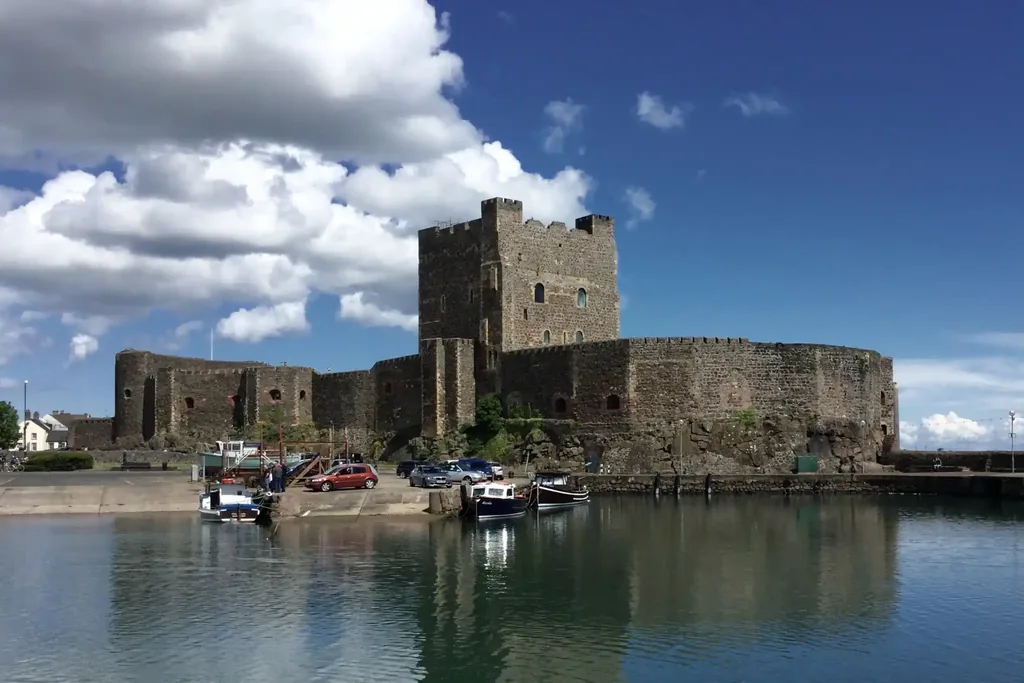
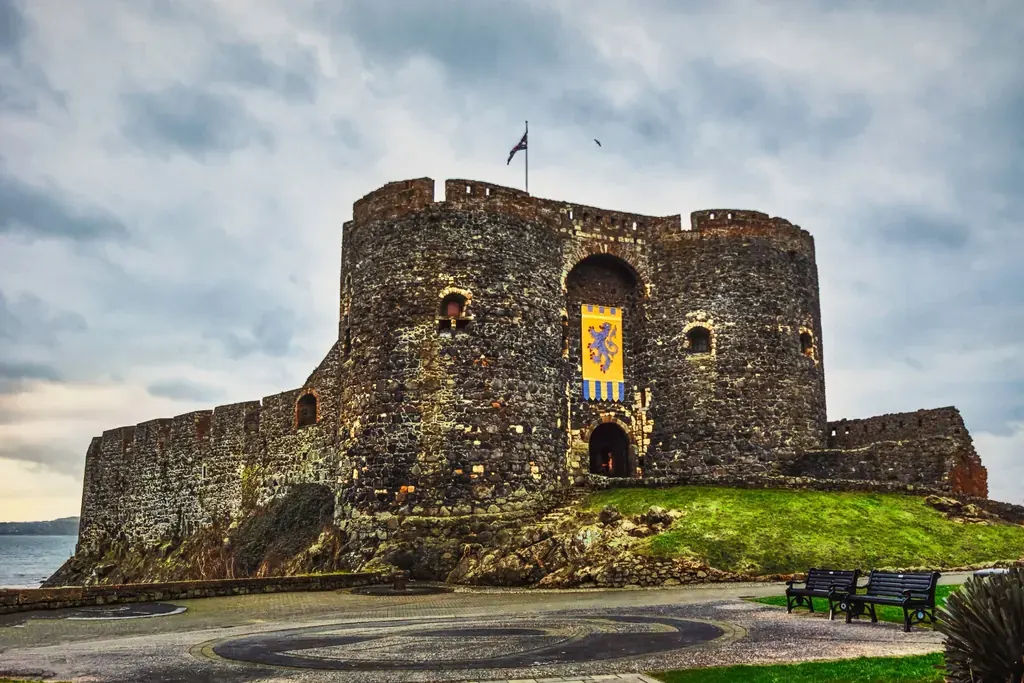
From the top of Knockagh you look straight down on Carrickfergus Castle, and it is the obvious next stop. The castle dates back to 1177 and stands on a rock at the edge of Belfast Lough, at the start of the Causeway Coastal Route. It was besieged by the Scots, the Irish, the English and the French, and it served as a military base until 1928, which is why it is one of the best preserved medieval buildings in Ireland.
What you see inside Carrickfergus Castle
You can climb the keep, walk the walls and look out over the lough between the battlements. Inside, the banquet hall, the vaults and the constable’s quarters are open, and the Great Hall has a newly renovated roof. There is a collection of cannons from the 17th to the 19th centuries, and children can dress up in period costume or play giant chess in the keep. Free guided tours run daily, and the official guidance suggests allowing a couple of hours.
Visiting Knockagh and Carrickfergus Castle together
Knockagh first, then the castle, is the order I would suggest. Twenty minutes on the hill shows you the shape of the lough and the shoreline you are about to drive along. Then the castle fills in the history of how this coast was held. The two are under three miles apart as the crow flies, and the drive down from the hill takes you through Greenisland and along the shore.
Carrickfergus town is worth a walk while you are there. St Nicholas’ Church, built by John de Courcy around 1180, is a few minutes from the castle, along with the town hall and the museum. The visitor information centre is inside the castle itself, and there is a café there too.
Visitor information
Opening times. Easter to September, 9.30am to 5pm with last admission at 4.30pm, closed on Mondays apart from bank holidays. October to Easter, 9am to 4pm with last entry at 3.30pm. In extreme weather, ring ahead before you travel.
Guide prices. Adult £6, child aged 5 to 17 £4, concession £4.50, family £18. Under 5s and carers free. Lower summer saver prices apply from 25 June to 1 September.
Booking. Tickets can be booked online through the official Mid and East Antrim tourism website or bought on arrival.
Facilities. Free car park beside the castle, café, visitor information centre, gift shop and free daily guided tours.
Where it is. Marine Highway, Carrickfergus, County Antrim, BT38 7BG. About 11 miles from Belfast by road on the A2, around 20 minutes according to the official tourism site. Carrickfergus station on the Larne line is a short walk away.
What is nearby. Knockagh Monument, St Nicholas’ Church, Carrickfergus Museum, and Whitehead further along the coast.
Whitehead and the Blackhead Path, Further Along the Shore
Keep going along the shore past Carrickfergus and you come to Whitehead, a Victorian seaside town that grew up around the railway. It sits in a small bay between the limestone cliffs of White Head and the black volcanic headland of Black Head, with Blackhead Lighthouse on top. Tourism Ireland describes it as a pretty seaside town with rows of colourful houses, and the seafront is the part most people remember.
Things to do in Whitehead
The Blackhead Path is the reason to stretch your legs here. It runs from the car park beyond the promenade, along the foot of the cliffs and round the headland to the lighthouse, with bridges and steps built into the rock. Railway engineer Berkeley Deane Wise built it in 1892 to bring day trippers to the town. WalkNI lists the route at 2.2 miles, on a level surfaced path with steep steps up to the lighthouse.
Whitehead is also home to the Whitehead Railway Museum, run by the Railway Preservation Society of Ireland, with steam locomotives, carriages and the workshops where they are restored. It opens Thursday to Saturday, so it is worth planning around if you have an interest in railways.
Rockfalls and closures on the Blackhead Path
The cliffs above the path are prone to rockfalls. The council closed the final section near the lighthouse after a rockfall in October 2025, and planned a three week closure for cliff maintenance in March 2026. The current tourism listing carries no closure notice, but it is always worth checking the council’s news before you set out. I cover Whitehead in more depth in a separate guide, so here I will keep it short.
Visitor information
Opening times. Open access with no published hours. Sections can close at short notice for cliff works or after rockfalls.
Guide prices. Free to walk. The official listing notes that parking charges may apply.
Booking. No booking needed.
Facilities. Car park at the start of the path. Public toilets at Castleview, 3 Castleview Road, open 8am to 9pm from April to September and 8am to 5pm from October to March. Cafés in the town.
Where it is. Blackhead Car Park, Old Castle Road, Whitehead, County Antrim, BT38 9NE. About 16 miles from Belfast by road on the A2 through Carrickfergus. Whitehead station on the Larne line has normally two trains an hour from Monday to Saturday.
What is nearby. Whitehead Railway Museum, The Gobbins at Islandmagee, and Carrickfergus Castle.
Ballygally Beach and the Antrim Coast Road Beyond Carnfunnock
North of Larne the main road turns into the Antrim Coast Road, and this is where the drive changes character. The road was built between 1832 and 1842 by the engineer William Bald, who blasted the cliffs so the rock fell to the foreshore and formed the bed of the new road. Before then, travel up this coast meant steep climbs over the headlands and down into each glen.
Ballygally beach
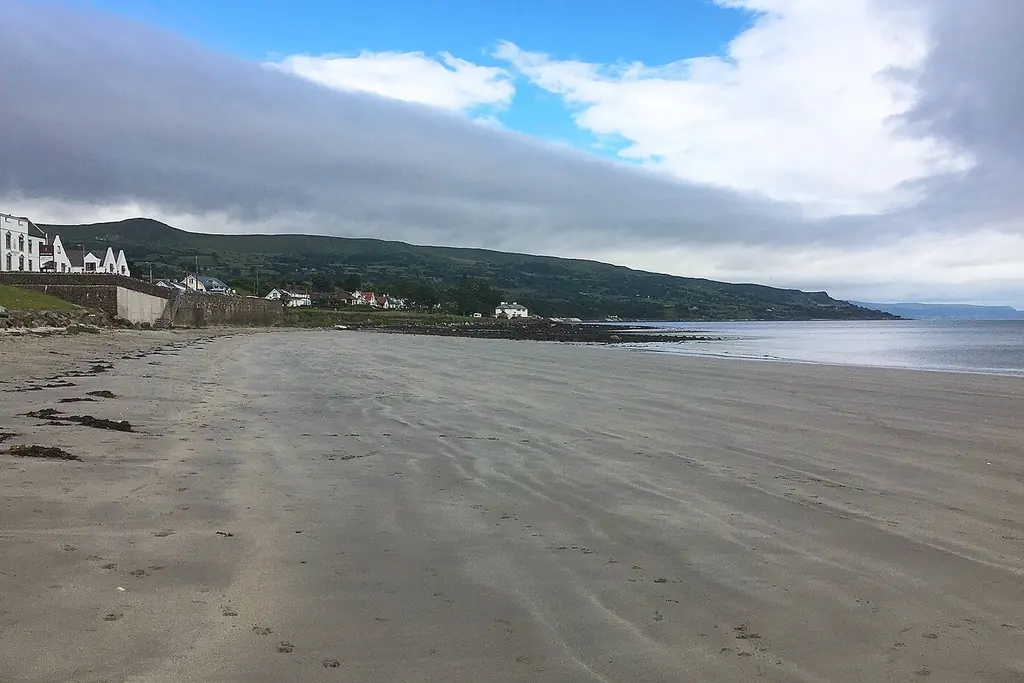
Carnfunnock’s nearest neighbour is Ballygally, a mile or so further north, and while the park is closed it is the better stop. Ballygally beach is a short sandy beach with boulders at each end. There is a free car park across the road, a shop with refreshments and ice cream, and public toilets at the far end of the car park. In 2025 the bathing water was classified as Excellent by DAERA.
Across the road from the sand stands Ballygally Castle, built in 1625 and now a hotel. The hotel describes it as Northern Ireland’s only 17th century castle still in use as a residence. From the beach you can look south to Ballygally Head and inland to the cliffs of Sallagh Braes, which appear in our guide to Game of Thrones filming locations.
Glenarm, Carnlough and the coast road north
From Ballygally the Coast Road runs on to Glenarm, with its castle and walled garden, and then to Carnlough Harbour, a good place for lunch and a walk along the harbour wall. Beyond that are the Glens of Antrim and, eventually, the Giant’s Causeway. If you want to see the whole of this coast in one day, our Giant’s Causeway tour follows this road north.
Visitor information
Opening times. Open access to the beach all year round. The public toilets open 9am to 9pm from April to September and 9am to 4.30pm from October to March.
Guide prices. Free.
Booking. No booking needed.
Facilities. Free car park, public toilets and baby changing, a shop for refreshments, a wheelchair accessible viewpoint with seating, and a children’s play park at the Croft Road and Cairncastle Road junction.
Where it is. Coast Road, Ballygally, County Antrim, BT40 2QZ. About 26 miles from Belfast by road, taking the A8 to Larne and then the A2 Coast Road north. The nearest railway station is Larne.
What is nearby. Carnfunnock Country Park walking trails, Sallagh Braes, Glenarm and Carnlough Harbour.
Planning a Half Day from Belfast to Knockagh and the Coast
Knockagh, Carrickfergus and the shore beyond them fit comfortably into half a day from Belfast. The order matters more than the distance. Go up the hill first while the light is good, come down to the castle, and then decide how much further along the coast you want to go.
A half day plan from Belfast
Start at Knockagh with twenty minutes on the hill. Drive down through Greenisland to Carrickfergus Castle and allow a couple of hours there, with lunch in the town. If you still have the afternoon, carry on to Whitehead for the Blackhead Path, or north through Larne to Ballygally beach. Each step takes you a little further along the same coastline you looked down on from the monument.
If you have a full day, the coast simply keeps going. North of Ballygally the Antrim Coast Road leads to Glenarm, Carnlough and the Glens, and on to the Causeway Coast. You could also turn this into a day on the Northern Ireland road trip route, or pair it with the city on another day.
Weather and timing for the half day
Check the forecast for visibility before you go up to Knockagh, because cloud can sit on the hill when the shore below is clear. Carrickfergus Castle closes earlier in winter, with last entry at 3.30pm, so on a short winter day do the castle first and the hill afterwards if the sky stays clear. If the weather turns, the castle and the town keep you dry while the cliff paths and the hill do not.
For anyone not driving, the Larne line from Belfast stops at Greenisland, Carrickfergus and Whitehead, which covers the shore but not the hill. A private tour is the easiest way to reach Knockagh and the coast in one go without a car.
Carnfunnock Country Park and Knockagh Monument FAQ
Is Carnfunnock Country Park open?
Not as a full park. It has been closed for redevelopment since July 2025, and the car park, visitor centre, play park and caravan park are all shut. Pedestrian access to the walking trails and the dog exercise area remains, with parking and toilets at Drains Bay.
Why is Carnfunnock Country Park closed?
It is closed for a redevelopment funded with £6.1 million from the UK Government. The work includes a new visitor centre and café, an inclusive adventure play park, a bike park and a viewing platform over the maze.
When will Carnfunnock Country Park reopen?
The council has not published a reopening date. Local reporting in September 2026 described the new visitor centre and amenity block as being at an advanced stage, so check the council’s Carnfunnock page before you travel.
Is the Carnfunnock play park open?
No. The play park is closed with the rest of the park’s facilities during the redevelopment. A new, fully inclusive adventure play park is part of the plans.
Is the Carnfunnock caravan park open?
No. The council lists the caravan park as closed during the redevelopment. The plans include new amenity facilities for caravan park visitors.
Is Carnfunnock free?
Yes, walking in the park is free. During the redevelopment you reach the trails on foot, parking at Drains Bay or Carnfunnock Bay.
Can you walk in Carnfunnock Country Park?
Yes. The council says walking trails are available during the works, and pedestrian access has been kept throughout. Dogs are welcome in the dog exercise area but are excluded from some parts of the park.
What is Knockagh Monument?
It is the County Antrim War Memorial, raised for the men of the county who died in the First World War and later dedicated to those who died in the Second. It is a 110 foot basalt obelisk and the largest war memorial in Northern Ireland.
How high is Knockagh Monument?
The obelisk itself is 110 feet high. It is a half size replica of the Wellington Monument in the Phoenix Park in Dublin.
Is there a car park at Knockagh Monument?
Yes. The official listing shows on site parking at the top of Monument Road in Greenisland. There are no toilets or café, so plan for that.
Is there a Knockagh Monument walk?
Yes, people walk up from Greenisland, but there is no official waymarked route published by the council. It is a steady climb on lanes and roads, so if you want the view without the effort, drive to the top.
Can you go inside Knockagh Monument?
No. It is a basalt obelisk with no public access inside. You walk round the base, read the inscription and enjoy the view.
How far is Knockagh Monument from Carrickfergus?
It is under three miles from Carrickfergus Castle as the crow flies. The drive down the hill through Greenisland is short, which makes the two an easy pairing.
What can you see from Knockagh Monument?
On a clear day you see Carrickfergus, Belfast and the whole of Belfast Lough, with the County Down shore on the far side. Visibility is everything, so pick a clear day.
Follow Us for Tour Updates & Travel Inspiration
Follow us for travel inspiration, local insights, and real moments from our private tours across Northern Ireland. Stay updated with new experiences, seasonal highlights, and guest stories.
Private Tours in Belfast and Northern Ireland
Knockagh and the coast below it are close to Belfast, which makes them easy to fit into a private tour with one of our local guides. We can start the day at the monument for the view, head down to Carrickfergus Castle, and carry on along the shore to Whitehead or north onto the Antrim Coast Road, all at the pace that suits you.
We collect you from your Belfast hotel, from Belfast International or George Best Belfast City Airport, or from the cruise terminal on a shore excursion. If you are staying in Dublin, we can bring you north with our chauffeur service, and the guided part of the day begins once we are in Northern Ireland.
Up to 7 passengers travel in a Mercedes-Benz V-Class, 8 in a Ford Tourneo Custom, and 9 or more in two V-Class vehicles travelling together. Every vehicle is licensed as a taxi and insured for passengers, and every driver holds a taxi licence.
Tell us your dates, how many of you there are and what you would like to see, and we will build a day around it. You can reach us through our contact page.

Game of Thrones Tour
Visit the real Game of Thrones filming locations across Northern Ireland, including the Dark Hedges and Ballintoy Harbour, on a fully private tour.
Giants Causeway Tour
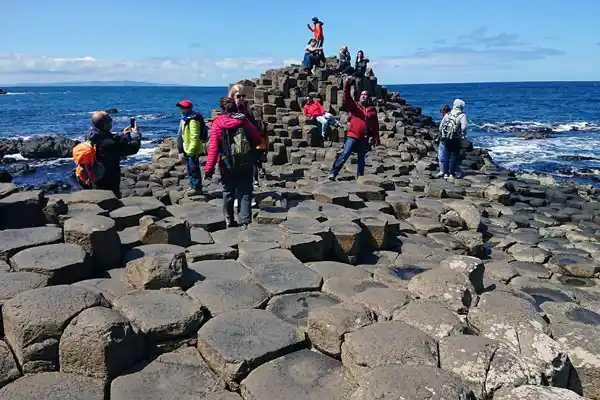
A full day at the Giant’s Causeway from Belfast, travelling the Causeway Coastal Route with your own local driver-guide and time for photos at every stop.
Giant’s Causeway Half Day Tour
Short on time? A private half-day run to the Giant’s Causeway and the Antrim Coast, ideal if your day in Belfast is already busy.
Planning a private tour of Northern Ireland? ➔ Get in touch to discuss your ideas.
Connect with Us
We share photographs from the road on our social channels, from clear days on Knockagh to Carrickfergus Castle in the evening light and news from along the Antrim coast. When Carnfunnock reopens, you will see it there too.
If you have a question about this part of the coast, a message on any of the channels below is the quickest way to reach us. Ask away, whether or not you book a tour with us.
Facebook
Pinterest
LinkedIn
WhatsApp